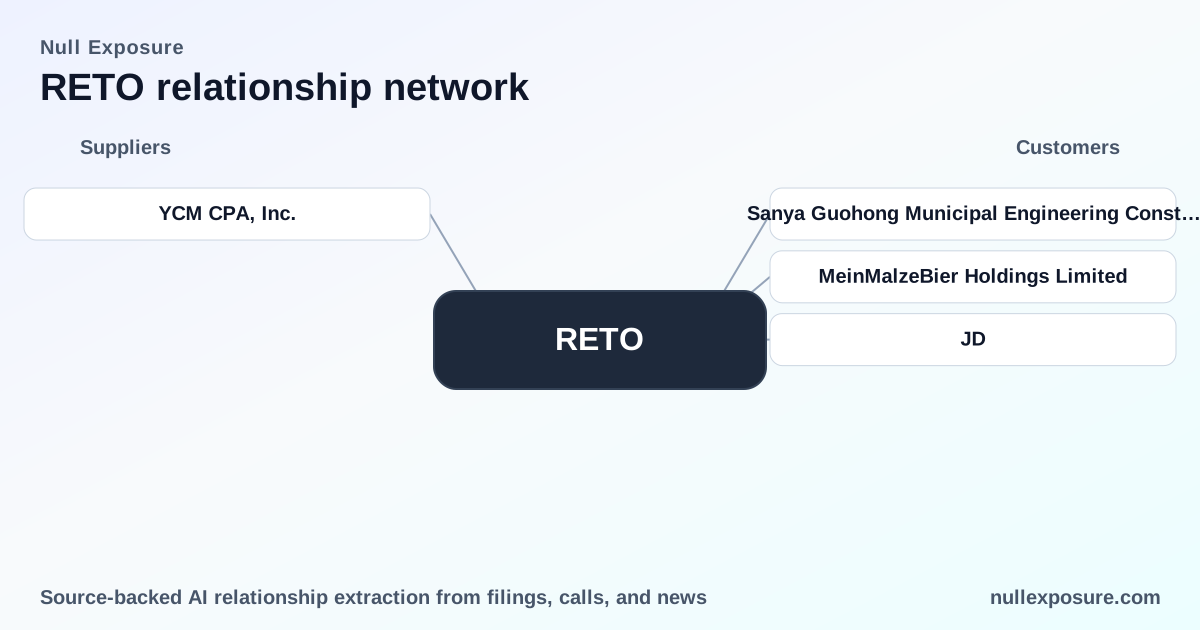
ReTo Eco-Solutions (RETO): Supplier relationships and what they mean for investors
ReTo Eco-Solutions manufactures and distributes building materials in China and monetizes through product sales to wholesale and retail channels, supported by a compact public capital base. The company’s operating cash flow profile is small relative to its balance sheet volatility: Revenue TTM $2.11M, gross profit $677.98K, and materially negative operating and net results, which makes supplier relationships and service contracts operationally important but not revenue-driving in scale.
If you are evaluating ReTo as a trade partner or counterparty, focus on financial reporting continuity, short-term vendor contracting, and cash-flow sensitivity. For a quick enterprise view or to benchmark supplier exposure across peers, visit the NullExposure homepage: https://nullexposure.com/.
A compact, loss-making materials business with concentrated public interest
ReTo is a China-headquartered building materials manufacturer listed on NASDAQ (RETO). Key public financials through the quarter ended 2025-09-30 show Price-to-Book of 0.052, Price-to-Sales ~0.75, and a market capitalization under $2 million, alongside a negative EBITDA and extremely depressed EPS. According to company financials for the trailing twelve months, operating margin is -1.33 and return on equity is -38.3%, which signals that supplier and professional services contracts that stabilize reporting and compliance are higher priority than large-scale procurement commitments. These figures are drawn from the company’s public financial summary through 2025-09-30.
- Commercial implication: A small public capitalization and persistent losses concentrate risk around liquidity, payment cycles, and dependency on short-term professional services rather than long-term procurement contracts.
- Operational implication: Suppliers that provide essential compliance, audit, or financial services command outsized strategic importance relative to their spend because interruptions threaten reporting and listing continuity.
What the records show: every supplier relationship in our coverage
The dataset for ReTo returns one supplier/service relationship.
YCM CPA, Inc. A press release distributed via The Globe and Mail on March 10, 2026 notes that ReTo scheduled its 2025 annual shareholder meeting and included ratification of YCM CPA, Inc. as the independent accounting firm on the agenda. This indicates an annual engagement and the normal corporate governance process for auditor ratification (Globe and Mail press release, March 10, 2026: https://www.theglobeandmail.com/investing/markets/stocks/RETO-Q/pressreleases/35731738/reto-eco-solutions-schedules-2025-annual-shareholder-meeting/).
Why the YCM CPA relationship matters for investors and operators
An auditor relationship is not a procurement line-item in the supply chain sense, but it is mission-critical for a listed microcap. Ratification of YCM CPA as independent accountant signals continuity in financial reporting processes; loss or change of auditor for a small, loss-making company can trigger regulatory scrutiny, restatements, or delays in filings that materially affect trading liquidity and counterparty confidence.
- Contracting posture: Auditor engagements are typically annual and subject to shareholder ratification; expect a short, recurring contracting horizon rather than a multi-year lock.
- Concentration and criticality: While the spend is modest relative to manufacturing costs, the criticality is high—auditor continuity supports listing status and creditor/supplier confidence.
- Maturity: The presence of a named independent accounting firm on the AGM agenda signals basic governance maturity necessary for a NASDAQ-listed issuer.
Company-level constraint signals and what they mean for supplier relationships
There are no supplier-level constraints returned in the public feed for this review. As a company-level signal, the absence of reported supplier constraints suggests limited disclosed dependency risk in external records, though that is an information-level observation rather than proof of low operational concentration.
- Implication for contracting posture: Expect ReTo to favor short, renewable contracts that preserve liquidity flexibility and allow rapid renegotiation if working capital tightens.
- Implication for concentration: Given the company’s scale and negative margins, supplier concentration is likely to be low in dollar terms but high in operational significance for professional services.
- Maturity signal: Public transparency about auditor ratification is a governance positive; however, the firm’s financial distress metrics indicate supplier negotiations will be dominated by cashflow management.
For supplier risk benchmarking, NullExposure aggregates these governance and supplier signals to help prioritize engagements: https://nullexposure.com/.
Risk factors investors should treat as immediate priorities
- Liquidity and counterparty risk: Negative EBITDA and extreme EPS loss rates materially raise the probability of delayed supplier payments and renegotiated terms.
- Governance dependency: Auditor continuity is a high-impact control; disruptions could amplify market illiquidity and investor uncertainty.
- Concentration of investor base: Minimal institutional ownership and a tiny free float increase volatility and reduce disciplined capital support in a stress event.
These are not theoretical: ReTo’s market capitalization and trailing metrics position the company as a small public enterprise where operational frictions have outsized market effects. Investors and counterparties should structure engagements with payment protections, short contracting horizons, and robust compliance triggers.
Practical next steps for investors and operators
- For counterparties: insist on credit visibility (recent bank confirmations or cashflow statements) and contract clauses that address delayed payment scenarios.
- For investors: prioritize governance monitoring—watch annual meeting outcomes and auditor ratifications as leading indicators of reporting stability.
- For research teams: track short-term filing timelines and any auditor changes as immediate risk signals.
For a consolidated view of supplier and governance profiling across small-cap issuers, see NullExposure’s supplier intelligence hub: https://nullexposure.com/.
ReTo’s single traceable supplier relationship in public coverage—an independent accountant ratification—highlights how, for microcap manufacturers, professional services often carry outsized strategic weight relative to procurement spend. Use governance milestones and liquidity metrics as the primary levers when evaluating counterparty risk or supplier exposure for RETO.