Rafael Holdings (RFL): Who Rafael Hired, Who Runs the Rights Offering, and What That Means for Supplier Risk
Rafael Holdings operates as a hybrid real‑estate and pharmaceutical holding vehicle: it owns commercial real estate assets while holding equity and contractual interests in preclinical and clinical‑stage pharmaceutical companies. The company monetizes through asset management, strategic mergers and corporate transactions (including spin‑ups and rights offerings), and the downstream economics of licensed drug candidates (maintenance payments and low‑single‑digit royalties when commercialized). Recent corporate activity has been adviser‑driven and capital‑focused, not revenue driven; Rafael reported trailing twelve‑month revenue of $1.029 million and negative EBITDA of $31.254 million as of the latest quarter ending 2026‑01‑31. For a compact, investor‑grade view of Rafael’s counterparty map, visit https://nullexposure.com/.
Transaction advisers and counsel set the orchestration tone
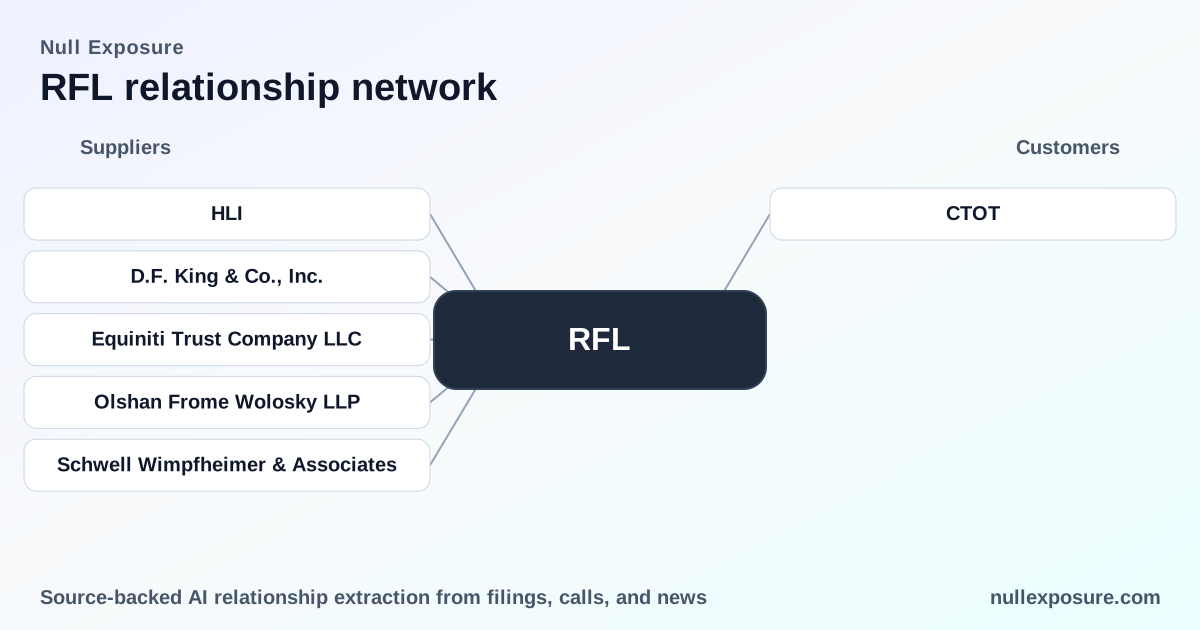
Rafael’s recent strategic moves were executed with heavyweight advisory and legal support, which signals a transactional management posture rather than an operating‑first posture. Houlihan Lokey was retained as the sole financial adviser to Rafael’s independent special committee in the strategic merger that refocused parts of the business into a late‑stage oncology company. According to a PR Newswire release in March 2026, Olshan Frome Wolosky LLP served as legal counsel to that independent special committee while Schwell Wimpfheimer & Associates served as Rafael’s legal advisor in the transaction — a conventional split that isolates conflicts and preserves deal optionality.
Rights offering mechanics and shareholder servicing
Rafael ran a rights offering to support development programs and engaged external vendors to execute it. D.F. King & Co., Inc. was engaged as the Information Agent for the rights offering, handling investor communications consistent with standard capital markets practice (FinancialContent / Pasadena Star‑News, May 2025). Equiniti Trust Company LLC acted as transfer agent for former Cyclo Therapeutics holders, processing letters of transmittal and share exchanges required to establish record ownership ahead of the offering (FinancialContent / Pasadena Star‑News, May 2025). These engagements show Rafael’s preference for specialized third‑party infrastructure for shareholder services and capital‑raising logistics.
Visit https://nullexposure.com/ for a concise supplier map and risk checklist if you are evaluating Rafael relationships.
What the public record names — every supplier and adviser cited
- Houlihan Lokey (HLI): Houlihan Lokey served as the sole financial adviser to the independent special committee in Rafael’s strategic merger transaction. Source: PR Newswire, March 2026.
- Olshan Frome Wolosky LLP: Retained as legal counsel to the independent special committee for the same strategic merger. Source: PR Newswire, March 2026.
- Schwell Wimpfheimer & Associates: Served as legal advisor to Rafael Holdings in the transaction. Source: PR Newswire, March 2026.
- D.F. King & Co., Inc.: Engaged as the Information Agent for Rafael’s $25 million rights offering, handling investor notices and informational materials. Source: FinancialContent / Pasadena Star‑News, May 2025.
- Equiniti Trust Company LLC: Acting as transfer agent, Equiniti processed letters of transmittal and related exchanges for former Cyclo holders to participate in the rights offering. Source: FinancialContent / Pasadena Star‑News, May 2025.
Constraints and the operating model they imply
Rafael’s public disclosures and transaction notices establish a clear set of operating constraints that are actionable for counterparties and investors:
- Outsourced manufacturing and development: Rafael and its portfolio pharmaceutical companies do not own manufacturing or fill‑finish capacity and rely on CROs and CMOs for preclinical, clinical, and potential commercial manufacture. This is a company‑level structural choice that creates high vendor criticality for product timelines and quality control.
- Service‑heavy contracting posture: The business model is built around third‑party service providers for clinical development, consultants, and vendor‑based functions; Rafael consistently uses confidentiality and NDA frameworks to protect intellectual property shared with vendors.
- License obligations and recurring spend: Rafael’s portfolio includes license agreements that require annual maintenance payments and low single‑digit royalties on commercialization; these contractual royalties translate future revenue dependence into present‑day licensing costs.
- Supplier concentration risk: Following Rafael’s Cyclo merger, one major vendor accounted for 38% of R&D expenses for the year ended July 31, 2025, indicating material concentration that elevates single‑counterparty operational risk.
- Role diversity among external partners: Public excerpts tag Rafael’s external relationships across multiple roles — buyer, distributor, licensee, manufacturer, and service provider — reflecting an ecosystem where Rafael contracts across the value chain rather than internalizing functions.
These signals jointly imply a capital‑intensive, outsource‑first operating model with concentrated vendor exposures and significant dependency on specialist advisers and service firms. Investors must price in the operational leverage that comes from outsourcing: vendor failure or a dispute can materially delay clinical programs and increase cash burn.
Investor implications: negotiation posture and due diligence priorities
For investors and operators evaluating Rafael supplier relationships, three practical priorities emerge:
- Prioritize counterparty concentration analysis. The 38% single‑vendor share of R&D indicates material counterparty risk; investors should demand granular spend schedules, contractual cure rights, and contingency plans for vendor replacement.
- Assess contract enforceability and IP protections. Given the reliance on external CMOs/CROs and the presence of license agreements with ongoing payments, robust IP and supply agreements are critical to preserve future royalty streams.
- Evaluate cash runway vs. outsourcing cost. Rafael’s small revenue base ($1.029M TTM) and negative EBITDA underscore the importance of capital markets activity (rights offerings, mergers) to fund outsourced development; advisers and information agents in recent transactions confirm a financing‑centric strategy.
For a practical supplier diligence checklist tied to these priorities, see the tools and templates at https://nullexposure.com/.
Closing takeaways and action items
Rafael Holdings runs a capital‑markets and licensing‑driven model supported by specialized advisers and third‑party vendors. The company’s outsized vendor concentration and full reliance on CRO/CMO/service providers are the defining supplier risks for investors. Legal and financial advisers engaged in the company’s recent transactions validate a governance posture optimized for deals rather than in‑house operational scale.
- If you are evaluating Rafael as a counterparty, demand detailed contractual remedies and an audited vendor spend breakdown.
- If you are evaluating a supplier relationship with Rafael, treat the company as a financing‑dependent client with acute sensitivity to cash flow timing.
For a mapped view of Rafael’s supplier relationships and to download a supplier risk template tailored to RFL, visit https://nullexposure.com/ and see our supplier due diligence resources.