RGC Resources Inc (RGCO) — supplier relationships and contract signals that matter for investors
RGC Resources is a regulated natural gas utility that monetizes by distributing and selling gas to about 62,500 customers in the Roanoke, Virginia area, collecting regulated tariff revenue and passing commodity costs through to customers while funding operations and capital with a mix of long‑term debt and equity. With roughly $98.3M in trailing revenues, a modest dividend yield (3.87%) and an EV/EBITDA around 10.9, the company’s investment case hinges on regulated cash flow stability, long‑dated supplier and financing commitments, and the regulatory treatment of commodity and pipeline costs. For a rapid view of counterparty exposure and contract posture, see NullExposure’s project page: https://nullexposure.com/.
Why supplier relationships define value in a local gas utility
Utilities like RGC Resources operate as nexus points between upstream gas infrastructure and downstream customers. Counterparties that supply, transport, store, or finance gas and capex directly influence margin volatility, credit profile, and regulatory risk. Long‑term contracts stabilize supply and financing costs but concentrate exposure; pipeline or storage counterparties that carry 100% of delivered gas are effectively critical infrastructure vendors whose service posture is a principal operational risk. Investors should evaluate supplier contracts through the lenses of contract tenure, concentration, counterparty credit, and regulatory pass‑through mechanics.
Operating constraints and what they imply for risk and returns
- Long‑term contracting posture. RGC’s disclosure includes a Note Purchase Agreement tied to senior guaranteed notes due in 2034 and pipeline/storage contracts that extend through 2044, signaling multi‑decade commitments on both the financing and physical supply side. These contracts anchor financing costs and supply continuity, reducing short‑term volatility but locking in obligations across multiple regulatory cycles (source: referenced Form 8‑K, August 4, 2014; SEC filings).
- Geographic concentration. The company is a local utility focused on Roanoke and surrounding localities: geographic concentration increases regulatory and demand risk but simplifies network management and rate design (company filings describing Roanoke service area).
- Buyer and service‑provider duality. RGC is both purchaser of transported gas and operator of distribution services — it buys wholesale supply and depends on multiple interstate pipelines and storage providers to move 100% of the gas it ultimately delivers, elevating counterparty criticality without necessarily increasing counterparty diversity (company disclosures).
- Balance‑sheet and spend profile. The presence of a $30.5M senior guaranteed note (original principal) and descriptive spend bands in the $10M–$100M range indicate material but manageable financing commitments relative to a ~ $228M market cap (note purchase agreement cited in filings).
- Maturity and stability trade‑off. Long contract tenors reduce short‑term exposure to price shocks but compress flexibility as the company navigates future regulatory cycles and capital needs.
These constraints operate as company‑level signals: they describe RGC’s operating maturity, capital intensity, contracting posture, and concentration profile rather than pointing to a single supplier unless the contract text names a counterparty.
(Explore counterparty analysis tools and supplier mapping at NullExposure: https://nullexposure.com/.)
What public coverage records about supplier relationships
RGC’s supplier relationship signals in the public record are clustered around professional services for FY2026:
-
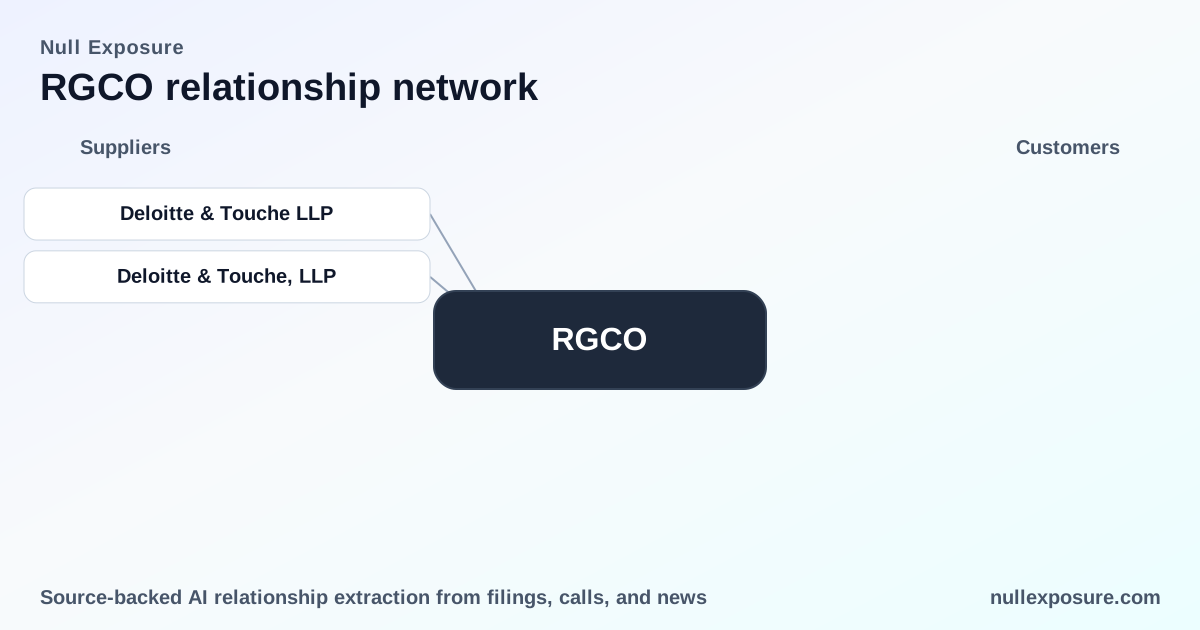
Shareholders ratified Deloitte & Touche LLP as RGC’s independent auditors for the fiscal year ending September 30, 2026, confirming auditor continuity for FY2026 and preserving an external assurance channel for financial reporting. Source: press release published on The Globe and Mail platform (March 10, 2026) — https://www.theglobeandmail.com/investing/markets/stocks/RGCO-Q/pressreleases/37309329/rgc-resources-refreshes-board-and-appoints-new-leadership/.
-
An annual meeting notice also states that shareholders ratified the appointment of Deloitte & Touche, LLP as auditors for fiscal 2026, reflecting identical governance action recorded in the company’s meeting disclosures. Source: GlobeNewswire coverage of the annual shareholders meeting (March 2026) — https://www.theglobeandmail.com/investing/markets/markets-news/GlobeNewswire/36468413/rgc-resources-holds-annual-shareholders-meeting/.
Both items document the same operational relationship—external audit services—captured in multiple public outlets; auditor continuity is a governance signal that feeds into diligence on reporting quality and off‑balance sheet disclosure practices.
What these relationships and constraints mean for investors and operators
- Governance and reporting: Retaining a Big Four auditor such as Deloitte is a positive governance signal; it supports investor confidence in financial disclosure quality and can reduce the risk of material reporting surprises.
- Supply chain criticality: Because interstate pipelines and storage providers transport 100% of delivered gas, service interruption risk is concentrated even if the company sources from multiple pipeline operators; retailers and regulators will prioritize restoration but operators face immediate commercial and reputational consequences if transport fails.
- Financial flexibility and covenant risk: The senior guaranteed note structure and mid‑tens‑of‑millions principal highlights sizable fixed obligations; investors should model interest and redemption schedules against regulated revenue growth and capex requirements.
- Regulatory pass‑through buffers margin risk. As a regulated utility, RGC can pass certain costs to ratepayers, muting some commodity volatility, but rate case timing and regulator decisions remain primary risk levers that can change effective margins.
Bold takeaways: auditor continuity reduces disclosure risk; long‑dated debt and pipeline contracts stabilize operations but concentrate counterparty risk; geographic focus simplifies regulatory relationships while concentrating demand risk.
Practical next steps for asset owners and research teams
- Validate the full list of pipeline and storage counterparty agreements and their expiries; identify any single‑vendor legs that transport 100% of flow and model outage scenarios.
- Map debt maturities and covenants against likely regulatory outcomes and capex—stress test dividend capacity under adverse rate case assumptions.
- Track auditor engagement letters and any audit‑related notes in quarterly filings, as auditor continuity can mask underlying reporting risks.
For a deeper, structured supplier exposure analysis and ongoing monitoring, visit NullExposure and review RGC’s supplier map: https://nullexposure.com/.
Bottom line
RGC Resources is a classic regulated gas utility with stable, long‑dated supplier and financing relationships that trade flexibility for predictability. The ratification of Deloitte for FY2026 underscores standard governance hygiene, while the company’s reliance on pipelines that deliver 100% of its gas and on long‑term notes underscores concentrated operational and financing commitments investors must price. For a tailored counterparty risk briefing and ongoing supplier monitoring, see NullExposure’s intelligence hub: https://nullexposure.com/.