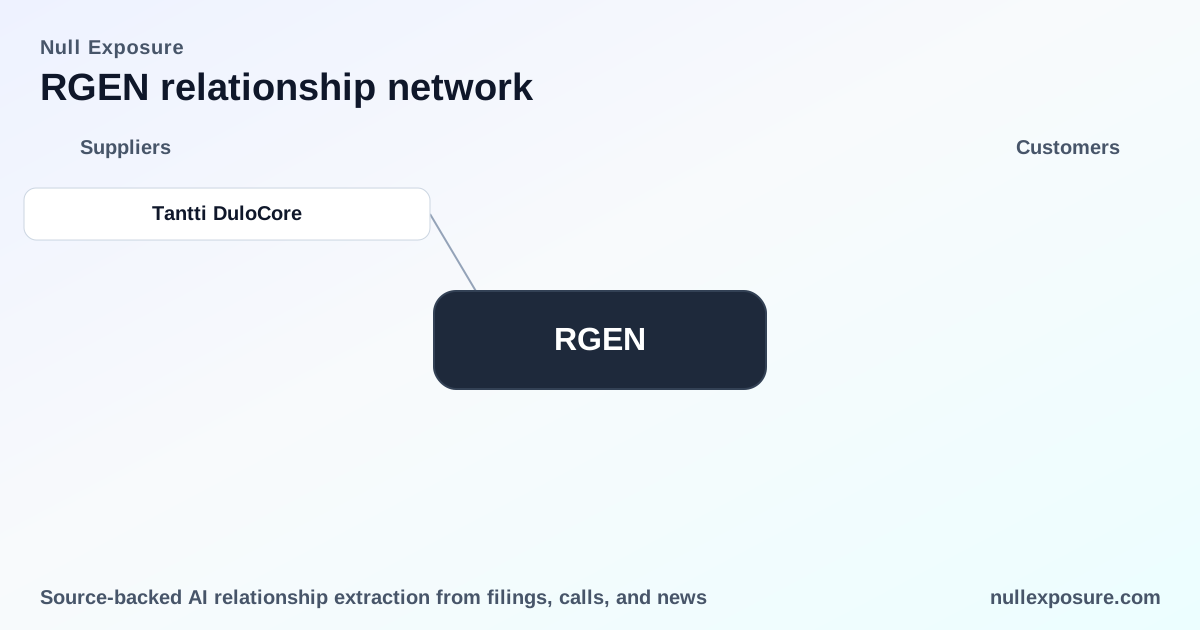
Repligen (RGEN) — Supplier Relationships and Operational Constraints that Drive Bioprocessing Exposure
Repligen monetizes by selling bioprocessing systems, consumables and enabling technologies to biologics manufacturers and contract development/ manufacturing organizations (CDMOs). The company combines high-margin consumables with systems and targeted acquisitions to capture recurring revenue from drug makers scaling upstream and downstream manufacturing. Revenue comes from product sales and service/rental arrangements tied to facility operations, with concentrated spend on facilities and select technology partners that influence operational continuity and margin durability. Learn more on the home page: https://nullexposure.com/
How Repligen’s supplier posture determines investor returns
Repligen is a supplier to a buyer base that prizes reliability and regulatory provenance. That commercial dynamic produces predictable recurring demand for consumables but also creates vendor concentration and medium-term capital commitments tied to leased facilities and purchase obligations. With a market cap around $6.48B and trailing revenue of ~$738M (TTM), the company’s growth rests on selling scalable consumables and accretive acquisitions while managing real estate and contractual obligations that sit squarely in the $10M–$100M range annually.
Key operational signals for investors:
- Contracting posture: combination of product sales and facility leases creates dual supplier/service relationships with counterparties.
- Concentration: significant rental and purchase obligations indicate meaningful fixed-cost exposure tied to physical footprint.
- Criticality: suppliers for process analytics and resin technologies are strategically important for customers’ GMP manufacturing lines.
- Maturity: established revenue base with repeated rental and purchase commitments suggests stable operating scale.
If you want a consolidated view of supplier relationships and constraints for procurement or counterparty risk analysis, visit https://nullexposure.com/ for tailored analytics.
What the public records say about named counterparties
The dataset of public references and filings points to a small set of named counterparties and expense categories that matter to operations and margins. Below are concise, plain‑English summaries of every relationship captured in the public results.
Tantti DuloCore (news mention)
Repligen’s resin partners include technologies using Tantti DuloCore base bead technology for convective flow; press coverage highlighted these resins in the context of bioprocessing leadership and order growth trends. According to an InsiderMonkey article published March 10, 2026, reports cited this base bead tech as a component of resins used in convective flow applications that intersect Repligen’s market position. (InsiderMonkey, March 10, 2026: https://www.insidermonkey.com/blog/ubs-tags-repligen-rgen-as-bioprocessing-leader-for-2026-cites-20-order-growth-and-reshoring-tailwinds-1679333/?amp=1)
908 Devices (seller relationship from company filing)
Repligen executed a Securities and Asset Purchase Agreement with 908 Devices on March 4, 2025 to acquire a desktop portfolio of four devices used in process analytical technology (PAT), indicating strategic M&A to broaden instrumentation capabilities and accelerate sales of integrated process analytics systems. This is recorded in Repligen’s disclosures around the March 2025 transaction. (Company filing, March 4, 2025)
Spectrum LifeSciences / Roy Eddleman Living Trust (service provider / related party lease)
Certain Spectrum facilities are leased from the Roy Eddleman Living Trust, which owned more than 5% of Repligen’s shares as of the 2024 disclosure; rent expense related to these leases was approximately $0.6–$0.7M per year in 2022–2024, reflecting a low-single-digit share of total rental expense. The company discloses these amounts and the related-party status in its 2024 filings. (Company filing, 2024 annual disclosures)
Constraints that shape vendor risk and contracting posture
The filings and public references show a blend of geographic breadth, material facility expense, and specific seller/service-provider roles that should inform procurement and investor diligence.
- Geographic footprint: filings reference Sweden (EMEA) and U.S. headquarters activity (NA), signaling multinational payroll and benefits administration as well as cross-border operational dependencies. The Sweden disclosure identifies contributions to a government‑mandated occupational pension plan administered by a third‑party specialist. (Company filing, 2024)
- Facility spending concentration: total rental costs for all facilities were disclosed at $28.8 million for the year ended December 31, 2024, and other purchase obligations were approximately $31.0 million payable within 12 months, indicating meaningful fixed commitments in the $10M–$100M spend band that underpins operations and constrains flexibility. (Company filing, 2024)
- Contract roles: Repligen acts as both buyer and seller—the company purchased a PAT device portfolio from 908 Devices (seller role) while paying third parties (including related parties) for facility leases and pension administration (service provider role). These dual roles increase counterparty complexity but also expand control over integrated solutions. (Company filings, 2024–2025)
- Spend cadence: discrete line items such as related-party rent in the $0.6–$0.7M range exist alongside large aggregate lease and purchase obligations; this mix produces predictable short-term cash outflows and medium-term capital commitments. (Company filing, 2024)
These constraints are company-level signals that reflect operational maturity and contractual leverage. Investors should treat facility leases and purchase obligations as recurring structural costs that reduce free cash flow flexibility during downturns.
Operational and strategic implications for investors
- Margin resilience: Repligen’s gross profit ($388.7M TTM) and operating margin (8.26% TTM) are supported by consumable recurring revenue, but facility and purchase commitments require constant top-line growth to maintain margin expansion.
- M&A as a growth vector: the 908 Devices purchase demonstrates a strategy of acquiring targeted instrument portfolios to broaden product suites and cross-sell into existing channels.
- Supplier concentration risk: reliance on a limited number of specialized technology partners (e.g., resin base bead suppliers) increases single‑point vulnerabilities in supply chains; operational continuity could be impacted if counterparties face production or regulatory issues.
- Governance and related-party oversight: related-party leases tied to a significant shareholder require monitoring for arm’s-length terms; rent expenses are small in isolation but part of broader facility spending. The company’s 2024 disclosures provide transparency on these arrangements.
If you need a tailored counterparty risk report or a supplier map for procurement stress-testing, explore our services at https://nullexposure.com/.
Investor takeaway and next steps
Repligen combines high-margin consumables with targeted acquisitions and facility commitments; this hybrid model offers steady recurring revenue but requires careful monitoring of lease obligations, purchase commitments, and critical supplier relationships. The 2024–2025 filings show deliberate expansion into process analytics (908 Devices) and an operational footprint spanning NA and EMEA with material facility spend. For investors, the path to upside is clearer if the company sustains order growth and successfully integrates acquired instrument portfolios while keeping fixed costs in check.
To review Repligen’s supplier exposures in a single view or to commission a custom diligence brief, visit https://nullexposure.com/ and contact our analyst team.