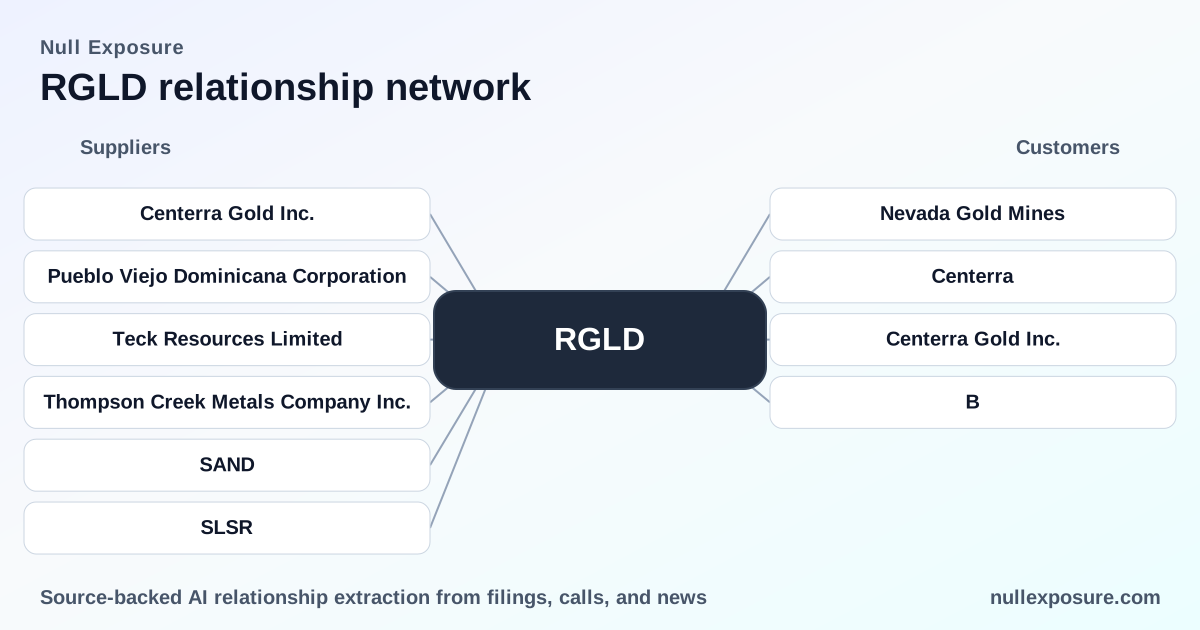
Royal Gold (RGLD): an investor view on supplier and counterparty relationships
Royal Gold acquires and manages precious‑metal streams and royalties, monetizing by purchasing future metal production rights (often for an upfront payment) and then buying a contracted portion of production at below‑market prices or receiving royalty cash flows. The business model is long‑dated, cash‑flow driven and highly dependent on contract durability and the operating health of a small set of material mines. For investors and operators, the relevant question is whether those counterparty links are stable, diversified across jurisdictions, and backed by long‑term commercial terms. Learn more about how we surface supplier and counterparty intelligence at the source: https://nullexposure.com/.
Quick read: what matters for RGLD’s economics
Royal Gold generates most revenue from streams and royalties, which are non‑operating, contract‑based cash flows rather than mined production. The 2024 Form 10‑K shows streams accounted for roughly two‑thirds of revenue (67% in 2024) and that a handful of stream/royalty interests are material to results — a concentration profile investors must price into valuation and risk. Royal Gold funds and expands that portfolio through one‑off purchases (the company disclosed acquisitions in excess of $100 million), reinforcing a long‑term contracting posture and a capital‑intensive growth profile.
If you want the complete supplier relationship picture for diligence and scenario planning, start here: https://nullexposure.com/.
Relationship-by-relationship: what to know today
Below I cover every counterparty mentioned in Royal Gold’s referenced materials, with a concise, plain‑English summary and the supporting source.
Centerra Gold Inc.
Royal Gold’s 2024 10‑K references news releases issued by Centerra Gold dated February 14, 2024, indicating open communication channels and shared public updates between operator and royalty holder. This citation in the Form 10‑K signals that operator disclosures at Centerra are material to Royal Gold’s reporting flow. (Source: Royal Gold 2024 Form 10‑K, FY2024)
Pueblo Viejo Dominicana Corporation (PVDC)
Royal Gold’s 10‑K cites PVDC commissioning a 218‑megawatt Wartsila combined‑cycle reciprocating engine power plant at the Pueblo Viejo complex — a direct infrastructure development note for a company‑identified material property. That disclosure matters because Pueblo Viejo is explicitly listed among the stream/royalty interests deemed material in Royal Gold’s 2024 filing. (Source: Royal Gold 2024 Form 10‑K, FY2024)
Teck Resources Limited
The filing references Teck’s Annual Information Form (dated February 23, 2024) attached to Teck’s 40‑F, showing Royal Gold’s reliance on third‑party operator filings (Teck) for background and due diligence on assets it has exposure to in Canada. Royal Gold leverages operator filings to validate reserves, production and project status on assets that underpin royalties or streams. (Source: Royal Gold 2024 Form 10‑K, FY2024)
Thompson Creek Metals Company Inc.
Royal Gold’s 10‑K references the Amended and Restated Purchase and Sale Agreement dated December 14, 2011 between Thompson Creek (an indirect subsidiary of Centerra) and RGLD Gold. Under the related Milligan Stream Agreement, Royal Gold owns the contractual right to purchase a defined percentage of payable gold and copper from Mount Milligan, reflecting a multi‑decade commercial link. (Source: Royal Gold 2024 Form 10‑K, FY2024)
Sandstorm (SAND)
A TradingView news piece (March 10, 2026) noted Royal Gold’s Q4 upside was driven in part by contributions from the Kansanshi stream and Sandstorm‑linked assets, signaling that third‑party streaming and minority‑owned assets can influence Royal Gold’s quarterly performance. This is a market‑coverage note that highlights cross‑owner production effects on Royal Gold’s revenue. (Source: TradingView / Zacks summary, March 10, 2026)
Solaris Resources (SLSR)
A TradingView news item (March 10, 2026) reported Royal Gold entered a gold purchase agreement with Solaris Resources for the Warintza Project, indicating Royal Gold continues to transact new purchase agreements to grow its stream book, including deals in early‑stage projects that carry development and execution risk. (Source: TradingView news summary, March 10, 2026)
What the contract and constraint signals tell investors
Royal Gold’s public disclosures and the relationships above collectively create a clear operating profile:
-
Contracting posture: long‑term and structured. Royal Gold’s core product is long‑dated metal purchase agreements and royalty deeds. The 10‑K explicitly describes long‑term offtake/stream agreements (for example, the Andacollo long‑term offtake agreement), and a metal stream is defined in the filing as an upfront payment for life‑of‑mine purchase rights. These contract terms lock in cash flows but also lock Royal Gold to operator execution risk. (Company signal: Royal Gold 2024 Form 10‑K)
-
Concentration and criticality: concentrated but cash‑generative. Streams accounted for 67% of 2024 revenue, and four interests (Andacollo, Cortez, Mount Milligan, and Pueblo Viejo) were named as material; a small number of assets drive a large portion of revenue, amplifying single‑asset operator risk. (Company signal: Royal Gold 2024 Form 10‑K)
-
Geographic footprint: North America and LatAm exposure. The firm lists material properties in Canada, Chile, the Dominican Republic and the U.S., implying jurisdictional diversification but persistent exposure to Latin American projects and North American operations which have different political and operational risk profiles. (Company signal: Royal Gold 2024 Form 10‑K)
-
Relationship role and maturity: buyer of metal streams, production‑stage orientation. Royal Gold behaves as a buyer of physical metal streams and royalties, often securing life‑of‑mine rights; many principal properties are production stage, giving near‑term cash visibility but requiring ongoing monitoring of operator performance. (Company signal: Royal Gold 2024 Form 10‑K)
-
Deal size and capital intensity: material single transactions occur. The company noted acquisitions totaling roughly $106 million for specific interests, showing the ability and willingness to deploy nine‑figure sums for portfolio growth. (Company signal: Royal Gold 2024 Form 10‑K)
If you need a deeper counterparty map and term‑level breakdowns for modeling downside scenarios and recovery timing, our platform aggregates these filings and news flows into investor‑grade relationship dossiers: https://nullexposure.com/.
Investment implications: how operators and allocators should think
Royal Gold is a yield‑plus‑option business: it buys contracted metal at favorable prices and benefits from upside in metal prices and operator production growth, but it is exposed to a handful of operators and jurisdictions. For portfolio construction, prioritize: (1) scenario modeling for the four named material assets; (2) governance and transparency of operator counterparties (how timely and reliable are operator filings and press releases); and (3) capital allocation cadence — Royal Gold’s buy‑and‑hold model reduces reinvestment volatility but intensifies due diligence on any new purchase targets.
Ready to convert relationship intelligence into investment action? Visit https://nullexposure.com/ for the full supplier and counterparty view.
Bottom line
Royal Gold’s economics rest on durable contracts with a concentrated set of operator partners; those contracts provide strong cash‑flow visibility but concentrate counterparty and jurisdictional risk. Investors should treat Royal Gold as a credit‑sensitive, asset‑specific cash‑flow vehicle rather than a diversified bullion producer, and stress‑test models around operator performance and regional political dynamics.
For transaction‑level summaries, comparative counterparty scoring, or integration into financial models, start here: https://nullexposure.com/.