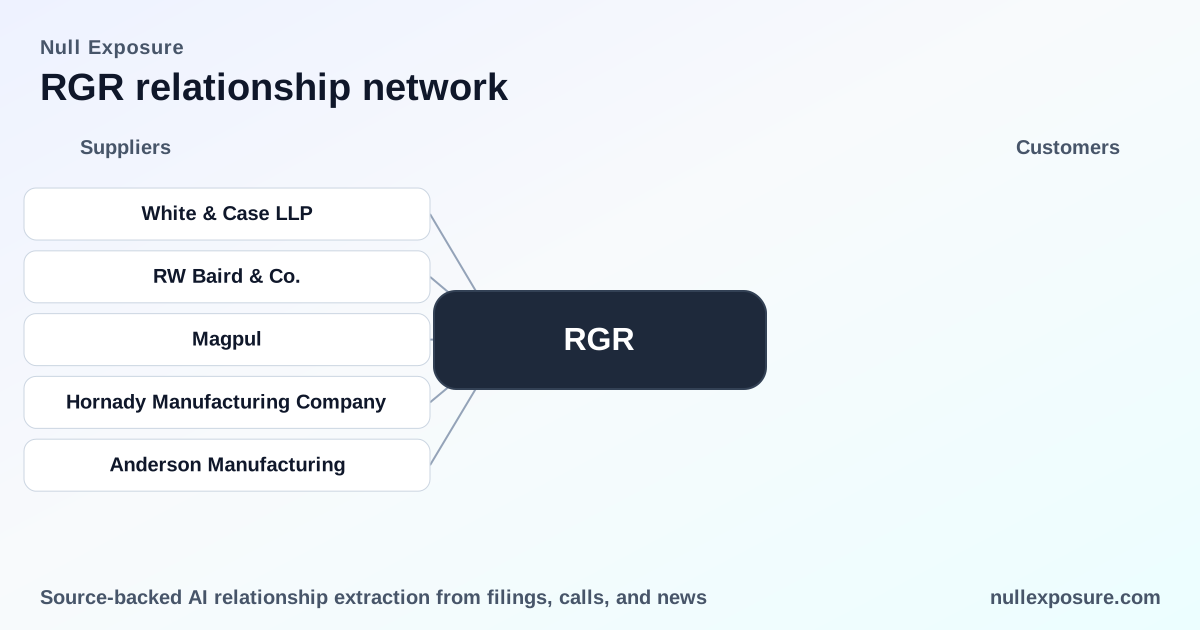
Sturm Ruger & Company (RGR) — supplier relationships that move product to market
Sturm Ruger designs, manufactures and sells firearms under the Ruger brand and monetizes primarily through the sale of firearms and related accessories to civilian and institutional buyers; management supplements organic growth with strategic acquisitions and product launches that leverage third‑party component and service relationships. Investors should evaluate supplier linkages not as incidental vendors but as operational levers that drive product features, launch cadence, and distribution reliability. For a full dossier on supplier exposures and third‑party relationships, visit https://nullexposure.com/.
How Ruger contracts and where dependence concentrates
Ruger operates a classic manufacturing outsourcing posture: the company internalizes core design and final assembly while sourcing raw materials, component castings, and logistics from third parties. The company filing language cited in public disclosures indicates Ruger relies on external suppliers for fabricated steel components, hardwood stocks (walnut, birch, beech, maple), metal alloys, synthetic parts and other inputs. Separately, Ruger relies primarily on third parties for transportation of finished goods and inbound raw materials — a company‑level signal that logistics vendors are operationally material to fulfillment.
- Contracting posture: Ruger uses supplier contracts for commodity inputs and specialized accessory components rather than full vertical integration.
- Concentration: Public excerpts do not name a dominant single supplier for commodity inputs; however, logistics reliance creates a vector for concentrated operational risk if a single carrier account becomes constricted.
- Criticality: Components and ammunition partnerships influence product features and go‑to‑market timing; contract relationships are therefore operationally critical.
- Maturity: Relationships range from long‑standing commodity supply to recent strategic acquisitions (see Anderson Manufacturing), indicating a mix of mature supply lines and evolving integration.
Supplier relationships — the complete list and what each partner does
Below I cover every relationship identified in the available signals, with concise, source‑referenced summaries for each partner.
White & Case LLP
White & Case serves as Ruger’s legal advisor in corporate matters tied to defensive governance actions, including the adoption of a limited‑duration stockholder rights plan disclosed around FY2025; this role positions the firm as counsel on corporate governance and transaction defenses. According to a company release distributed on The Outdoor Wire (March 2026) and related filings from October 2025, White & Case acted as legal advisor to Ruger.
RW Baird & Co.
RW Baird is acting as Ruger’s financial advisor in the same governance and defensive transaction context, supporting board strategy and financial structuring related to the stockholder rights plan adopted in FY2025. The Outdoor Wire reported the advisory role in March 2026, and the October 14, 2025 businesswire filing also documents RW Baird’s engagement.
Magpul
Magpul supplies accessory hardware used on new Ruger product lines, including PMAG magazines, MOE‑K2 grips, and DT carbine stocks for the Ruger Harrier rifle series, thereby influencing product ergonomics and aftermarket compatibility. Ruger’s January 2026 product announcement and a hands‑on review noted inclusion of Magpul components (The Outdoor Wire, January 2026; Hook & Barrel review, FY2026).
Hornady Manufacturing Company
Hornady supplied ammunition tied to the launch of the Marlin Trapper Series Model 1894 in 10mm Auto, with Ruger coordinating model introduction to align with Hornady’s LEVERevolution 10mm Auto ammunition release; this partnership ties product launch timing to ammunition availability. The launch was publicized in Ruger’s FY2025 press materials on The Outdoor Wire.
Anderson Manufacturing
Ruger acquired Anderson Manufacturing (Hebron, Kentucky), integrating the maker of certain receivers and components into its manufacturing footprint; the acquisition expands Ruger’s in‑house manufacturing capabilities while retaining Anderson’s established product lines. Industry coverage in FY2026 discusses the acquisition and subsequent product development tied to Anderson Manufacturing.
Why these relationships matter to investors and operators
Each relationship has distinct implications for margins, product differentiation and operational resilience.
- Advisory relationships (RW Baird, White & Case) are material to governance and strategic defense — they indicate a board prepared to defend shareholder structure and negotiate complex transactions, which investors value for downside protection.
- Component partners (Magpul, Hornady) directly influence product appeal and time‑to‑market; Magpul‑branded parts and Hornady ammunition tie Ruger offerings to well‑known accessory ecosystems, improving consumer acceptance and resale value.
- The Anderson acquisition signals deliberate vertical integration where Ruger judges internalizing manufacture will lower cost or secure supply for strategic components.
These dynamics create a mixed picture: strategic acquisitions reduce dependence on external manufacturers, while the continued use of third‑party logistics vendors sustains an external operational dependency that must be managed.
For more detailed supplier exposure mapping and relationship analysis, see the firm’s profile at https://nullexposure.com/.
Key risk and opportunity takeaways for investors
- Opportunity: Partnerships with recognized accessories and ammunition brands accelerate product adoption and support premium positioning for new model launches.
- Operational risk: Dependence on third‑party transportation and multi‑tier suppliers for raw materials introduces potential disruption risk, especially for time‑sensitive launches.
- Governance protection: Engagement of RW Baird and White & Case signals proactive corporate defense capability, reducing risk of hostile action that could erode strategic focus.
Mid‑analysis action: if you are benchmarking supplier concentration or evaluating takeover‑defense posture, review Ruger’s public releases and governance filings for the full legal and financial advisory terms at https://nullexposure.com/.
How to monitor these relationships going forward
Investors should track three signals quarterly: (1) product announcements that name accessory partners or ammunition tie‑ins, (2) procurement or manufacturing disclosures that shift inputs in‑house, and (3) filings and press releases that update advisory engagements or governance measures. These signals move from descriptive to causal when tied to revenue timing and gross margin changes in quarterly results.
Conclusions and investor next steps
Ruger’s supplier topology combines strategic third‑party partnerships for product differentiation with selective vertical integration via acquisitions. This hybrid model preserves product agility while steadily building manufacturing resilience, but it keeps logistics and supplier management as active risk vectors. For a deeper, transaction‑level view of these supplier links and ongoing monitoring, visit https://nullexposure.com/ — use the platform to align supplier intelligence with investment theses and operational audits.
Final note: monitor upcoming quarterly reports and press releases for updates to the relationships listed above, as changes in supplier or advisor engagement will have direct implications for launch timing, margin performance, and governance dynamics.