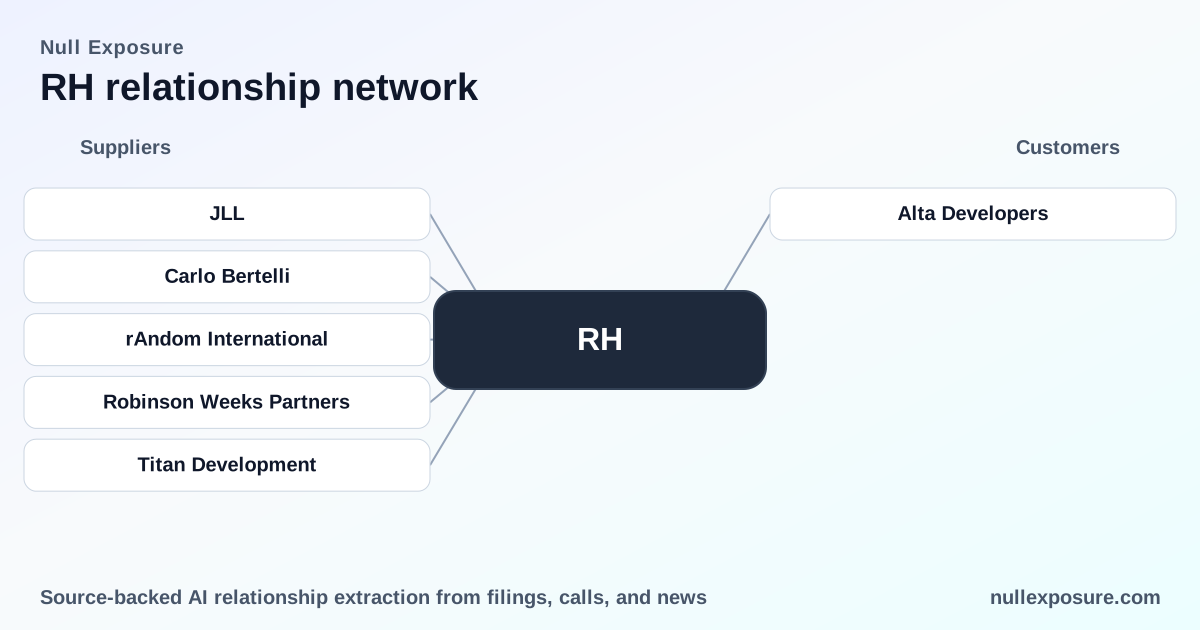
RH: Supplier Relationships and Operational Constraints — A strategic read for investors
RH is a high-end home furnishings retailer that monetizes primarily through the sale of goods across its retail galleries, outlets and direct fulfillment channels; the company sources globally, operates owned and third‑party distribution capacity, and carries material real‑estate commitments that affect operating leverage. With roughly $3.41B in trailing revenue and $1.52B in gross profit, RH’s operating model is driven by global procurement concentration, physical retail and distribution footprint, and lease-driven occupancy costs that create both scale advantages and fixed-cost sensitivity. For a structured view of RH’s supplier and partner map, see https://nullexposure.com/.
Why supplier relationships matter for RH’s economics
RH’s income statement is a function of procurement cost, inventory turns and real‑estate commitments. 72% of product dollar volume is sourced from Asia, which concentrates supplier exposure and logistics risk, while the company’s fulfillment centers and evolving European distribution channel create operational optionality but also execution risk. Lease structures include long-term commitments, short-term leases not capitalized, and percentage‑rent clauses tied to retail sales, a mix that amplifies operating leverage when retail performance is strong and creates downside when traffic softens.
- Key drivers: concentrated APAC sourcing (Vietnam, China, Indonesia, India), owned fulfillment centers in the U.S., one third‑party distribution center in Europe, and a large share of leased retail/distribution space.
- Risk vectors: supplier concentration in Asia, percentage-based rent exposure, and real‑estate concentration for flagship galleries.
For an integrated supplier risk map and supplier relationship intelligence, visit https://nullexposure.com/.
Contracting posture and structural constraints
The corporate disclosures and relationship evidence give a clear picture of contract types and sourcing geographies that shape risk and execution:
- RH reports material long‑term lease obligations on its balance sheet, signaling committed occupancy costs that drive fixed operating leverage.
- The company also recognizes short‑term leases (under 12 months) as period expense, which provides some flexibility for transient or pop‑up locations.
- Several leases include usage‑based (percentage) rent tied to retail sales, linking landlord economics directly to RH’s top‑line performance.
- Geographic concentration of procurement is a company‑level signal: 72% of purchase dollar volume originated in Asia for fiscal 2024 (35% Vietnam, 23% China), with 18% from North America and 10% from Europe and other countries.
- Role signals: RH acts principally as the buyer (purchaser of finished goods), operates as a distributor through owned fulfillment centers and a third‑party European center, and engages service providers for cybersecurity and specialized functions.
These constraints indicate a blend of committed real‑estate exposure and supplier concentration that increases operating leverage but benefits from scale advantages in logistics and buying power.
Supplier and partner relationships: what the record shows
Below are the relationships surfaced in available reporting, each paired with a concise business context and source.
JLL — JLL’s Kyle Mueller represented RH in a lease transaction for warehouse space in Schertz, Texas, evidencing RH’s active leasing of distribution capacity as it scales U.S. fulfillment footprint. According to a ConnectCRE report on March 10, 2026, the broker role confirms RH’s use of national commercial real‑estate advisors for industrial leasing.
Carlo Bertelli — RH sources luxury bedding and textiles from artisanal European houses, including goods tied to Italian atelier leadership under Carlo Bertelli, illustrating RH’s procurement of high‑end, small‑batch suppliers to support its premium positioning. An archived New York Times Magazine piece from October 3, 2013 described RH’s sourcing relationships with third‑generation atelier suppliers.
rAndom International — The company commissioned immersive art projects such as the Rain Room by rAndom International, a brand‑building partnership that leverages cultural programming to drive experiential traffic to RH’s galleries. The New York Times Magazine archive (October 3, 2013) noted that RH commissioned rAndom International’s Rain Room installation.
Robinson Weeks Partners — Robinson Weeks Partners executed leases at Enterprise Industrial Park (EIP) in Schertz with RH, confirming RH’s tenancy in speculative Class A industrial development and its strategy of leasing distribution space in growth markets. ConnectCRE coverage (March 10, 2026) reported the executed lease between RH and Robinson Weeks Partners.
Titan Development — Titan Development partnered with Robinson Weeks Partners on the Schertz development and executed a lease with RH at Enterprise Industrial Park, indicating RH’s use of new speculative logistics capacity to expand or reconfigure its supply chain footprint. ConnectCRE reporting (March 10, 2026) listed the Titan Development lease with RH.
How these relationships translate to operational reality
The mix of professional real‑estate brokers/developers and artisan suppliers compresses RH’s supplier universe into two operating themes:
- Real‑estate and logistics partnerships (JLL, Robinson Weeks Partners, Titan Development) are core to distribution scalability and inventory flow, and they anchor RH’s ability to shorten lead times to market. These relationships confirm an active strategy of leasing purpose‑built industrial space rather than solely relying on legacy facilities.
- High‑end artisan and cultural partnerships (Carlo Bertelli, rAndom International) are marketing and procurement levers that underpin RH’s premium brand and product differentiation, supporting higher gross margins on select categories.
Investment implication: real‑estate relationships and lease structures are high‑impact to cash flow given RH’s long‑term lease obligations and percentage‑rent provisions; supplier concentration in Asia is an ongoing sourcing risk requiring monitoring.
For a closer look at how supplier relationships affect financial exposure and to map counterparties, visit https://nullexposure.com/.
Operational and credit considerations for investors
Investors and operators should treat RH’s supplier footprint and lease profile as central to valuation and risk:
- Concentration risk: 72% APAC sourcing exposes RH to trade, shipping and regional labor disruptions. Procurement stress in Vietnam or China would transmit quickly to margins and availability.
- Lease-driven leverage: long‑term leases and percentage rents amplify earnings volatility—strong retail execution rewards scale, while downturns produce fixed‑cost pressure.
- Distribution maturity: owned U.S. fulfillment centers improve margin capture and customer fulfillment control; the European third‑party center indicates measured international expansion without full capital commitment.
- Brand‑driven sourcing: artisan suppliers and commissioned cultural projects are strategic differentiators that support pricing but are not substitutes for scale sourcing in core categories.
Actionable takeaways and next steps
- Monitor RH’s lease maturity schedule and percentage‑rent exposure in filings to quantify real‑estate cash flow risk.
- Track shipping cost and lead‑time trends out of Vietnam and China; a small shift in input costs will have outsized margin impact given sourcing concentration.
- Evaluate RH’s tenant relationships with developers in growth industrial markets as signals of distribution expansion or realignment.
For an investor‑grade supplier risk report and to see the full relationship map, visit https://nullexposure.com/.