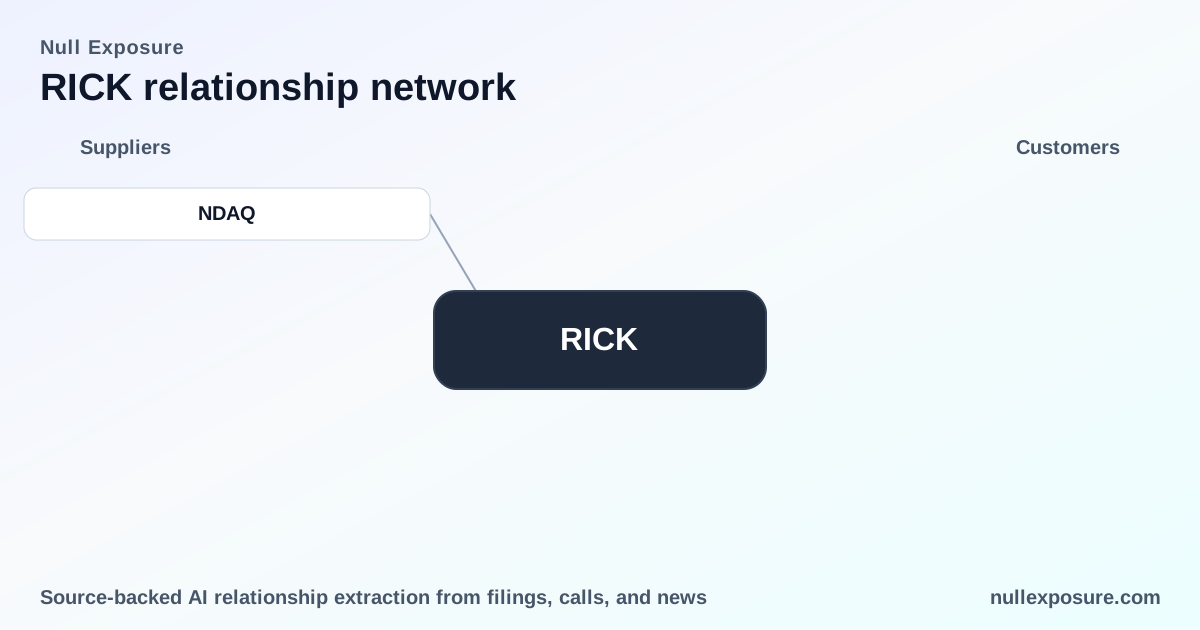
RCI Hospitality (RICK) — Supplier Relationships and Operational Constraints
RCI Hospitality operates a portfolio of venue-based hospitality businesses and monetizes through on-premise food, beverage and merchandise sales, venue services, and related hospitality services that generate recurring point-of-sale revenue and periodic capital spend for fit-out and maintenance. For investors, the supplier profile matters because vendor cost, maintenance uptime and payment-platform continuity directly influence margins and guest throughput at the venue level. Explore supplier exposures and operational constraints before sizing an investment or counterparty relationship. For further due diligence, visit https://nullexposure.com/.
The Nasdaq notice: a regulatory relationship that matters now
On January 30, 2026, Nasdaq notified RCI that the company is not in compliance with Listing Rule 5250(c)(1) for failing to file its Form 10‑K for the fiscal year ended September 30, 2025. TradingView reported the notice and linked the Nasdaq action to the missed filing, creating near‑term governance and market‑access risk for the company. (TradingView / Nasdaq notice, FY2026).
Why this matters to suppliers and investors: an exchange compliance notice elevates counterparty risk because it can precipitate trading restrictions, reduce liquidity, and increase the probability that vendors demand stricter credit terms or faster payment. Maintain focus on counterparties that depend on RCI for material revenue and monitor the company’s remediation timeline.
Relationships called out in company disclosures
The company’s public filings and related coverage name a concise set of providers that shape operating cost and capital maintenance. Below are the relationships the filings explicitly identify, with plain‑English summaries and source notes.
-
Nasdaq — On January 30, 2026 Nasdaq notified RCI of noncompliance with the listing rule for failing to file its FY2025 Form 10‑K, exposing the company to potential delisting processes and governance scrutiny. (TradingView report referencing Nasdaq notice, FY2026)
-
Nottingham Creations — Nottingham fabricates tables, chairs and furnishings for the Bombshells locations and provides ongoing maintenance; amounts billed collectively from Nottingham and Sherwood Forest were approximately $350,000 in fiscal 2024. (Company filings, fiscal years 2022–2024)
-
Sherwood Forest Creations, LLC — Previously used as a furniture fabricator for Bombshells locations; together with Nottingham, these suppliers accounted for mid‑hundred‑thousand dollar annual spend in recent years, indicating a concentrated but not dominant procurement line. (Company filings, fiscal years 2022–2024)
-
TW Mechanical LLC — Provided plumbing and HVAC services both to the third‑party general contractor and directly to RCI during fiscal 2022–2024, establishing it as a recurring facilities service provider. (Company filings, fiscal years 2022–2024)
-
Third‑party delivery and ordering platforms — RCI relies on external delivery and payment platforms to receive guest orders and route them into its point‑of‑sale systems, making these platforms operationally critical to off‑premise revenue. (Company filings, fiscal years 2022–2024)
What the constraint signals say about RCI’s operating model
The disclosures embed several actionable constraints that describe how RCI contracts and spends with suppliers. These are company‑level signals unless a constraint explicitly names the vendor.
-
Short-term contracting posture. RCI applies the short‑term lease exception for equipment leases (under 12 months), meaning many asset relationships are expense-driven and deliberately short horizon, which reduces long-term capital commitments but increases operating expense volatility.
-
Buyer profile and cost structure. RCI classifies cost of goods sold to include alcoholic/non‑alcoholic beverages, food, cigars, merchandise, media printing/binding and Drink Robust, confirming that procurement is centered on fast‑moving consumables and hospitality supplies rather than large supplier lock‑ins.
-
Service reliance and criticality. The company depends on third‑party delivery and payment platforms and outsources HVAC/plumbing and furniture fabrication; these are operationally critical services where failures directly impact revenue throughput and guest experience.
-
Spend concentration and scale. Vendor billing for furniture suppliers totaled ~$350k in FY2024 and ranged in prior years (FY2023: $195k; FY2022: $207k), placing some suppliers in a $100k–$1m spend band—material to the supplier, modest relative to company revenue, and manageable for procurement diversification.
-
Maturity of relationships. Multiple fiscal years of recurring billing to the same vendors indicate established supplier relationships rather than one‑off engagements, reducing onboarding risk but creating modest mid‑tail dependency.
Risk and opportunity implications for investors and operators
-
Operational concentration risk is moderate. The reliance on third‑party ordering and payment platforms is a critical exposure: platform outages or contract disputes would materially depress off‑premise sales. Operators should prioritize redundancy and contractual uptime SLAs with these providers.
-
Capex flexibility is preserved. Short‑term leasing practices and reliance on external fabrication mean RCI can adjust capital intensity quickly, which supports nimble rollout or contraction of venues as market conditions change.
-
Counterparty credit risk rises with governance events. The Nasdaq noncompliance notice elevates the probability that vendors will seek shorter payment terms or additional assurances; credit providers and larger suppliers should reassess payment terms until filings are current.
-
Spend is meaningful but not overwhelming for suppliers. Furniture vendors’ mid‑hundreds of thousands annual bills make RCI an important customer for niche fabricators while still allowing those suppliers to diversify risk.
For a deeper supplier exposure readout and vendor scoring, see https://nullexposure.com/ — the platform aggregates filings and vendor signals to surface material counterparties.
Practical next steps for investors and supplier managers
-
Review RCI’s remediation plan and the status of the missing Form 10‑K; resolution of the Nasdaq notice is the single most consequential short‑term event for counterparty confidence. (TradingView/Nasdaq notice, FY2026)
-
For operators, negotiate redundancy or failover with ordering/payment platforms and obtain stronger SLAs for HVAC/plumbing vendors to protect venue uptime.
-
For larger suppliers, consider re‑pricing or tightening payment windows until RCI demonstrates compliance and stable liquidity.
For a vendor‑level analysis suite and continuous monitoring of RCI and peer counterparty disclosures, visit https://nullexposure.com/ — the hub for supplier risk intelligence.
Bottom line
RCI’s supplier footprint combines operationally critical third‑party platforms, recurring mid‑sized fabrication and facilities suppliers, and a short‑term contraction posture that preserves flexibility but concentrates revenue risk if execution slips. The Nasdaq compliance notice heightens counterparty risk until filings are brought current; monitor remediation closely and prioritize contracts that safeguard uptime and cash flow. For structured supplier diligence and monitoring tools, return to https://nullexposure.com/.