Transocean (RIG) — Supplier Relationships, Contracts, and What Investors Should Price In
Transocean monetizes a capital-intensive offshore drilling fleet by contracting rigs, equipment and associated lifecycle services to oil majors and drilling contractors under long-term service arrangements and dayrate contracts. The company’s operating model ties high fixed capital and recurring maintenance spend to a relatively concentrated set of critical suppliers and service providers; that structural linkage converts operational uptime and contract coverage directly into cashflow volatility and counterparty exposure for equity and credit investors. For investors and operators evaluating RIG supplier relationships, the focus is on contract term stability, counterparty criticality, and contractual spend commitments that underwrite operational continuity and repair cycles. Learn more about where we source and analyze supplier signals at https://nullexposure.com/.
Quick investment thesis — what drives value here
Transocean’s value derives from fleet utilization and contract backlog, but supplier commitments drive the other half of the equation: long-term OEM service agreements, expensive spare-parts pipelines, and outsourced subsea or lifting services determine fleet readiness and margin sustainability. Investors should value Transocean not only on dayrates and backlog but on how contractual supplier obligations and concentrated spend create operating leverage and single-point risks.
What the audit relationship tells investors
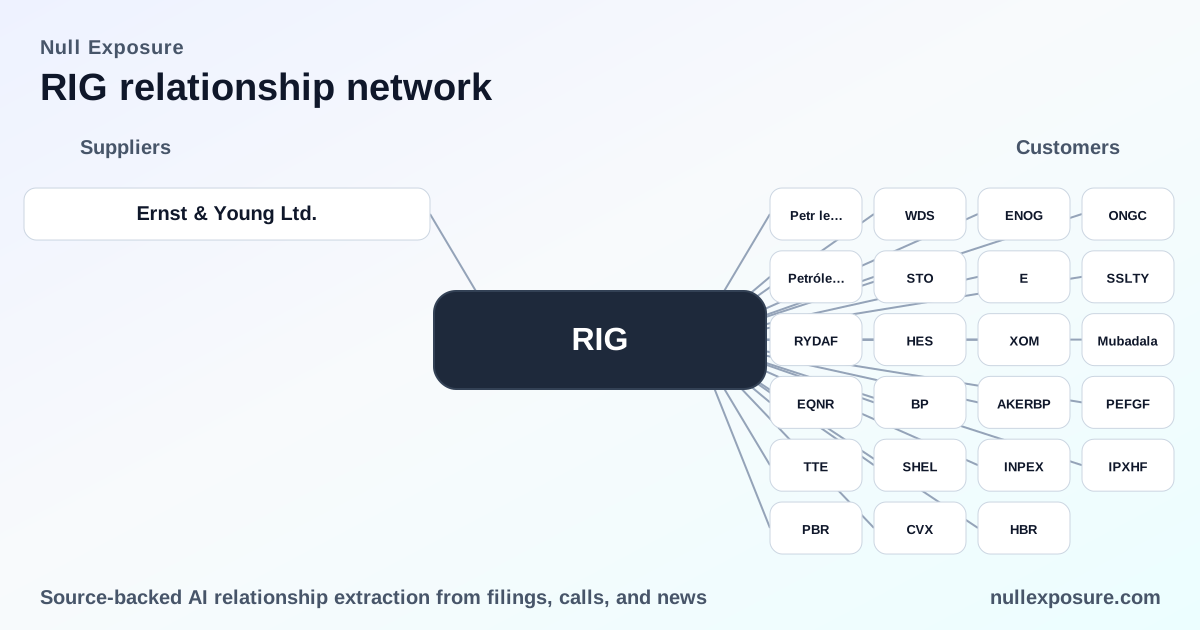
A major vendor relationship in the public evidence set is with Ernst & Young Ltd., which serves as Transocean’s statutory auditor. According to a Globe and Mail press release first indexed March 10, 2026, Ernst & Young Ltd. issued an unqualified opinion on Transocean’s consolidated financial statements for the years ended December 31, 2025, 2024 and 2023. This audit outcome signals accounting continuity and auditability of Transocean’s reported metrics, reducing one axis of financial reporting risk for creditors and institutional investors. Source: Globe and Mail press release (first seen March 10, 2026) — https://www.theglobeandmail.com/investing/markets/stocks/RIG/pressreleases/400602/transocean-receives-unqualified-audit-opinion-on-financial-statements/
Supplier and contract constraints you need to model
Transocean’s disclosures and supporting excerpts surface three company-level constraints that shape counterparty risk and procurement posture:
- Contracts skew long-term. Management discloses long-term service agreements with original equipment manufacturers for pressure control and drilling systems. That contracting posture creates predictable maintenance windows and negotiated pricing but also locks the company into multi-year obligations that reduce flexibility during demand shocks.
- Supplier role is primarily service provision. The company relies on a significant inflow of capital and consumable spare parts, plus ancillary services (supply boats, helicopters) and subcontracted technical services (e.g., casing, managed pressure drilling). That structure makes suppliers operationally critical: delayed parts or subcontractor failure instantly impacts rig availability.
- Large committed spend. At December 31, 2024 Transocean disclosed aggregate future payments under service agreement obligations totaling $610 million, which places the vendor base in a >$100m spend band. Large committed spend increases counterparty concentration risk and makes working capital and covenant management a strategic priority.
Together these constraints form a single, integrated signal: Transocean operates with long-term, high-dollar supplier commitments to service providers that are operationally critical, creating concentrated counterparty exposure that is central to credit and operational risk.
Learn how we parse supplier risk in offshore services at https://nullexposure.com/.
How these signals change the investment checklist
Hedge funds and credit desks should translate the company-level signals into pricing adjustments and operational monitoring:
- Pricing: apply a counterparty concentration premium to discount rates if a material share of maintenance spend is concentrated among a few OEMs or service platforms.
- Liquidity and covenant monitoring: size the liquidity buffer to cover near-term scheduled service payments, especially when committed payments exceed typical working capital.
- Operational monitoring: integrate supplier delivery KPIs (parts lead times, subcontractor availability, vessel/helicopter scheduling) into utilization and downtime scenarios.
- Contract renegotiation risk: long-term OEM agreements reduce short-term exposure but increase rollover risk when long-term contracts approach expiry under a different commodity cycle.
Relationship-by-relationship review
This section covers every supplier or counterparty listed in the available results.
- Ernst & Young Ltd.: Transocean’s statutory auditor issued an unqualified audit opinion on the consolidated financial statements covering the years ended December 31, 2025, 2024 and 2023, as reported in a Globe and Mail press release first seen March 10, 2026. This audit opinion supports the credibility of reported financials and eases investor concerns about restatements. Source: Globe and Mail press release — https://www.theglobeandmail.com/investing/markets/stocks/RIG/pressreleases/400602/transocean-receives-unqualified-audit-opinion-on-financial-statements/
(There were no other supplier relationships present in the supplied results set.)
Operational implications for operators and counterparty managers
Operators should treat Transocean’s supplier posture as a structural operating constraint that informs deployment choices:
- Criticality: Spare parts and specialist services are not fungible at scale, so contingency planning and alternate vendor pre-qualification are essential to keep expensive rigs generating dayrates.
- Concentration: The $610 million committed service obligation (as of Dec 31, 2024) implies a meaningful portion of supplier spend is locked in; procurement should build layered fallback options to avoid single-source failures.
- Contract maturity profile: Long-term OEM contracts reduce short-term procurement risk but require active management around renegotiation windows to avoid step-changes in cost.
What investors should do next
- Reprice Transocean equity and credit exposures for supplier concentration and committed spend rather than only for dayrate cycles.
- Monitor audit and reporting continuity as a core part of due diligence; the single audit relationship in the record reflects a positive reporting signal.
- If you are underwriting operational or credit risk, require supplier continuity plans, documented lead times for critical spare parts, and clarity on subcontractor contingency arrangements.
For a deeper read on counterparty concentration and supplier criticality in offshore services, visit https://nullexposure.com/.
Bottom line
Transocean’s supplier profile is characterized by long-term, high-dollar commitments to service providers that are operationally critical. The unqualified audit opinion from Ernst & Young reduces financial reporting risk, while the disclosed service-payment obligations create a separate, material axis of operational and counterparty risk that investors must price. Active procurement oversight and contingency planning materially affect the firm’s utilization and therefore its valuation for both equity and credit holders.