RIME (Algorhythm Holdings): Supplier and counterparty exposure investors should price in
Algorhythm Holdings (ticker RIME) sells consumer karaoke hardware, accessories and recorded content while monetizing through hardware sales, e-commerce channels and a managed music subscription relationship; the company supplements working capital with structured pre-paid equity financings. Revenue is concentrated in product sales with an embedded subscription/content component outsourced to third parties, and financing counterparties now play a direct role in liquidity provisioning. For a quick gateway to the full profile, see https://nullexposure.com/.
How Algorhythm makes money and why suppliers matter
Algorhythm sells karaoke equipment and related recordings across North America, Europe and APAC, operating an e-commerce-forward distribution model and using third‑party logistics for North American fulfillment. The company’s most recent filings (latest quarter 2025-09-30) report trailing twelve‑month revenue of $26.39 million and negative EBITDA of $11.07 million, underlining the importance of working capital and external funding to sustain growth and inventory cycles. The business model couples low-margin hardware distribution with a subscription/content layer run by partners, creating supplier dependencies that are operationally critical even if individual vendors are not a single point of failure.
Counterparty relationships that matter (what the market reported)
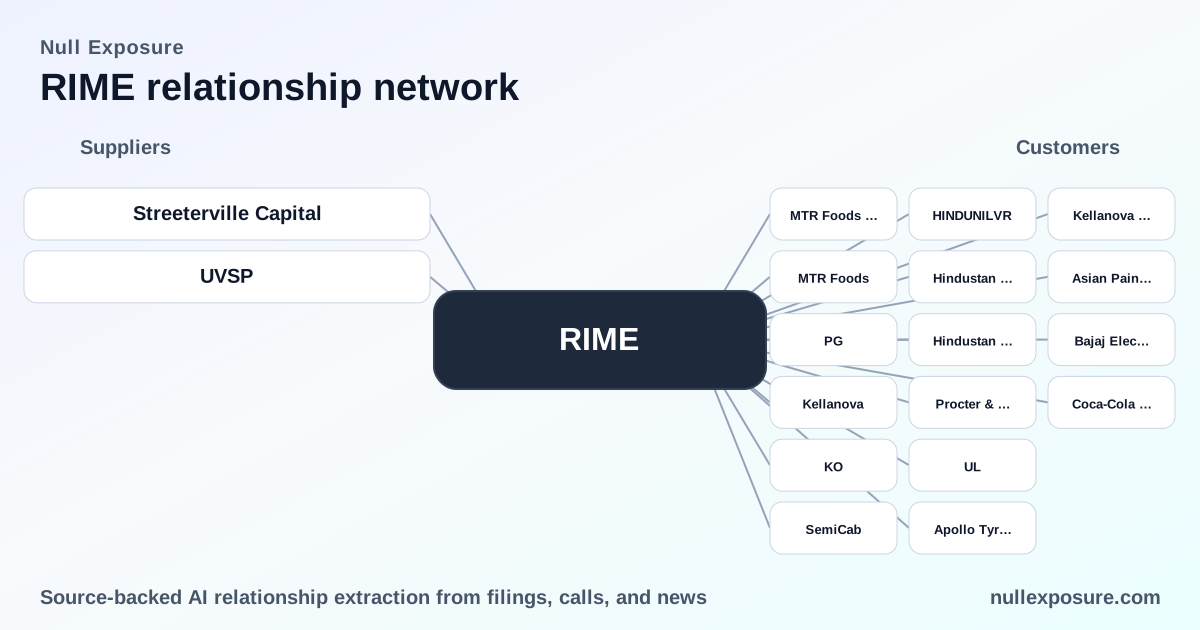
Algorhythm’s most material counterparties for investors to track over the FY2026 period are a financing counterparty and a placement/fee recipient tied to that transaction.
- Streeterville Capital provided a Secured Pre‑Paid Purchase (referred to as Purchase #4) that injects $10.36 million under a three‑year pre‑paid equity financing arrangement to fund operations and growth; the structure is framed under Algorhythm’s existing securities purchase framework. According to a TradingView news report dated March 10, 2026, the Streeterville financing is the primary near‑term liquidity event referenced by the company.
- Univest is named as the placement fee recipient and is tied to the transaction via placement mechanics; a subsidiary guaranty and existing security agreements support the financing structure and placement fees to Univest are payable as funds are released. TradingView’s March 10, 2026 coverage identifies Univest as the placement channel in the Streeterville transaction.
What the Streeterville financing implies for counterparty risk
The Streeterville Capital facility is both a lifeline and a governance lever. The $10.36 million pre‑paid purchase introduces conditional capital that reduces immediate liquidity stress and extends the runway, but it also increases counterparty influence over balance‑sheet mechanics through secured and guaranty arrangements. Company statements filed through FY2026 show the financing structured as a secured arrangement under the existing securities purchase framework; this elevates the importance of the security package and subsidiary guarantees for creditor recovery and control rights in stressed scenarios (TradingView, March 10, 2026).
- Takeaway: The financing materially reduces short‑term liquidity risk while transferring downside exposure to secured creditors; investors should value equity accordingly.
Univest’s role: fees, placement mechanics and signaling
Univest is compensated with placement fees as funds are released, which signals a traditional placement agent role rather than operational partnership. The presence of a fee‑based placement agent reduces friction for capital deployment but increases transaction cost and creditor layering. Univest’s compensation is transactional; it does not alter operational supply chains, but it does affect net proceeds and therefore the company’s liquidity profile. (TradingView, March 10, 2026.)
Operational constraints and supplier posture — company‑level signals
The public disclosures flag several durable operational characteristics investors must incorporate into any valuation or operational due diligence:
- Contracting posture: Algorhythm outsources music subscription functionality and payment processing to third parties (Stingray Group for content and Shopify for e‑commerce payments), and relies on expert third‑party managed IT service providers for cybersecurity. This is a deliberate asset‑light posture that reduces fixed costs but increases dependency on external service SLAs.
- Supplier concentration and criticality: The company uses multiple contract manufacturers in southern China to produce hardware and states that it is not dependent on any one supplier, which lowers single‑vendor concentration risk. Product manufacturing is still a critical capability for revenue generation because finished goods flow through these suppliers and third‑party logistics hubs.
- Geography and logistics: Manufacturing is concentrated in China (APAC) with fulfillment nodes in California and Canada (NA), creating exposure to ocean freight, customs and geopolitical trade dynamics between APAC and North America.
- Maturity and materiality: Supplier relationships are described as operationally standard and materiality is immaterial at the single‑vendor level; however, the aggregate reliance on contract manufacturers and external content providers is material to product availability and customer experience.
These company‑level constraints are operational features, not isolated statistics: outsourcing reduces capital intensity but increases vendor management risk and places a premium on working capital and financing options.
For a consolidated company profile, visit https://nullexposure.com/.
Investor implications and risk checklist
Institutional and sophisticated investors should price the following into RIME’s equity: persistent negative EBITDA and tight runway that justified the Streeterville facility, secured creditor priority and fee leakage to placement agents, and supply chain exposure to southern China with NA fulfillment nodes.
- Liquidity risk: Streeterville financing reduces near‑term liquidity risk but creates structural creditor claims documented in the security package.
- Operational risk: Outsourced content and payment processing reduce fixed cost but increase dependence on external service levels (Stingray Group and Shopify relationships described in filings).
- Geopolitical/logistics risk: Concentration of manufacturing in southern China and reliance on ocean freight to NA warehouses elevates exposure to trade disruptions.
Bottom line and next steps for due diligence
Algorhythm’s business remains a hardware‑led consumer play with outsourced content and a newly enlarged reliance on structured financing. Streeterville’s $10.36 million pre‑paid purchase materially extends runway, and Univest’s placement fees affect net capital available to the business. Investors should prioritize review of the security agreement, guaranty language and tranche release conditions in any further material filing.
If you need a deeper counterparty risk map or a consolidated exposure report for RIME and comparable suppliers, start here: https://nullexposure.com/.
For portfolio teams tracking funding‑driven equity outcomes, monitor subsequent filings for covenant triggers, additional secured borrowings, and any operational disruptions from manufacturing or content partners. For immediate reference and ongoing signals, see https://nullexposure.com/ — the profile consolidates public filings and market coverage on counterparties and supplier relationships.