RLJ-P-A: How the preferred shares monetize hotel-brand relationships and what operators should price in
RLJ Lodging Trust’s Series A Cumulative Convertible Preferred Shares (RLJ-P-A) monetize exposure to the hospitality sector by owning a diversified portfolio of branded upscale and extended-stay hotels and returning stable cash via a high-yield preferred dividend with upside through convertibility into common equity. The REIT’s economics rely on real estate cash flow from leased and managed hotel assets, franchise and management agreements with major brands, and active portfolio management to preserve dividend coverage and long-term NAV. For an operationally focused read on counterparties and partner risk, start your diligence at https://nullexposure.com/.
Why brand and management partners matter to RLJ’s preferred holders
RLJ does not operate in isolation; the company’s earnings and asset values are tightly linked to brand affiliations and third-party management contracts that drive operating performance and marketability of hotel assets. Franchise and management relationships determine guest demand, revenue-per-available-room (RevPAR) recovery, and transaction liquidity—each of which directly affects the safety of preferred dividends and conversion optionality. The company-level record shows no extracted contractual constraints in our review, which is a signal that public reporting emphasized commercial affiliations rather than bespoke legal encumbrances. That lack of explicit constraints should be read as a disclosure posture rather than proof of unlimited flexibility: RLJ’s standard industry contracting model is prevalent across its portfolio.
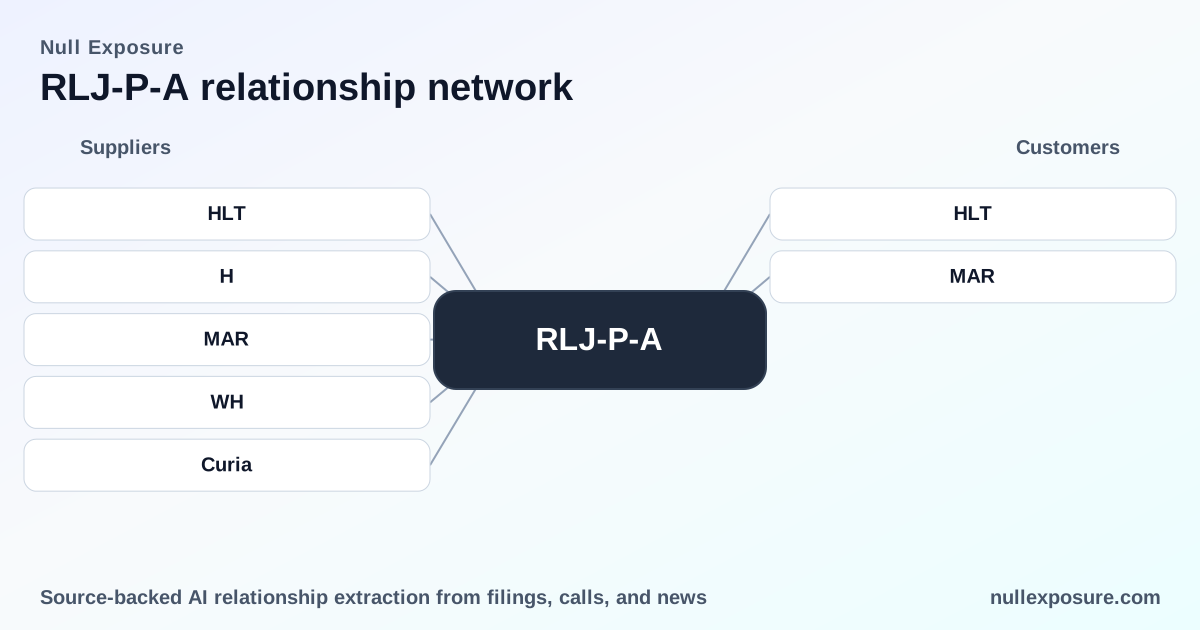
Supplier relationships you need to model (complete list)
Below are every supplier/brand/operator relationship cited in the source set, presented with a short plain-English takeaway and the reporting citation.
Marriott (FY2025)
RLJ lists extensive Marriott affiliations—spanning Courtyard, Residence Inn, Fairfield Inn & Suites, Renaissance, SpringHill Suites, AC Hotel, Moxy and Tribute Portfolio—indicating deep reliance on Marriott’s brand distribution to drive room rates and group demand. According to MarketScreener (reported March 2026), these affiliations are a core part of RLJ’s brand mix: https://www.marketscreener.com/news/rlj-lodging-trust-keeps-quarterly-dividend-at-0-15-per-share-payable-jan-15-to-shareholders-of-re-ce7d50d9da81fe27.
Hilton (FY2025)
RLJ’s portfolio includes multiple Hilton flags—Embassy Suites, Hilton Garden Inn, DoubleTree, Curio Collection, Homewood Suites, Hilton and Tapestry—providing access to Hilton’s loyalty base and group channels that support midweek and corporate demand. MarketScreener documented these Hilton affiliations in the same March 2026 release: https://www.marketscreener.com/news/rlj-lodging-trust-keeps-quarterly-dividend-at-0-15-per-share-payable-jan-15-to-shareholders-of-re-ce7d50d9da81fe27.
Hyatt (FY2025)
RLJ reports Hyatt-brand hotels, including Hyatt House, Hyatt Place and Hyatt Centric, which complement its Marriott/Hilton holdings and diversify channel exposure across business and leisure segments. MarketScreener included Hyatt in the March 2026 brand affiliate list: https://www.marketscreener.com/news/rlj-lodging-trust-keeps-quarterly-dividend-at-0-15-per-share-payable-jan-15-to-shareholders-of-re-ce7d50d9da81fe27.
Wyndham (FY2025)
Wyndham is noted among RLJ’s brand partners, adding economy and midscale distribution that stabilizes occupancy across price-sensitive segments during downturns. This affiliation is listed in the MarketScreener coverage from March 2026: https://www.marketscreener.com/news/rlj-lodging-trust-keeps-quarterly-dividend-at-0-15-per-share-payable-jan-15-to-shareholders-of-re-ce7d50d9da81fe27.
Hyatt Hotels Corp. (FY2014)
In a historical transaction, RLJ acquired a West Coast portfolio from Hyatt affiliates and continued the hotels under Hyatt management agreements—showing a precedent for acquiring brand-affiliated assets while preserving operator continuity. NBC San Diego reported the 2014 acquisition and the continuation of Hyatt management: https://www.nbcsandiego.com/news/local/san-diego-hyatt-house-among-hotels-in-313-million-acquisition/1990546/.
Curia (FY2025)
RLJ executed a conversion of a Charleston hotel to the Curia flag that generated a 150% increase in revenue at that property, demonstrating selective flag changes and rebranding as a lever to drive near-term performance. HospitalityInvestor covered the conversion and the resulting revenue uplift in a 2025 feature on asset management: https://www.hospitalityinvestor.com/investment/art-asset-management.
What these relationships imply for investors and operators
- Diversified brand exposure is a structural hedge. RLJ’s affiliation with Marriott, Hilton, Hyatt and Wyndham reduces single-brand concentration risk and preserves multiple revenue channels for different demand segments. That diversity supports the reliability of preferred dividends under normal market cycles.
- Franchise and management contracts are operationally critical. Many assets operate under third-party management; continued performance depends on contract terms (fees, termination rights, performance standards). The public data emphasizes affiliations, not bespoke constraints—treat that as a company-level disclosure posture rather than contractual immunity.
- Active asset management creates asymmetric upside. The Curia conversion shows RLJ executes tactical rebrandings to improve cash flow, a direct lever to protect dividend coverage and conversion value.
- Historical acquisitions demonstrate continuity of management relationships. The 2014 Hyatt portfolio deal shows RLJ acquires assets that remain under incumbent operator management, limiting integration execution risk but preserving operator dependence.
Key credit consideration: preferred holders should treat RLJ’s brand/management network as both a strength (diversification and loyalty channel access) and a concentration of operational counterparty risk where management fees and brand standards can compress margins during stress.
If you want a straight-line operational risk summary and counterparty heat map, we provide tailored supplier intelligence and scoring—learn how at https://nullexposure.com/.
Practical next steps for diligence
- Review the explicit management and franchise agreements for termination triggers, fee escalators, and performance remedies; these clauses materially alter cashflow stability under stress.
- Stress-test dividend coverage under scenarios where one major brand’s RevPAR declines 20–30% year-over-year and simulate the impact of accelerated capex from brand standards.
- Validate the upside case for convertibility by modeling NAV per share under conservative occupancy assumptions and the recoverability of rebranding investments like the Curia conversion.
For investors and operators seeking an actionable counterparty report and scenario modeling for RLJ-P-A, visit https://nullexposure.com/ to commission a supplier risk assessment.
In sum, RLJ’s preferred shares trade on a blend of steady dividend cashflow and conversion optionality supported by diversified brand affiliations; operational diligence should focus on the durability and cost of those brand and manager agreements.