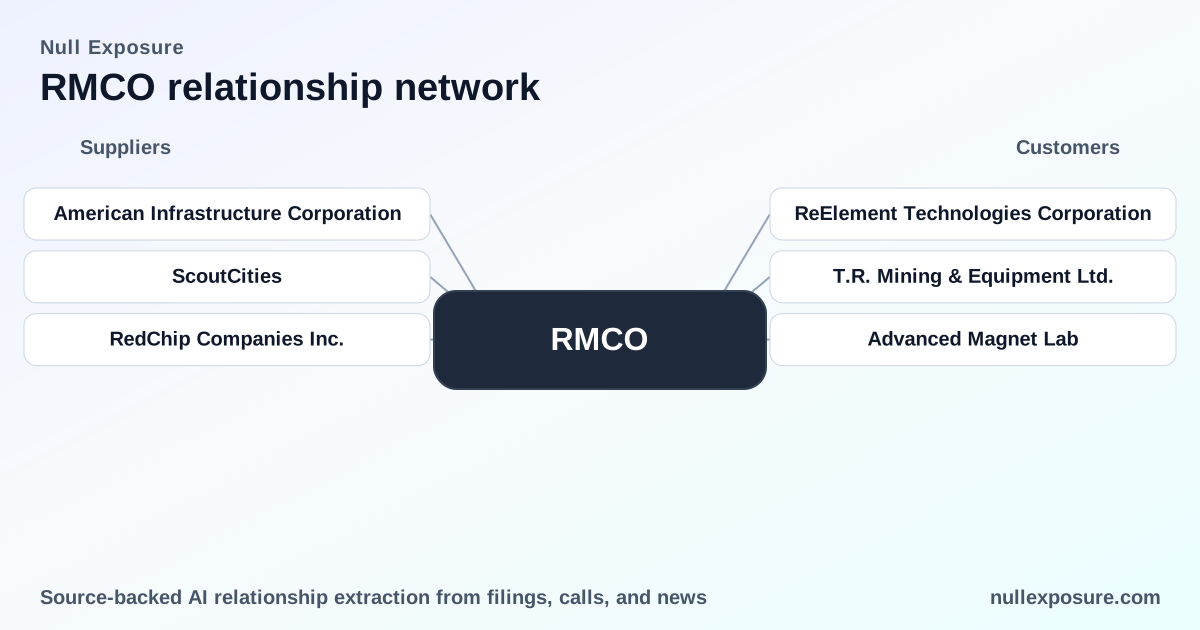
RMCO supplier relationships: what operators and investors need to know
Royalty Management Holding Corporation (RMCO) sources and monetizes value by acquiring or controlling land and royalty interests, leasing those assets to operators, and selectively deploying capital into infrastructure projects that unlock electricity‑intensive uses (datacenters, AI compute, mining). The company’s revenue base is modest (Revenue TTM ~$3.8M) while capital allocation is focused on converting held assets into cash‑flowing operations through long‑term leases and joint buildouts with third‑party operators; equity investors should treat RMCO as an asset‑management vehicle that monetizes land and royalty rights rather than a conventional operating business. For a structured view of counterparties and supplier posture, see more at https://nullexposure.com/.
What the relationship set tells you about how RMCO runs the business RMCO’s supplier footprint combines strategic, long‑term affiliated leases with project partnerships for infrastructure buildouts and conventional investor relations support. The company discloses multiple long‑dated leases (10–21 year initial terms) with affiliated entities and documents active collaboration with outside operators to convert sites to electricity‑dominant uses. These features frame RMCO’s contracting posture as long‑term and lock‑in oriented, not spot market sourcing.
Key business-model drivers visible from supplier relationships:
- Capital deployment for site activation: RMCO directly funds infrastructure and partners with operators to generate new revenue streams from its land holdings. According to a press release on March 10, 2026, RMCO “deployed additional capital to the site to start building infrastructure in conjunction with our operator, American Infrastructure Corporation.”
- Asset conversion strategy: Third‑party studies and operator engagements are used to identify high‑value use cases (datacenters, AI, mining) and then to execute infrastructure builds that convert unimproved land into revenue‑producing assets. A company announcement on March 10, 2026 referenced a study with ScoutCities that identified sites with attractive characteristics for these uses.
- Affiliated leasing and governance levers: The company leases offices and land from affiliated entities (Land Resources & Royalties LLC and American Resources Corporation) under lengthy terms and low nominal rents, which signals internalized supplier routing and potential related‑party governance considerations as part of the operating model.
All of these points are why investors should treat RMCO’s supplier network as a direct extension of its asset‑realization strategy rather than as an arm’s‑length procurement function.
The vendor roll call — concise, source‑backed lines for each relationship
American Infrastructure Corporation
RMCO is actively co‑funding infrastructure construction with American Infrastructure Corporation to bring a site online; the company stated on March 10, 2026 that it “deployed additional capital to the site to start building infrastructure in conjunction with our operator, American Infrastructure Corporation.” (Press release via Yahoo Finance, March 10, 2026).
ScoutCities
RMCO commissioned a study with ScoutCities that identified several owned or controlled properties as suitable for datacenters, AI compute, and other electricity‑dominant industries, underpinning the company’s pivot to monetize land through specialized energy‑intensive users. (Company announcement via Yahoo Finance, March 10, 2026).
RedChip Companies Inc.
RMCO’s investor communications have been routed through RedChip Companies Inc.; a corporate release (April 17, 2024) lists RedChip as the investor contact for a board‑approved stock repurchase program, indicating an active IR/service provider relationship. (Markets/FinancialContent, April 17, 2024).
Constraints and what they mean for diligence The company filing text reveals constraints that shape supplier dynamics and risk:
- Contracting posture — long‑term leases: RMCO discloses office and land leases with initial terms of 10, 5 and 21 years, respectively. Those durations create a long‑dated fixed‑cost structure and establish lease relationships as a core operating lever rather than transient vendor agreements.
- Service‑provider relationships and governance controls: Filings describe audit committee oversight of auditing and non‑audit services and disclose leasing relationships with affiliated entities. That combination signals centralized control of provider selection and related‑party routing; governance diligence should focus on arm’s‑length terms and audit committee minutes.
- Active stage and relatively low third‑party spend: The firm reports active relationships and a spend profile that, when isolated to disclosed lease line items, sits below $100k per contract in nominal monthly rents, suggesting that direct supplier cash flows are modest relative to capital deployment for buildouts.
- Company‑level signals: High insider ownership (~56% insiders) and low institutional ownership (~2%) amplify governance and control considerations when evaluating supplier terms and counterparty selection.
Investor and operator implications — risks and opportunities
- Opportunity: RMCO’s model allows asymmetric upside if infrastructure builds secure long‑term cash flows from high‑margin tenants (datacenters/AI). The ScoutCities study and the American Infrastructure partnership are explicit execution vectors for that strategy.
- Risk: Long‑term leases with affiliated entities and concentrated insider control create related‑party and governance risk that demands transparency in pricing and performance metrics. The company’s margins are currently negative and the capital intensity of buildouts implies execution risk.
- Operational dependency: Successful monetization depends on the company’s ability to convert sites and secure tenants for electricity‑dominant industries; operator selection (e.g., American Infrastructure) is therefore critically material to value realization.
Actionable next steps for investors and operators
- Request the latest lease schedules and affiliate transaction disclosures to verify market comparability of rents and lease terms.
- Track progress on the American Infrastructure buildouts and require milestone‑based reporting or escrowed capital commitments for investor assurances.
- Review ScoutCities’ study outputs and underwriting assumptions for site energy availability, interconnection timelines, and zoning constraints before underwriting revenue forecasts.
- For operators evaluating a partnership, insist on performance milestones and clear responsibility matrices on infrastructure scope and long‑term O&M obligations.
For a deeper view of RMCO’s supplier signals and comparable counterparties, visit https://nullexposure.com/ and search the supplier dossier.
Bottom line and recommended investor posture RMCO is an asset‑conversion vehicle that monetizes land and royalty positions through long‑dated leases and targeted capital deployment in partnership with operators. The supplier relationships disclosed are consistent with a strategy that leverages affiliated leasing and third‑party technical/IR services to activate assets; investors should weigh the upside of site activation against governance and execution risk driven by related‑party leases and concentrated insider control. For operational partners, RMCO presents the potential for long‑term site availability but requires stringent milestone governance and clear allocation of build responsibilities.
To monitor developments and supplier disclosures on RMCO, or to compare counterparties across similar royalty and land‑conversion plays, start at https://nullexposure.com/.