RMI supplier snapshot: advisers, concentration, and what investors should price in
RMI operates as a closed-end investment vehicle that outsources portfolio management to external asset managers and monetizes through management and advisory fee arrangements tied to assets under management and distribution policies. For investors evaluating RMI’s supplier posture, the relevant signal set is narrow and centered on investment advisory relationships that directly drive fund performance, distribution policy, and fee friction—factors that materially affect NAV volatility and yield sustainability.
For the clearest supplier intelligence and monitoring, start here: https://nullexposure.com/
Who supplies RMI’s portfolio decisioning today — the concise list
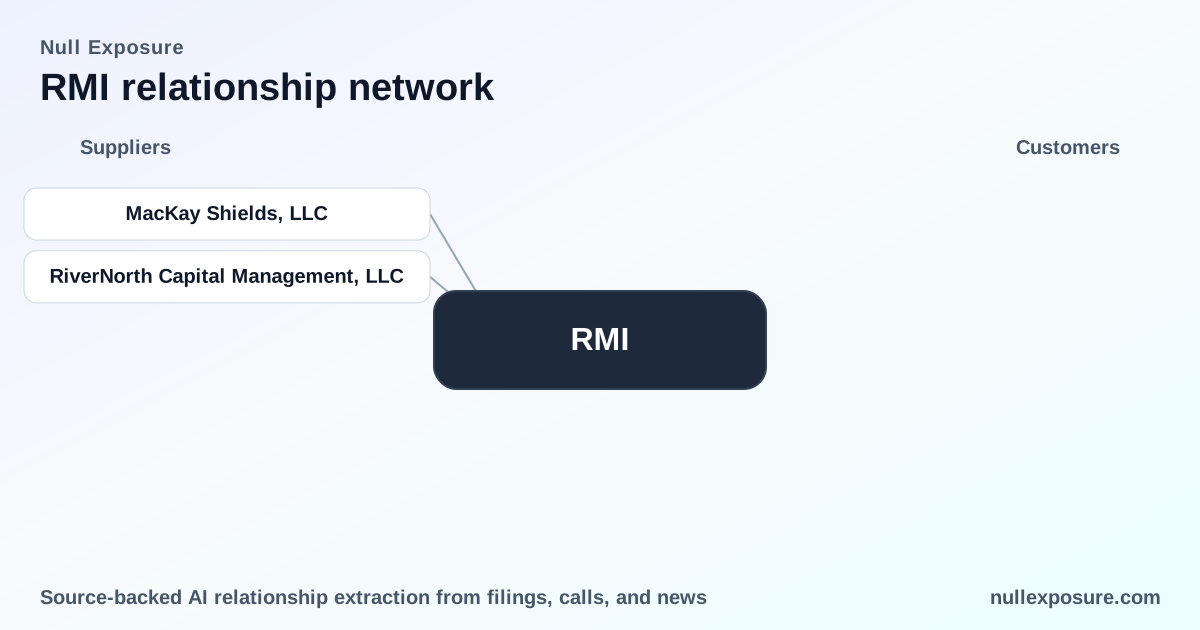
Two external managers are identified in public reporting tied to RMI’s fund operations. Each relationship is operationally material: advisers handle security selection, risk management, and distribution guidance that flow through to investor returns.
-
MacKay Shields, LLC
MacKay Shields is listed as the fund’s sub-adviser, responsible for delegated portfolio management duties under the primary advisory architecture. According to an Intellectia news release on March 10, 2026, MacKay Shields is explicitly named as the Fund’s sub‑adviser in distribution communications. (Intellectia, March 10, 2026) -
RiverNorth Capital Management, LLC
RiverNorth Capital Management is named as the fund’s investment adviser, the primary contractual manager responsible for overall advisory functions and fee arrangements. A March 10, 2026 Intellectia report on RiverNorth closed‑end fund distributions identifies RiverNorth as the Fund’s investment adviser. (Intellectia, March 10, 2026)
These two relationships constitute the full supplier universe returned in RMI’s supplier scope during the latest public reporting window; the market impact of any adviser change is therefore highly concentrated.
What the adviser mix tells investors about RMI’s operating model
RMI’s supplier footprint signals a classic closed‑end fund operating posture: outsourced portfolio execution with concentrated third‑party dependency. From a business model perspective, that carries a few structural characteristics investors should price into valuation and governance assessments:
-
Contracting posture — Advisory agreements dominate cash flows. RMI’s monetization is tied to advisory and sub‑advisory fee schedules and distribution mechanics rather than direct operating revenue. That creates a predictable but fee‑sensitive cost structure where net yield to investors is a function of gross returns less advisory dilution.
-
Concentration — Two named managers imply low supplier diversity. Concentration elevates execution and continuity risk: a single manager transition or underperformance can move NAV and distributions materially.
-
Criticality — These suppliers are mission‑critical. Investment advice and sub‑advisory execution affect realized returns, risk exposures, and distribution capacity, making counterparty governance a first‑order investment consideration.
-
Maturity and professionalism — Both named firms are established asset managers, which reduces certain operational risk categories (e.g., execution capability, compliance infrastructure) while leaving strategic risks (alignment of incentives, fee levels) intact.
No explicit supplier constraints or contractual caveats were disclosed in the data reviewed; that absence is itself a signal about public transparency and the need for investors to review governing documents directly. In short: the company’s supplier disclosures are sparse, so primary source diligence—prospectuses, advisory agreements, and proxy materials—is essential.
Explore a structured supplier review framework at https://nullexposure.com/ to operationalize this checklist.
Relationship-level takeaways for portfolio managers and risk officers
Treat each named adviser as an active risk factor rather than passive background. For quick decisioning:
-
MacKay Shields, LLC — As sub‑adviser, MacKay Shields executes delegated strategies that can materially affect short‑term performance and sector allocations; monitor sub‑advisory mandates and performance attribution reports to assess style drift. (Intellectia, March 10, 2026)
-
RiverNorth Capital Management, LLC — As the primary investment adviser, RiverNorth shapes fee arrangements, distribution policy, and oversight of sub‑advisers; its compensation and stewardship practices determine incentive alignment with shareholders. (Intellectia, March 10, 2026)
Both citations derive from the same public distribution announcement, which is the clearest public confirmation of these roles in the most recent reporting window.
Practical investor checklist — what to monitor next
To convert this supplier intelligence into actionable investment decisions, prioritize the following:
-
Review the fund’s current SEC filings (prospectus and SAI) for fee schedules, termination clauses, and performance fee triggers that govern adviser compensation and exit rights. These documents reveal contractual switching costs and termination notice periods.
-
Track distribution coverage metrics and NAV discount trends alongside quarterly attribution reports to see whether adviser decisions are consistently delivering alpha net of fees.
-
Monitor any related‑party transactions, adviser‑sponsored funds crossover, or concentration in securities that could create conflicts of interest.
-
Establish a cadence for checking adviser stability: leadership turnover, regulatory actions, or changes in AUM at either RiverNorth or MacKay Shields can be early warning signs.
-
Demand transparency on sub‑adviser monitoring: investors should see how the primary adviser assesses and replaces sub‑advisers, and whether there are formal KPIs tied to replacement decisions.
These steps turn an adviser list—two names—into a governance and valuation framework investors can act on.
Learn how to build continuous supplier monitoring into investment due diligence at https://nullexposure.com/.
Final read: pricing the supplier concentration into your thesis
RMI’s supplier map is compact and consequential: two professional managers handle the decisions that determine distributions and NAV performance. The core investment risk is not an obscure counterparty failure but the concentrated dependence on advisory performance and fee structures. For investors and operators, the task is straightforward: quantify adviser contribution to net returns, demand clarity on contractual terms, and monitor for governance signals that portend adviser turnover or alignment shifts.
If you are evaluating RMI or similar closed‑end exposures, prioritize adviser contract review and monthly attribution checks as part of the standard monitoring slate. For a repeatable approach to supplier and counterparty intelligence tailored to investment strategies, visit https://nullexposure.com/ and integrate supplier signals into your risk models.