TransCode Therapeutics (RNAZ): Supplier Relationships and What They Mean for Investors
TransCode Therapeutics operates as a small-cap oncology biotech focused on next‑generation oncolytic immunotherapies and metastatic disease prevention. The company monetizes by aggregating therapeutic assets through licensing and acquisitions, advancing candidates through outsourced development and manufacturing, and funding programs via equity and structured capital raises; commercialization revenue remains prospective. For investors evaluating counterparty exposure, the balance of placement agents, legal and financial advisors, licensors, and CMOs dictates cash runway, execution risk, and the path to value realization. Visit the Null Exposure hub for supplier intelligence and monitoring: https://nullexposure.com/
A clear operating posture: partnership‑heavy and capital reliant
TransCode runs a lean internal R&D and commercialization footprint and outsources most development, clinical and manufacturing functions. Company disclosures describe exclusive licensing arrangements, reliance on CROs/CMOs for preclinical and clinical activities, and foreign manufacturing in Germany that creates Euro currency exposure. These facts confirm a contracting posture that is transactional and externally dependent: agreements are often licensing or short‑term engagements, and third‑party services are material to program delivery and timing.
- Contracting posture: heavy use of licensing agreements and third‑party service contracts (company filings, licensing excerpts).
- Concentration and criticality: manufacturing concentration in Europe and reliance on external CRO/CMO partners increases execution risk and supply‑chain criticality.
- Maturity: relationships are active and deal‑oriented—legal, placement and advisory partners show an emphasis on capital formation and asset integration rather than in‑house scale.
For ongoing monitoring and supplier profiles, see Null Exposure: https://nullexposure.com/
The MGH license — a cornerstone intellectual property position
According to company filings, TransCode entered a November 2018 license with Massachusetts General Hospital (MGH) that granted an exclusive, worldwide, royalty‑bearing, sublicensable license to a set of patented technologies. That license remains a structural part of TransCode’s IP estate and frames its ability to develop covered products (company filings, November 2018).
Relationship snapshots: who does what and why it matters
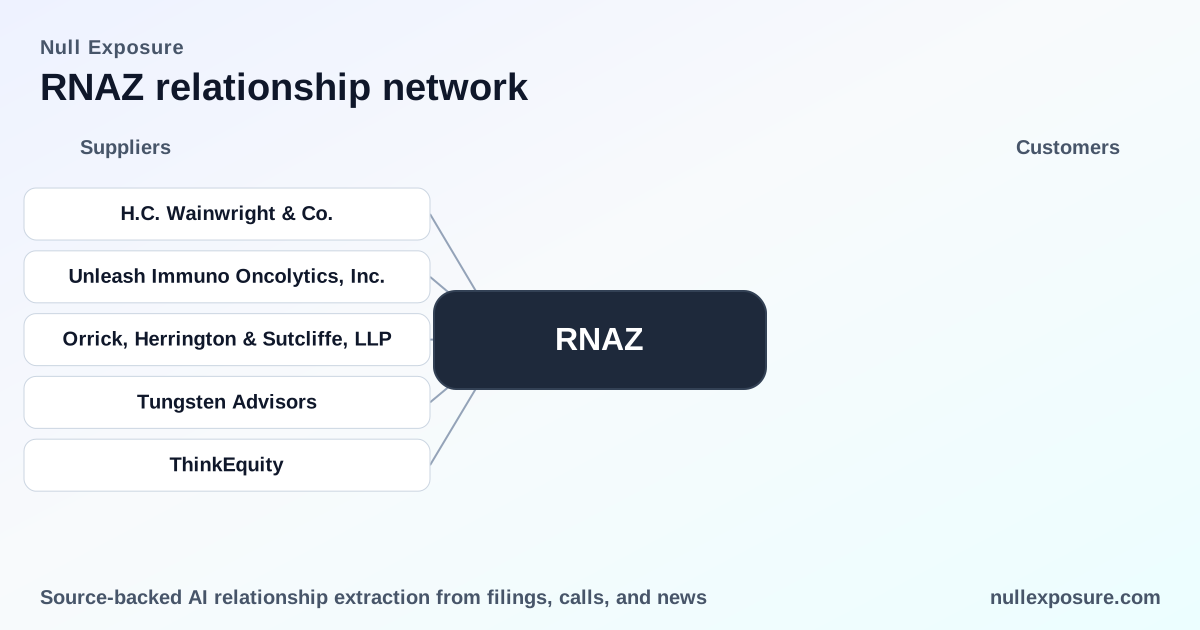
H.C. Wainwright & Co.
H.C. Wainwright acted as the exclusive placement agent for a $1.5 million registered direct offering announced in March 2026, underscoring TransCode’s ongoing reliance on boutique investment banks for capital raises (ADVFN news release, March 10, 2026).
Unleash Immuno Oncolytics, Inc.
TransCode completed an all‑stock transaction that secures an exclusive worldwide, fully paid‑up, royalty‑free license to three Unleash drug candidates (UIO‑524, UIO‑525, UIO‑526), effectively adding near‑term clinical assets to its pipeline (PR Newswire announcement, March 2026).
Orrick, Herrington & Sutcliffe, LLP
Orrick is serving as legal counsel to TransCode in connection with the Polynoma acquisition and strategic financing, reflecting the company’s use of top‑tier law firms for transaction execution and regulatory diligence (PR Newswire release, FY2025).
Tungsten Advisors
Tungsten Advisors served as exclusive financial advisor and sole placement agent for TransCode’s strategic financing tied to the Polynoma acquisition, signaling coordinated advisory support for deal structure and syndication (PR Newswire release, FY2025).
ThinkEquity
ThinkEquity acted as sole bookrunner on a historical public deal (IPO filing referenced in 2021 coverage), demonstrating TransCode’s prior capital‑markets pathway and ongoing relationships with equity capital markets intermediaries (Renaissance Capital, IPO Center, 2021).
What these relationships imply for value creation and risk
Collectively, the supplier roster reveals a company executing a capital‑intensive, partnership‑based growth playbook. The acquisition and licensing of Unleash assets in an all‑stock deal accelerates pipeline breadth without upfront cash outlay, but it shifts dilution risk to equity consideration and increases the value‑creation burden on clinical progress. Active use of placement agents and boutique banks is consistent with a small market cap and limited institutional ownership; these firms provide access to capital but also reflect recurrent financing dependency.
Manufacturing and service constraints are central to the risk profile: company disclosures confirm a German CMO for oligonucleotide production and an additional European CMO for final drug‑product manufacturing, creating supply concentration and FX exposure to the Euro. The firm also discloses short‑term facility arrangements and widespread use of CROs/consultants, which categorizes these supplier relationships as operationally critical and materially substantive in enabling program milestones (company filings and risk disclosures).
Mid‑article resource: for deeper counterparty tracking and alerts, consult Null Exposure: https://nullexposure.com/
Targeted risk checklist for investors
- Capital dependency: frequent use of placement agents and strategic financings indicates recurring capital raises and potential dilution.
- Third‑party concentration: CMOs in Germany and other European providers create single‑region risk and logistics vulnerability.
- Material outsourcing: the firm relies materially on CROs/CMOs for clinical execution, which puts timelines outside fully internal control.
- Contract maturity: several supplier engagements are active but built on licensing or short‑term arrangements, which increases renegotiation and continuity risk.
- Governance and advisers: engagement of firms like Orrick and Tungsten indicates robust transactional support, improving execution quality but not eliminating development risk.
Bottom line and next steps for investment teams
TransCode is executing a high‑leverage strategy of asset accumulation and outsourced development that enables rapid pipeline growth but concentrates execution risk in third‑party suppliers and capital markets access. For investors, the critical monitors are: progress on clinical milestones for the newly acquired Unleash candidates, stability of CMO supply and Euro exposure, and the cadence and terms of future financings.
If you are evaluating counterparty risk or building a supplier oversight program, start with a focused supplier map and event triggers for capital raises and manufacturing updates. For subscription‑grade supplier intelligence and continuous monitoring, visit Null Exposure: https://nullexposure.com/
Summary: TransCode’s supplier relationships are functional and deal‑driven, delivering access to assets and capital but placing program delivery and timing squarely in the hands of external partners. Investors should price upside against concentrated operational dependencies and financing dilution risk.