Roivant’s supplier posture: what the Samsung Biologics tie means for investors
Roivant Sciences operates as a platformed drug developer that spins out and finances focused subsidiaries (“Vants”), licenses assets and then outsources clinical and commercial manufacturing and services to third parties. The company monetizes through milestone and royalty-bearing licensing deals, equity value creation in its Vants, and downstream commercialization upside — while accepting a deliberately outsourced operating model that substitutes asset risk for partner execution risk. For investors, the economic upside is paired with concentrated vendor dependency and multi-year procurement commitments that drive both upside optionality and measurable operational risk. Learn more about supplier risk signals at https://nullexposure.com/.
The business model in plain language: platform economics with outsourced execution
Roivant’s core strategy is to identify or acquire therapeutic assets, move them into a focused subsidiary, fund development, and then rely on external partners for critical activities such as manufacturing, clinical operations and regulatory support. That approach delivers two clear business model characteristics:
- Contracting posture: long-term, license- and milestone-driven relationships. Roivant commits to licensing and acquisition deals with future milestone payments and structured minimum purchase commitments rather than building internal manufacturing capacity. According to the company’s FY2025 Form 10‑K, Roivant and its subsidiaries have multiple asset acquisition and license agreements with potential material future milestone payments recorded as of March 31, 2025.
- Concentration and criticality: heavy reliance on a small set of high-capability providers. Roivant does not own large-scale manufacturing; it depends on contract manufacturers and CROs to supply clinical and potential commercial volume. That reliance elevates vendor criticality: interruptions at a partner can materially affect product availability and timelines.
These operating choices compress capital expenditures and accelerate time-to-market, while introducing vendor execution, regulatory and supply-concentration risks that investors must price into valuation and operational diligence.
Supplier relationship in the record: Samsung Biologics Co., Ltd.
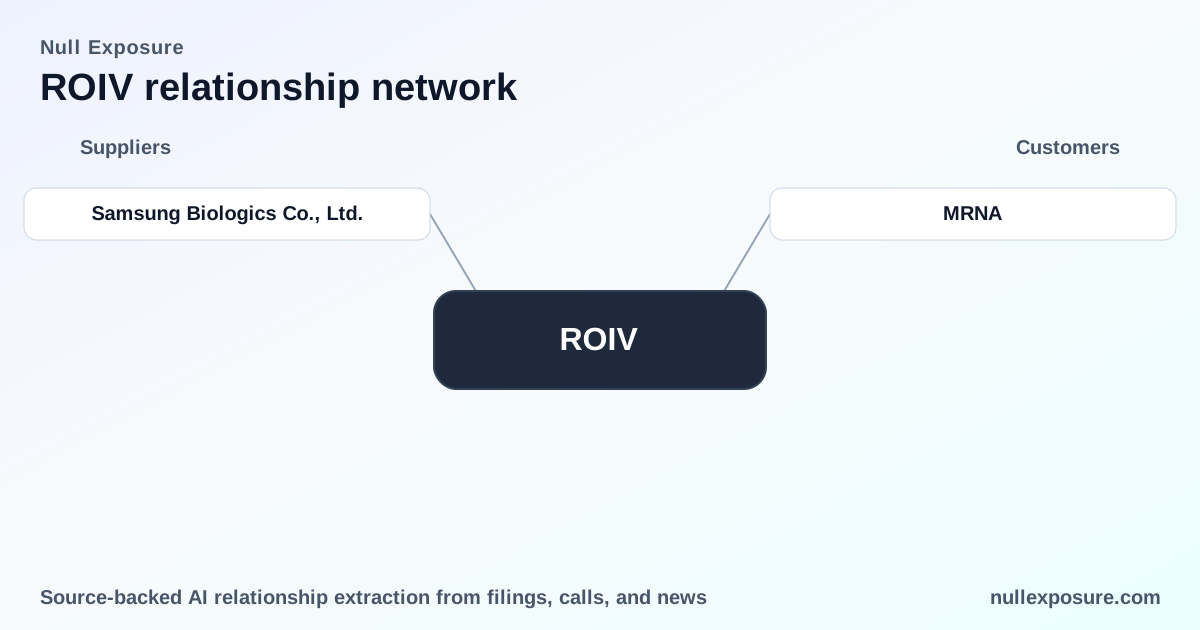
Roivant’s filings identify a single explicit supplier contract in the FY2025 reporting: a Product Service Agreement with Samsung Biologics.
- On November 17, 2021, Immunovant — a Roivant subsidiary — executed a Product Service Agreement with Samsung Biologics under which Samsung will manufacture and supply batoclimab drug substance for commercial sale, and perform other manufacturing-related services for batoclimab if the product is approved. According to Roivant’s FY2025 Form 10‑K, the PSA governs commercial supply and manufacturing services for batoclimab. (Source: Roivant FY2025 10‑K, file dated March 31, 2025.)
- The PSA is structured as a long-term manufacturing commitment, with the agreement continuing until the later of December 31, 2029 or completion of services, and with Immunovant having a minimum purchase obligation for additional batoclimab batches during 2026–2029. (Source: Roivant FY2025 10‑K.)
These two sentences capture the extent of the relationship disclosed in the supplier scope: Samsung is the designated manufacturer and long-term service provider for a potentially commercial drug asset.
What the constraints tell you about Roivant’s operating posture
Roivant’s filings and relationship excerpts collectively create a clear operational profile. Below are the high-conviction, company-level and relationship-level signals investors and operators should consider.
- Long-term contractual posture (relationship-level): The Samsung PSA is explicitly multi-year and includes minimum purchase obligations, indicating durable supply commitments rather than ad‑hoc purchase arrangements. This is a relationship-level signal drawn from the PSA language in the FY2025 filing.
- Manufacturer and service-provider dependency (relationship-level): Samsung is identified as the manufacturer and service provider for batoclimab, confirming that Roivant relies on third-party contract manufacturing rather than internal capacity.
- Geographic execution footprint (company-level): Roivant and its Vants conduct manufacturing and trials outside the U.S., including Asia, which aligns with the Samsung relationship and raises cross-border supply chain considerations.
- Financial structuring and spend profile (company-level): The company records large contingent and milestone commitments across its portfolio, with examples in filings showing both mid‑tens‑of‑millions minimum purchase commitments and program-level milestone exposures up to several hundred million dollars. These items are company-level signals about the scale of external spend and contingent liabilities.
- Criticality of third-party services (company-level): Roivant flags third-party vendors — including IT, data centers and CROs — as material to operations, which frames Samsung and similar partners as operationally critical to commercialization success.
- Treasury and counterparty posture (company-level): The company’s investments include U.S. Treasury securities, indicating a conservative cash-management posture for liquid assets.
Collectively, these signals describe a platform with concentrated, long-duration supplier commitments and high vendor criticality — a model that reduces fixed capital needs but increases the importance of contract enforceability and supply contingency planning.
Learn how to monitor supplier risk with vendor intelligence at https://nullexposure.com/.
Investment risks and operational considerations
For investors and operators evaluating Roivant supplier relationships, the Samsung tie raises a set of actionable risk/return points:
- Supply concentration risk is material. Batoclimab’s commercial availability depends on Samsung’s manufacturing and supply continuity; any capacity constraints or quality/regulatory issues at Samsung would directly impact revenue timing.
- Minimum purchase commitments create cash-flow rigidity and contingent liabilities. The PSA’s minimum purchase obligations across multiple years lock in future spend that reduces optionality if clinical or market conditions change.
- Regulatory read-through matters. The value of the relationship is contingent on clinical and regulatory success for batoclimab; manufacturing readiness is necessary but not sufficient for commercialization upside.
- Operational mitigants are measurable. Investors should watch order fulfillment history, batch release metrics, and whether Roivant secures secondary suppliers or inventory buffers to reduce single-source risk.
- Supplier maturity is an asset. Samsung Biologics is an established large-scale contract manufacturer; that maturity reduces execution risk relative to smaller CMOs, but does not eliminate geopolitical, capacity or quality risks.
Key takeaway: the commercial path for batoclimab is supported by a long-term manufacturing agreement with a top-tier CMO, which is positive for scale and quality — but the same contract structure introduces fixed obligations and vendor concentration that prudently lower the margin for error.
What to watch next: milestones and metrics
- Regulatory milestones for batoclimab (approvals and label decisions).
- PSA performance indicators: batch delivery schedules, lot release timelines, and minimum purchase fulfillment across 2026–2029.
- Any amendments to the PSA or secondary sourcing announcements that would diversify manufacturing risk.
- Company disclosures about milestone payments, contingent liabilities and any impairment or restructuring of Vants tied to the Anti-FcRn franchise.
For decision-makers building a supply-risk view, monitor these items quarterly and in proxy or 10‑K/10‑Q disclosures.
Explore supplier intelligence and portfolio monitoring tools at https://nullexposure.com/.
Bottom line
Roivant’s outsource-first model creates a replicable playbook: lower capex, faster go‑to‑market via Vants, and monetization through licensing and milestone economics. The Samsung Biologics PSA is emblematic of that playbook — a long-term, manufacturer-led relationship that supports commercialization scale but concentrates supply risk and locks in purchase commitments. Investors and operators should value Roivant’s upside while actively monitoring contractual performance, minimum purchase commitments and regulatory timelines to assess real-world cash flow and execution risk.