Rapid Micro Biosystems (RPID): Supplier Relationships, Operational Constraints, and Investment Implications
Rapid Micro Biosystems builds automated, growth‑based microbial detection systems for pharmaceutical and biotech quality control, selling instruments and high‑frequency consumables to regulated manufacturers. The company monetizes through a mix of capital equipment sales, recurring consumable cartridges and reagents, and service‑and‑support, creating a high‑margin annuity stream tied to installed base utilization. For investors and procurement officers, the core investment thesis is simple: growth in regulated QC spend and installed‑base penetration drives recurring revenue, but supplier concentration and spot contracting introduce operational risk that can compress growth if not managed aggressively. Explore more on NullExposure: https://nullexposure.com/
How Rapid Micro actually captures value
Rapid Micro’s business model combines hardware sales with consumable attach rates—customers buy Growth Direct analyzers and then replenish proprietary media and cartridges on a frequent cadence. The balance of hardware to consumables shifts revenue towards recurring streams as installed units scale, which supports higher lifetime value per customer and improves revenue visibility once adoption crosses a threshold. Financially, trailing revenue of roughly $33.6 million and a negative profitability profile reflect a growth stage company investing in commercialization while scaling consumable economics. Key value drivers are installed base growth, consumable attachment rates, and conversion of pilot users to full production deployments.
For a deeper look at supplier and partner exposure, see the NullExposure supplier hub: https://nullexposure.com/
Who Rapid Micro works with — relationship rundown
Below are the supplier and partner mentions captured in public disclosures and news releases. Each relationship summary is concise and sourced to the referenced press material.
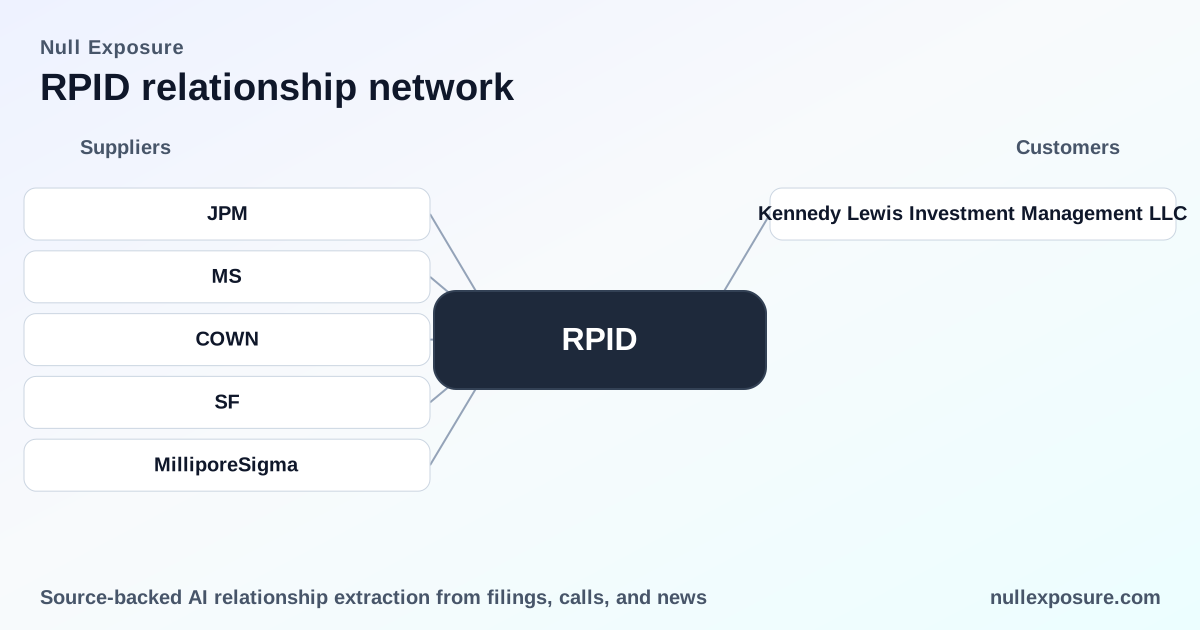
J.P. Morgan Securities LLC
J.P. Morgan acted as one of the joint book‑running managers for Rapid Micro’s initial public offering, supporting the capital raise that funded commercialization and manufacturing scale‑up. This role is documented in the company’s IPO pricing announcement on GlobeNewswire (July 15, 2021).
Morgan Stanley & Co. LLC
Morgan Stanley served alongside J.P. Morgan as a joint book‑running manager on the 2021 IPO, underwriting and placing shares with institutional investors to provide Rapid Micro with public market access. The engagement appears in the GlobeNewswire IPO release (July 15, 2021).
Cowen and Company, LLC
Cowen was listed as a joint book‑running manager in Rapid Micro’s IPO announcement, participating in the equity offering that underpinned the company’s public listing and subsequent liquidity channel. See the GlobeNewswire IPO pricing release (July 15, 2021).
Stifel, Nicolaus & Company, Incorporated
Stifel was part of the syndicate of joint book‑running managers for Rapid Micro’s public offering, helping structure distribution and investor outreach for the IPO. This is recorded in the GlobeNewswire press release announcing the IPO pricing (July 15, 2021).
MilliporeSigma
Rapid Micro referenced the further advancement of a global strategic partnership with MilliporeSigma in a January 14, 2026 company release, signaling a commercial and distribution relationship that supports go‑to‑market scale for consumables and channel reach. The mention was included in a January 2026 revenue update posted via Sahm Capital’s news feed.
What the supplier profile and constraints reveal about operational risk
Rapid Micro’s public disclosures outline structural characteristics of its supplier base that translate directly to execution risk and contract posture:
- Contracting posture: mainly spot purchase orders rather than long‑term supply agreements. The company states it does not have supply agreements with most suppliers beyond purchase orders, which creates exposure to price and availability volatility when demand spikes.
- Supplier concentration is a live risk. Rapid Micro identifies that certain critical components and consumables are sourced from single suppliers, and the loss of any such supplier could materially harm production and revenue.
- Role diversity: third parties supply components and logistics. The company sources Growth Direct components from third‑party manufacturers and relies on third‑party vendors for shipping, indicating dependency across manufacturing and distribution functions.
- Maturity signal: commercial scaling with constrained supplier commitments. The combination of spot contracting and single‑source critical components is consistent with a company still formalizing long‑term supplier agreements as production volumes ramp.
These constraint signals are company‑level indicators of operational vulnerability rather than relationship‑specific failures. Investors should treat them as a picture of the procurement posture and the work remaining to achieve supply resilience.
Investment implications: upside tied to execution, downside concentrated in supply flow
Rapid Micro’s upside is rooted in converting regulated manufacturers to an automated testing paradigm—if instrument installs ramp and consumable attachment rates follow, revenue and margin trajectories will improve. However, the most direct near‑term downside is supply disruption: single‑source parts or logistics interruptions can stall analyzer deployments and choke recurring consumable sales.
Other financial factors to weigh:
- Revenue growth is visible but profitability remains negative, reflecting commercialization investment; trailing revenue of ~$33.6 million and negative EBITDA highlight ongoing cash burn.
- Analyst sentiment is modestly favorable, with multiple buy ratings and an $8 target price consensus indicating room for appreciation if execution holds.
- Balance of institutional ownership (≈58%) gives the stock a professional investor base but could also accelerate supply‑ or execution‑driven re‑rating in either direction.
Mid‑way action point: for procurement teams and buy‑side analysts who need granular supplier risk data, NullExposure centralizes supplier disclosures and constraint signals—review the hub here: https://nullexposure.com/
Practical monitoring checklist for investors and operators
- Monitor announcements expanding long‑term supply agreements or secondary sourcing for critical components; these materially reduce operational risk.
- Track conversion metrics from pilots to production across strategic customers and distribution partners such as MilliporeSigma.
- Watch gross margin trends as consumables scale, and follow any inventory or lead‑time commentary in quarterly filings.
Bottom line and next steps
Rapid Micro sits at the intersection of a compelling recurring‑revenue model and tangible supply chain fragility. If management converts spot suppliers into contracted partners and mitigates single‑source dependencies, the installed‑base economics will drive durable value; absent that, growth can be interrupted by component or logistics disruption. For a centralized view of supplier signals and relationship evidence that matters for diligence and monitoring, visit NullExposure: https://nullexposure.com/
For diligence requests or to integrate supplier intelligence into investment workflows, explore the NullExposure supplier hub and contact our team through the homepage: https://nullexposure.com/