RPM International: How supplier strategy shapes an industrial chemicals leader
RPM International manufactures and sells specialty chemicals—coatings, sealants, and building systems—to consumer, specialty and industrial markets and monetizes through product sales, branded acquisitions and global distribution. The company operates as a large-scale buyer of raw materials while selectively acquiring upstream and adjacent product capabilities to accelerate growth, converting scale and brand breadth into predictable recurring sales and margin improvement. For additional supplier-insight tools and tracking, visit https://nullexposure.com/.
What the buying posture tells investors about RPM
RPM’s filings and public commentary make clear the company is a procurement-led operator. RPM obtains raw materials from a wide pool of suppliers—pigments, resins, solvents, packaging and transportation services—positioning the firm as a repeat, high-volume buyer rather than a captive supplier-dependent business. That buying posture produces several observable company-level characteristics:
- Scale and leverage: The company operates with multimillion-dollar purchasing and capital programs; for example, RPM disclosed a $487.4 million purchase price for a recent acquisition and maintains large committed facilities.
- Working capital sophistication: RPM reported $190.0 million outstanding under its accounts receivable financing program as of May 31, 2025, and has an amended facility increasing borrowing capacity to $1.35 billion (expiration extended to August 1, 2027), reflecting significant short-term funding and supplier payment flexibility.
- Commodity exposure with hedging implications: Procurement categories emphasize oil- and gas‑derived feedstocks and transportation, so commodity price swings and logistics shocks are primary supplier-linked risks.
These signals describe a mature procurement organization: diversified supplier base, material absolute spend, and active capital management to support large working-capital and acquisition-driven activities.
Key takeaways for operators and investors
- RPM is a buyer with concentrated absolute spend—strategic suppliers command large dollar volumes even if the supplier count is broad.
- Acquisitions are integrated to broaden product mix, increasing supplier complexity as new production lines and raw-material requirements are added.
- Working-capital programs and credit facilities are material to operations, so counterparty and liquidity stress in the supply chain has direct balance-sheet implications.
The Kalzip relationship — a precise strategic fit
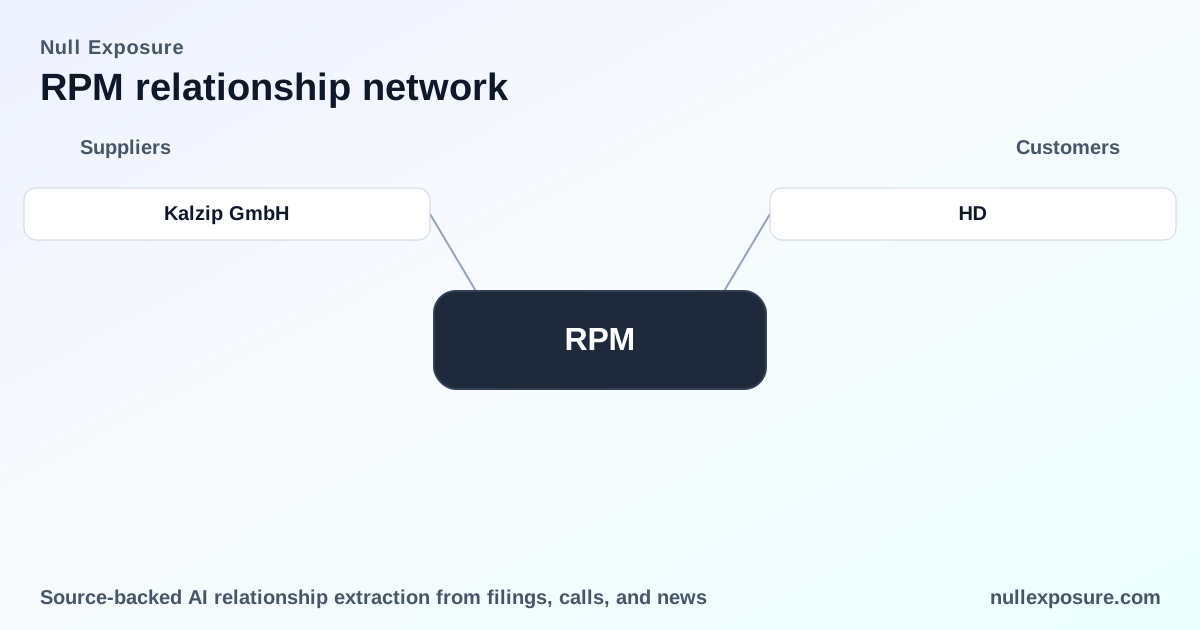
Kalzip GmbH was acquired to bring aluminum building envelope systems into RPM’s building solutions portfolio, reflecting an acquisition-driven strategy to expand product capabilities in building solutions. According to a Simply Wall St news item published March 10, 2026, the deal integrates Kalzip’s aluminum systems into RPM’s portfolio (FY2026 reporting context), signaling vertical broadened product lines and new supplier and raw-material flows tied to aluminum products. https://simplywall.st/stocks/us/materials/nyse-rpm/rpm-international/news/rpm-international-deal-for-kalzip-raises-questions-on-underv
How every disclosed relationship maps into RPM’s operating model
- Kalzip GmbH — RPM added Kalzip’s aluminum building envelope systems to its building solutions business as part of a FY2026 transaction; this is a product- and capability-focused acquisition that will shift raw-material exposure toward aluminum and broaden supplier relationships in metals and architectural systems. (Source: Simply Wall St, March 10, 2026.)
This article covers all supplier-facing relationships disclosed in available public reporting for the RPM supplier scope; the Kalzip transaction is the explicit third‑party relationship documented in FY2026 reporting and press coverage.
Risk profile derived from relationship and constraint signals
RPM’s company-level constraint signals—procurement role as a buyer and spend band above $100 million—translate into several investment-relevant risk and opportunity points:
- Negotiation power versus concentration risk: As a large buyer, RPM captures bargaining leverage on commodity and packaging purchases, which can protect margins when markets are rational. Conversely, high absolute spend concentration in certain commodity inputs (resins, solvents, pigments, aluminum, packaging) creates outsized exposure to supplier disruption or rapid price inflation.
- Integration risk from acquisitions: Acquiring asset-heavy suppliers like Kalzip brings operational integration demands—new supplier cohorts, logistical pathways, and metal-focused raw-material sourcing—which temporarily raises execution risk while offering long-term margin expansion.
- Liquidity and counterparty linkage: The company’s working-capital programs (notably $190 million outstanding under the AR Program as of May 31, 2025 and an expanded $1.35 billion borrowing capacity) indicate material reliance on short-term financing to smooth supplier payments and fund growth. Changes in credit conditions or AR program availability would affect supplier payment cadence and procurement flexibility.
What operators and suppliers should expect in contracting
RPM’s buyer posture dictates contract dynamics: suppliers will face volume commitments, competitive pricing pressure, and scrutiny on quality and delivery. At the same time, RPM’s scale and working-capital facilities make it an attractive long-term customer—suppliers that can meet scale, compliance and price performance will win durable business. For counterparties, aligning performance guarantees, logistics reliability and cost transparency will be decisive to secure and expand relationships with RPM.
For a vendor or operator benchmarking RPM’s procurement behavior and competitor sourcing, start here: https://nullexposure.com/.
Investment implications and recommended monitoring
Investors evaluating RPM should prioritize these monitoring items over the next 12–24 months:
- Track commodity price trends for resins, solvents and aluminum; these inputs directly affect gross margins and supplier negotiation dynamics.
- Watch integration milestones and capex related to the Kalzip acquisition for signs of accretion or operational drag.
- Monitor AR Program utilization and facility availability as near-term liquidity indicators; rising utilization or tighter credit terms would tighten supplier payment flexibility and raise execution risk.
- Assess supplier diversification metrics across critical inputs—high spend with a small supplier set elevates counterparty risk.
Conclusion: supplier relationships are a strategic lever for RPM
Supplier strategy is central to RPM’s competitive position: large-scale procurement provides margin benefits but concentrates risk in commodity inputs and integration events. The Kalzip deal exemplifies the company’s approach—acquire complementary product capability, accept near-term complexity, and monetize through cross-selling and scale. For further ongoing supplier and counterparty intelligence on RPM and comparable industrials, visit https://nullexposure.com/.
By focusing on commodity exposure, working-capital posture, and acquisition integration, investors and operators can form a clear view of how supplier dynamics will shape RPM’s next phase of performance.