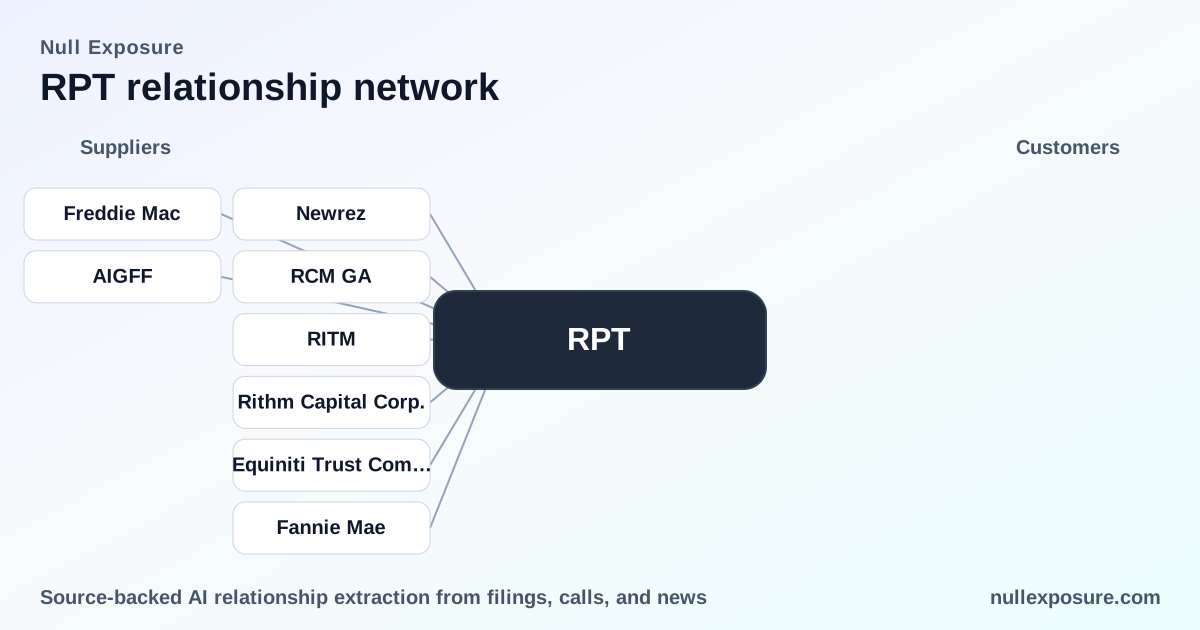
Rithm Property Trust (RPT): supplier map, contract posture, and what it means for investors
Rithm Property Trust (NYSE: RPT) is an externally managed REIT that combines operating real estate (outdoor shopping destinations) with a balance sheet of mortgage loans and related securities. The company monetizes through property-level cash flow (rent and leasing), mortgage servicing and interest spread on held loans/MBS, and fees paid to external managers and servicers that run day‑to‑day operations. For investors evaluating supplier risk, the critical facts are that RPT relies on external service providers under long‑lived and usage‑based contracts for both asset management and loan servicing, and it has recently reorganized governance and management through strategic transactions with the Rithm platform.
If you want a concise supplier-risk dashboard and primary source links, visit https://nullexposure.com/ for the full company supplier profile and primary‑document references.
Quick read: the operating model that matters to returns
RPT is externally managed and uses third parties to deliver core services: investment execution, property management, leasing, renovation oversight, and mortgage servicing. That structure translates to predictable fee flows to service providers and concentrated operational dependency—an investor should view management and servicer relationships as both operationally critical and economically meaningful. The company has also pursued strategic alignment with the Rithm platform through equity issuance and a new management agreement, shifting control and sourcing to an institutional parent.
Supplier relationships you need to know (short, source‑backed takes)
Newrez — servicing moved effective June 1, 2024
Servicing of RPT’s mortgage loans and real property was transferred to Newrez under a new servicing agreement effective June 1, 2024, changing who performs loan administration and loss‑mitigation services. (TradingView summary of RPT SEC 10‑K, FY2026)
RCM GA — new external manager implementing day‑to‑day operations
RPT entered a new management agreement with RCM GA, which is responsible for implementing the company’s business strategy and providing the management team and administrative personnel for daily operations. (TradingView summary of RPT SEC 10‑K, FY2026)
Rithm Capital Corp. / Rithm (RITM) — strategic parent and platform alignment
RPT completed a strategic transaction with Rithm Capital Corp. that included issuing common stock to Rithm, adopting a new management agreement, and relocating headquarters—effectively integrating RPT more directly into Rithm’s sourcing and scale. Multiple reporting outlets characterize RPT as externally managed by an affiliate of Rithm Capital. (CityBiz, FY2025; AlphaStreet and MarketScreener coverage, FY2024–FY2026)
Equiniti Trust Company, LLC — transfer agent handling corporate actions
Equiniti Trust Company, LLC is the company’s transfer agent and handled communications and payments to stockholders following the reverse stock split and related fractional‑share cash payments. (CityBiz, FY2025)
Fannie Mae and Freddie Mac — target licensing for multifamily servicing/origination
Management disclosed it is working to acquire licenses to serve as a Fannie Mae or Freddie Mac multifamily servicer or originator, which would broaden RPT’s servicing capabilities and potential market access for loan sales or conduits. (The Globe and Mail earnings transcript coverage, FY2026)
Genesis — pipeline of multifamily loans to seed the vehicle
RPT plans to acquire multifamily loans from its operating business Genesis, using that existing pipeline to seed loan portfolios and accelerate earnings growth without a J‑curve. (The Globe and Mail and InsiderMonkey transcript coverage, FY2026)
What the constraints tell investors about RPT’s supplier posture
RPT’s extracted constraints form a clear company‑level picture: contracts are predominantly long‑term, fee structures are usage‑based, and the relationships are operationally critical. Specifically:
- Long‑term contracting posture: Management and servicing relationships are governed by agreements with multi‑year terms and automatic renewal language—this drives predictability but increases lock‑in to external providers.
- Usage‑based economics: Servicing fees are charged as percentages of unpaid principal balance and paid monthly (0.42%–1.25% at acquisition), aligning servicer incentives with portfolio size and loan status.
- Short‑term liquidity arrangements coexist: The company uses short‑term repurchase agreements for funding, underlining sensitivity to short‑term wholesale funding markets even as operational contracts remain longer dated.
- Counterparty concentration and quality signal: Cash and deposits are maintained at large, insured banking institutions; counterparties are institutional in nature.
- Operational criticality: Servicers provide “critically important services” (loan servicing, loss mitigation, property management), making substitution difficult without operational disruption.
- Service‑provider role and active stage: RPT is actively governed by its new manager and servicer arrangements; these are not dormant contracts but core to current operations.
These are company‑level signals extracted from governance and contract language and should be treated as structural characteristics of RPT’s operating model rather than metrics tied to any single vendor.
If you want a side‑by‑side supplier scoring and primary‑document links, see the RPT supplier profile at https://nullexposure.com/.
Investment implications — what investors should watch next
- Operational continuity risk: Because key services are outsourced and labeled critical, any service disruption (transition failures, vendor insolvency, or contract disputes) would hit operations and cash collection quickly.
- Fee growth vs. expense leakage: Usage‑based servicing fees scale with loan balances, so portfolio growth benefits servicer economics but increases absolute third‑party fees; investors should monitor net yield after external fees.
- Platform benefits and integration risk: The strategic tie to Rithm Capital provides sourcing scale and potential preferential access to originations, but integration execution and governance alignment will determine realized value.
- Funding sensitivity: Short‑term borrowings and repo usage mean liquidity markets can affect cost of capital independent of long‑term management contracts.
For a deeper read on how these supplier dynamics affect valuation and relative risk, consult the full supplier report at https://nullexposure.com/.
Bottom line and next steps
RPT’s model is externally dependent and platform‑aligned: external management and servicing relationships are both a source of operating leverage and a concentration of operational risk. The company’s recent strategic transaction with Rithm Capital shifts the balance toward a parent‑sourced platform play—investors should value the potential for improved sourcing and execution against the governance and substitution risks inherent in outsourced operations.
To review primary documents and a consolidated supplier risk scorecard for RPT, go to https://nullexposure.com/.