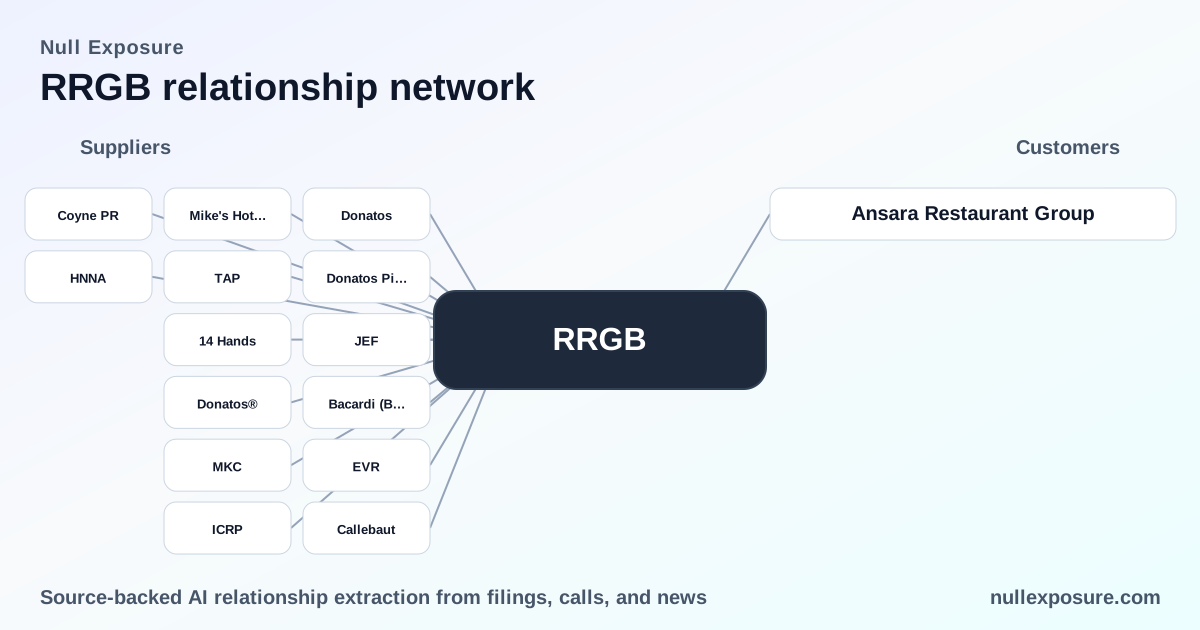
Red Robin (RRGB) supplier map: who matters to margins and why investors should care
Red Robin Gourmet Burgers operates a national casual-dining chain and franchises select locations, monetizing through dine-in sales, beverage programs, franchise fees and periodic promotions that drive traffic and ancillary beverage spend. The company runs on a tight input-cost model: food and beverage purchasing is the operational fulcrum, while capital and liquidity actions—debt refinancing and at‑the‑market equity programs—shape its financial flexibility. For investors and operators, the supplier list is not decorative: it directly influences menu economics, promotional capability and refinancing risk. Learn more at https://nullexposure.com/.
Why the supplier list is an investment signal
Red Robin reports $142.1 million of non‑cancelable purchase commitments tied primarily to vendors that supply food, beverages and restaurant supplies as of December 29, 2024. That single figure signals a material, recurring cash obligation to third‑party suppliers and implies an operating model with meaningful vendor concentration and firm contracting posture for core consumables. These commitments are a company‑level signal of scale in procurement and a constraint on liquidity and flexibility during margin pressure.
- Contracting posture: Significant non‑cancelable commitments indicate multi‑period purchase agreements rather than spot procurement.
- Concentration: Large aggregate commitments create counterparty dependency for core inputs; disruption or price inflation at key vendors flows directly through margins.
- Criticality: Food, beverage and branded ingredient partners are operationally critical — they affect menu availability, promotional design and guest experience.
- Maturity: The $142.1 million figure is contemporaneous with FY2024 filings and is a near‑term cash flow obligation investors must model into liquidity planning.
The supplier relationships that appear in public filings and press
Below is a plain‑English tour of every supplier or third‑party relationship cited in Red Robin public materials and press as captured in recent releases. Each item is tied to the originating press release or news report so investors can follow the primary source.
Donatos / Donatos Pizza / Donatos® (multiple press releases, FY2024–FY2026). Red Robin repeatedly promotes Donatos pizza as a menu option at select locations across FY2024–FY2026 press releases, which demonstrates a continuing menu partnership that expands offering breadth and supports value promotions. Source: Red Robin press releases and investor news (FY2024–FY2026).
Jefferies LLC (JEF) (FY2025). Red Robin retained Jefferies to advise and support refinancing efforts for its long‑term debt under the credit agreement, signaling active liability management and an imminent capital markets process. Source: Red Robin FY2025 press release on results and refinancing efforts.
Bacardi (Bacardi Superior rum) (FY2024). Bacardi Superior rum is specified in new cocktail recipes announced in FY2024, indicating branded spirit relationships that support higher‑margin beverage sales. Source: Red Robin FY2024 menu announcement press release.
Evercore Group L.L.C. (EVR) (FY2025). Evercore is acting as sales agent for an at‑the‑market equity offering program, tying an investment‑banking relationship directly to Red Robin’s equity liquidity strategy. Source: Red Robin FY2025 press release announcing the AT‑THE‑MARKET program.
Callebaut (FY2024). Callebaut chocolate is identified as an ingredient in a featured dessert, reflecting use of premium branded ingredients to support menu differentiation. Source: Red Robin FY2024 menu press release.
Mike's Hot Honey (FY2026). Mike’s Hot Honey is part of new flavor offerings on the Big YUMMM value menu, illustrating Red Robin’s use of branded hot sauces to create limited‑time menu variants. Source: Sahm Capital coverage and company FY2026 promotional release.
Coors Light (TAP) (FY2026). Coors Light appears as a promotional beverage paired with value menu pricing, underlining beverage brand partnerships that drive in‑restaurant beverage upsell. Source: Sahm Capital coverage of the Big YUMMM Deals program (FY2026).
Frank’s RedHot (MKC) (FY2026). Frank’s RedHot Buffalo‑style Buzz Sauce is used in new sandwich menu items, showing a strategy of leveraging recognizable condiment brands for product marketing. Source: Red Robin FY2026 Big YUMMM menu release.
14 Hands (FY2024). 14 Hands merlot is referenced in a curated cocktail recipe, an example of wine branding included in limited menu promotions to enhance perceived menu value. Source: Red Robin FY2024 spicy‑menu press release.
ICR (ICRP) (FY2024). ICR is listed as an investor relations contact in company filings, indicating an external IR relationship to manage shareholder communications. Source: Red Robin FY2024 results press release.
Coyne PR (FY2026). Coyne PR is listed as a media relations partner on a FY2026 quarterly reporting notice, indicating outsourced PR support for corporate communications. Source: FY2026 quarterly results filing and MX ADVFN posting.
Hennessy (HNNA) (FY2024). Hennessy cognac is cited as an element in a cocktail described in a FY2024 menu release, again reinforcing the role of branded spirits in beverage margin strategy. Source: Red Robin FY2024 menu press release.
What these relationships mean for investors and operators
- Menu partnerships are tactical and revenue‑levering. Branded ingredients and spirits (Bacardi, Hennessy, Coors Light, Frank’s, Mike’s Hot Honey, 14 Hands, Callebaut, Donatos) are used to create limited‑time offers and promotional combos that increase check size and traffic. These suppliers are revenue multipliers, not just cost centers.
- Capital markets relationships matter for balance‑sheet durability. Engagements with Jefferies and Evercore show Red Robin is actively managing financing and equity programs; success or failure of these efforts will materially affect liquidity and refinancing risk.
- Communications and reputation are outsourced. ICR and Coyne PR handle IR and media relations respectively, which concentrates external disclosure and brand messaging through a small set of contractors.
Visit https://nullexposure.com/ to explore supplier exposure tools and benchmark peer procurement profiles.
Key risk and opportunity checklist
- Risk — Procurement concentration: The $142.1 million in firm commitments ties up capital and increases vulnerability to supplier price inflation; investors must model input shocks into margin scenarios.
- Risk — Refinancing execution: Jefferies’ retention indicates dependence on successful debt refinancings; liquidity outcomes are sensitive to market access and pricing.
- Opportunity — Branded beverage and cross‑brand co‑marketing: Partnerships with recognizable beverage and ingredient brands support higher‑margin beverage spend and differentiated value promotions.
- Operational sensitivity: Disruption to any major food or beverage supplier would create immediate menu constraints given the company’s stated non‑cancelable commitments.
Final read: how to use this supplier map in diligence
For equity investors and operators, the supplier disclosures translate directly into actionable diligence items: stress‑test the P&L with a 10–20% uplift in core food and beverage costs; evaluate refinancing plan contingencies and timeline; and monitor promotional cadence tied to branded partners for margin benefit. Red Robin’s supplier relationships are operationally central and financially consequential.
For a deeper supplier‑centric risk view and peer comparisons, pursue the platform at https://nullexposure.com/. This analysis highlights where procurement constraints and capital strategy intersect — and where management will need to deliver to protect margins and liquidity.