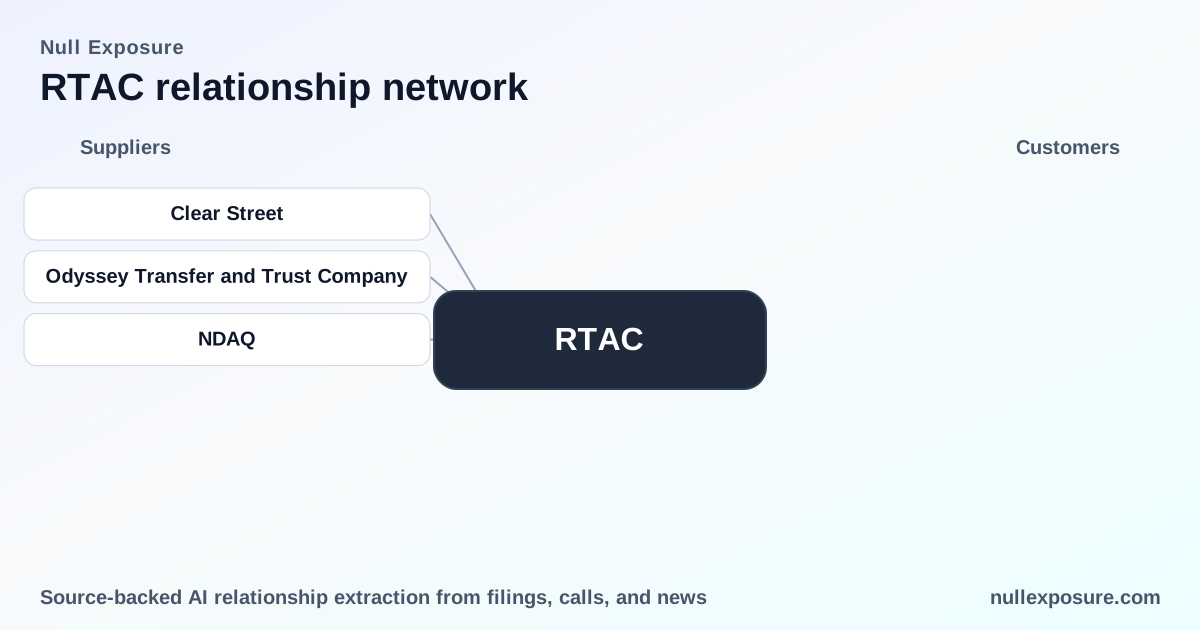
RTAC: A compact map of counterparties that run and record the SPAC plumbing
Renatus Tactical Acquisition Corp I (RTAC) operates as a traditional SPAC: it raises capital through a units offering, holds proceeds in trust, and monetizes through a sponsor promote and merger execution when it identifies a target. Value creation depends entirely on its ability to complete a business combination, the robustness of underwriting and market distribution, and the operational mechanics that separate and list units and warrants for public trading. For investors evaluating supplier and counterparty exposure, the meaningful relationships are narrow but operationally critical: underwriting, transfer-agent services, and exchange listing. Learn more about supplier-risk intelligence at https://nullexposure.com/.
How RTAC’s operating model dictates supplier priorities
RTAC’s business model is not an operating company; it is a transaction vehicle. That structure forces a specific contracting posture and concentration profile:
- Contracting posture: Standard SPAC vendor engagements are short, high-frequency and milestone-driven — underwriting fees and placement responsibilities for the bookrunning bank, transfer-agent contracts that govern unit separation and shareholder recordkeeping, and exchange listing agreements that set compliance and trading rules.
- Concentration: Counterparty concentration is high and intentional: a handful of firms carry asymmetric operational importance (e.g., the bookrunner that places units with investors and the transfer agent that executes unit separations).
- Criticality: These relationships are functionally critical — failure or delay in underwriting execution, transfer-agent logistics, or exchange listing can derail the liquidity and timeline that underpin a SPAC’s ability to consummate a deal.
- Maturity and risk posture: RTAC reports no operating revenue, a negative book value, and is a capital vehicle with finite life and a performance hinge around deal execution and sponsor expertise; governance and disclosure cadence matter as much as market sentiment.
No explicit constraints were provided in the source feed; the above are company-level operational signals inferred from RTAC’s SPAC structure and disclosed attributes (zero operating revenue, market capitalization, Nasdaq listing). If you require a supplier-risk scorecard or ongoing tracking of counterparties, visit https://nullexposure.com/ for monitoring options.
The three counterparties that matter, and what they do
Below are the relationships identified in public reporting and what each partner contributes to RTAC’s execution chain.
-
Clear Street — Clear Street acted as sole book-running manager for RTAC’s units offering, which positions them as the primary underwriter responsible for distribution and placement of the SPAC’s capital raise. According to a press release published on Yahoo Finance on March 10, 2026, Clear Street carried sole book-running responsibilities for the offering and therefore bears underwriting and distribution execution risk for that transaction. (Source: Yahoo Finance press release, March 10, 2026.)
-
Odyssey Transfer and Trust Company — Odyssey is the transfer agent tasked with handling unit separations; brokers must coordinate with Odyssey to split Units into Ordinary Shares and Warrants. A Yahoo Finance release dated March 10, 2026 noted that holders will have their brokers contact Odyssey Transfer and Trust Company to effect those separations, highlighting Odyssey’s operational role in shareholder recordkeeping and instrument segmentation. (Source: Yahoo Finance press release, March 10, 2026.)
-
Nasdaq (NDAQ) — The Ordinary Shares and Warrants resulting from separated Units are listed to trade on the Nasdaq Global Market under the tickers “RTAC” and “RTACW,” creating the public market and regulatory venue for liquidity and compliance. The same March 10, 2026 press release specified Nasdaq as the trading venue and the ticker assignments, formalizing the exchange-level obligations RTAC must satisfy. (Source: Yahoo Finance press release, March 10, 2026.)
Why these relationships shape investor risk and upside
Each named counterparty maps directly to a distinct investor outcome:
- Clear Street (bookrunner) — distribution and market reception. The bookrunner controls how the offering is placed and therefore affects investor composition, redemption behavior and post-offer float dynamics. A sole bookrunner structure concentrates execution risk but can ensure coherent placement strategy when the manager has appropriate capabilities.
- Odyssey (transfer agent) — operational integrity and timing. Transfer agents handle the mechanics of unit separation and shareholder records; errors or processing delays can create settlement problems, hamper warrant exercise, and erode investor confidence.
- Nasdaq (exchange) — liquidity and compliance regime. Listing on Nasdaq governs reporting cadence, continued listing standards and market liquidity; Nasdaq compliance issues translate directly into trading risk for shareholders.
Key takeaway: RTAC’s counterparty map is narrow but high-leverage — operational failures at any of these three nodes would materially affect the SPAC’s ability to deliver on its transaction timetable and investor liquidity.
Monitoring and action checklist for investors
Keep a short, operational monitoring list to track supplier risk effectively:
- Confirm the bookrunner’s reputation and recent SPAC placement performance; watch for changes to underwriting partners or fee structures.
- Monitor transfer-agent notices and settlement advisories from Odyssey for any delays or processing irregularities.
- Track Nasdaq filings, compliance flags, and Form 8-K disclosures for sponsor agreements and any changes to listing status.
- Watch redemption levels at the time of a deal announcement and the sponsor’s PIPE commitments; distribution and market placement directly influence redemption dynamics.
These items form a practical surveillance plan for investors focused on the intersection of execution risk and market outcomes. For continuous supplier-risk monitoring and alerts, review our service offerings at https://nullexposure.com/.
Bottom line for investors and operators
RTAC’s value proposition is straightforward: execute a business combination that converts trust-held capital into long-term equity value. For investors, the primary risk is operational and counterparty concentration, not traditional operating performance. Clear Street’s role as sole bookrunner, Odyssey’s transfer-agent function, and Nasdaq’s exchange oversight form the critical plumbing that determines whether a SPAC successfully transitions from an empty shell to an operating public company. Track these relationships, their contractual terms, and any operational notices as leading indicators of transaction health.
If you want a supplier-focused dossier or ongoing alerts tied to RTAC’s counterparties and filing activity, start here: https://nullexposure.com/.