Rentokil Initial (RTO) — supplier relationships that shape a route-based services franchise
Rentokil Initial operates a global route-based services platform delivering pest control, hygiene and related services, monetizing through recurring field-service contracts, add-on protection products and incremental technology-enabled upsells. The company generates predictable cashflow from high-frequency service cycles while selectively layering insurance-style protections and digital tools to raise wallet share. For investor and operator due diligence, the supplier relationships highlighted below illuminate Rentokil’s operational dependencies and how third parties influence delivery, cost and product innovation. For a consolidated view of supplier intelligence and relationship mapping, visit https://nullexposure.com/.
How Rentokil’s supplier map moves the P&L and execution risk
Rentokil’s model is route-first: a dispersed field force delivers recurring contracts to residential and commercial customers while centralized systems and partners handle scheduling, customer protection products, and increasingly, AI-enabled productivity tools. Key monetization drivers are recurring contract retention, service upsell penetration (e.g., termite protection with financial guarantee add-ons), and digital tools that increase technician throughput. Financially, the company trades as a mature industrial services operator (Market cap ~$16.5bn; Revenue TTM ~$6.9bn; EBITDA ~$940m), so marginal improvements to route efficiency or reduction of software friction can be high-return.
- Contracting posture: Predominantly long-duration customer contracts with frequent, small-basket transactions; supplier contracts that support operational continuity are strategically important.
- Concentration and criticality: Central platforms that coordinate field operations and customer records are single points of operational concentration and therefore elevate counterparty risk.
- Maturity and optionality: The business blends legacy operational processes with a push toward modern AI and software tools, creating a window for productivity gains but also integration cost.
Explore supplier and counterparty insights for investors at https://nullexposure.com/ to test these operational assumptions in your model.
What the vendor list tells investors and operators
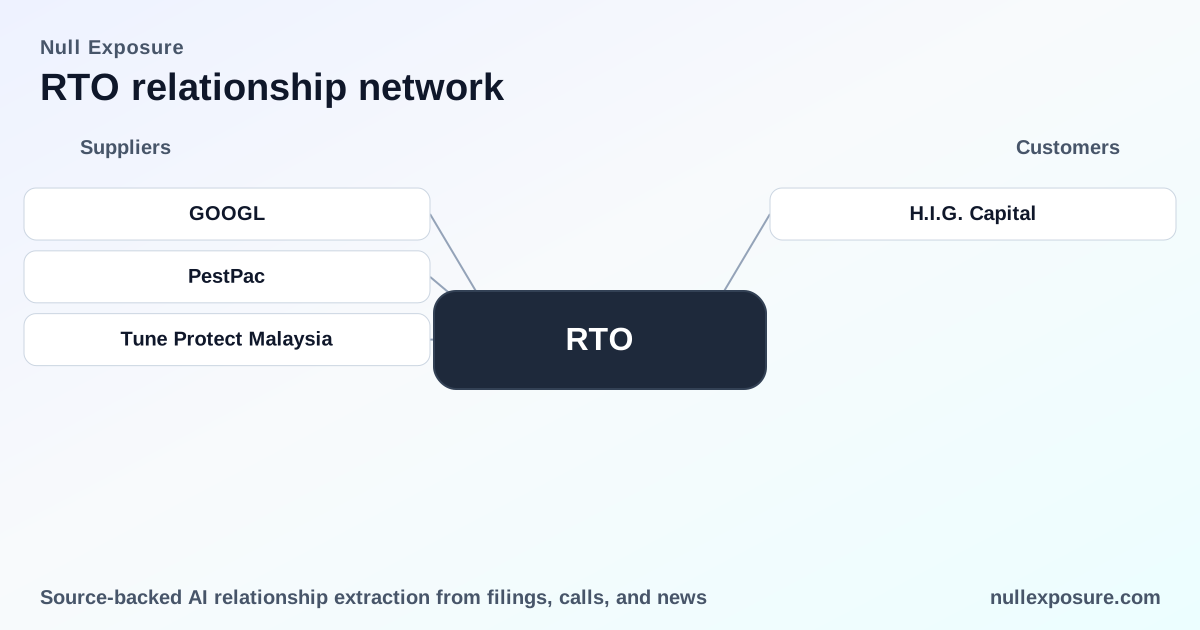
Rentokil’s public disclosures and media reports mention a small set of external partners that play outsized roles in operations and product packaging. Below I cover each relationship identified in the public results.
Google — enterprise AI rollout to the workforce (FY2026)
Rentokil deployed Google’s Gemini AI across its employee base in 2025, rolling the tool out to over 60,000 colleagues and reporting more than 1 million users in the first six months, indicating a rapid internal adoption of generative AI to support operations and knowledge management. According to an earnings call transcript for Q4 2025 published by InsiderMonkey, management framed this as a productivity and training initiative to scale technical know-how across field teams (InsiderMonkey, Q4 2025 earnings call transcript).
PestPac — the core commercial operations system in the U.S. (FY2026)
Rentokil’s U.S. commercial business runs on PestPac, a field service management platform that the company has standardized on for three to four years, consolidating scheduling, job history and billing into a single operational backbone. Management referenced PestPac as the “core system” for the U.S. commercial business during the Q4 2025 earnings call transcript (InsiderMonkey, Q4 2025 earnings call transcript).
Tune Protect Malaysia — financial protection on termite treatments (FY2024)
In Malaysia, Rentokil packaged residential termite treatments with financial protection against termite-related damages through a partnership with Tune Protect Malaysia, adding an insurance-style layer to product offerings that increases customer value and potential lifetime revenue. This partnership was announced in a public notice (Malaysiakini announcement, FY2024).
Company-level constraints and operating signals (no supplier-specific constraints captured)
There are no supplier-specific constraints captured in the available relationship metadata; that absence itself is a signal. At the company level, the following operating characteristics shape supplier risk and purchasing behavior:
- Operational dependency on centralized software: The business relies on centralized platforms to manage a distributed field workforce; this creates concentration risk around any single platform or integration partner.
- Strategic adoption of AI and digital tooling: Rapid enterprise rollout of AI (per Google Gemini deployment) signals a push to extract efficiency gains from knowledge management and routing — a potential source of structural cost savings.
- Product layering with third-party insurers: Partnerships that convert services into bundled, insurance-backed products (e.g., termite protection) shift some financial liability and broaden revenue streams but introduce counterparty risk tied to insurer solvency and claims handling.
- Maturity trade-offs: As a global, route-based operator, Rentokil balances legacy process risk against opportunistic modernization; supplier relationships are therefore both operational levers and potential points of friction.
These are company-level signals; there are no supplier-contract excerpts in the record that explicitly tie constraints to any one vendor.
What this means for investors and operators: risk, levers and attention areas
- Operational leverage is real: The Google AI rollout and standardized use of PestPac suggest tangible levers to improve technician productivity and reduce back-office friction; investors should build conservative but visible efficiency assumptions into models.
- Single-platform concentration is the biggest supplier risk: When a major market (the U.S. commercial business) operates on a single core system, an outage, integration failure or vendor pricing shift could have outsized operational impact. Operators should prioritize disaster recovery, supplier SLAs, and multi-year pricing commitments.
- Product bundling shifts capital and claims exposure: Partnerships like the Tune Protect Malaysia arrangement reduce customer attrition risk via enhanced value propositions but transfer concentrated claims and underwriting risks to insurer partners — and conversely expose Rentokil to reputational risk via partner claims handling.
- Execution beats strategy: The path to margin improvement runs through execution — technician routing, upsell conversion and low-friction billing — which are directly influenced by these supplier relationships.
If you are stress-testing Rentokil’s supplier-dependent upside or downside, focus on outage scenarios for core systems, incremental productivity gains from AI adoption, and the durability of insurer partnerships. For a deeper supplier risk profile and relationship map, see https://nullexposure.com/.
Bottom line and recommended actions
Rentokil’s supplier disclosures reveal a pragmatic blend of software dependency, AI adoption, and insurance partnerships that materially affect execution and margin expansion. For investors: model conservative productivity improvements tied to AI, but explicitly stress single-platform and insurer counterparty scenarios. For operators: lock down SLAs, expand contingency capacity, and measure the economic returns on each supplier relationship.
For a practical next step in supplier diligence and to compare Rentokil’s supplier posture across peers, visit https://nullexposure.com/ and request a tailored supplier risk briefing.