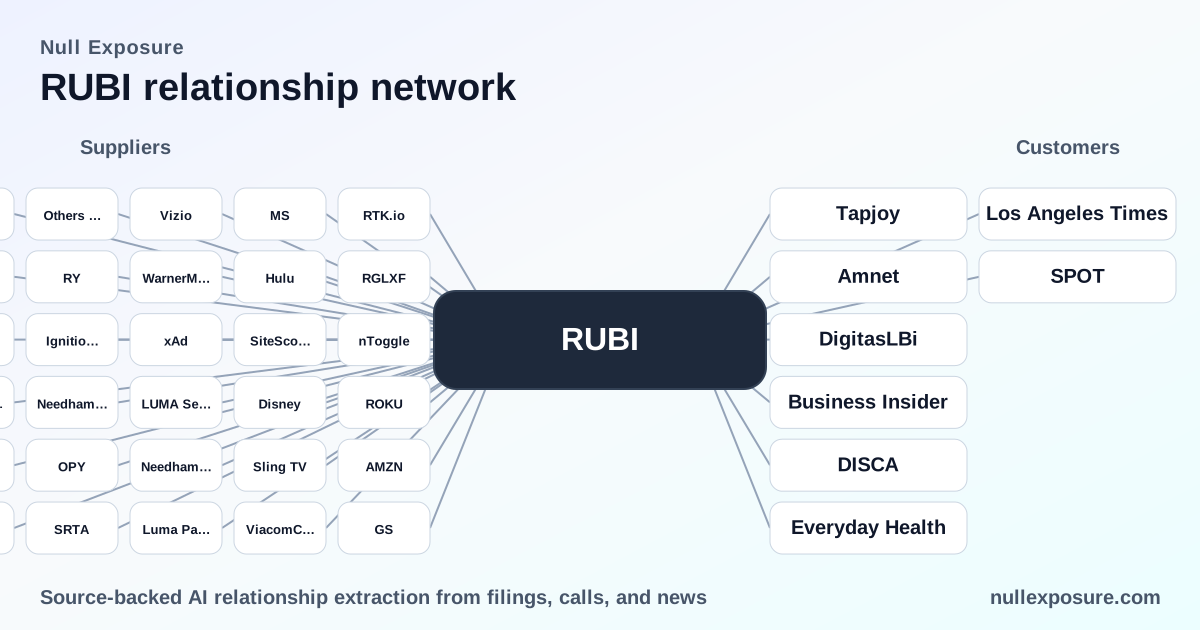
Rubico Inc. (RUBI) — supplier relationships that shape an ad‑tech sell‑side platform
Rubico (formerly known in market commentary as Rubicon Project) operates a sell‑side ad‑tech platform that automates the buying and selling of digital advertising inventory and monetizes through transaction fees and take‑rates on impressions and supply‑side services. The company grows by integrating publisher tooling, strategic distribution partnerships and targeted acquisitions that expand inventory, improve yield and lock in publisher relationships. Investors should treat RUBI as a platform business whose revenue sensitivity is driven by supply integrations, distribution agreements, and the firm’s ability to defend take‑rates.
For a consolidated view of RUBI’s partner map and operational implications, visit the Null Exposure homepage: https://nullexposure.com/.
Why supplier relationships matter for valuation and risk
RUBI’s margins and revenue per share depend on the durability of publisher and device partnerships and on successful incorporation of acquired technology into the sell‑side stack. The relationship set shows a mix of strategic acquisitions (to add tooling or inventory), commercial partnerships (to reach apps and device manufacturers), and investment‑bank relationships tied to capital markets events. These partners determine inventory breadth, pricing power, and exit options for the business.
Middle‑market acquirers and institutional counterparts also appear repeatedly in RUBI’s history, reflecting a corporate posture that blends organic platform development with M&A and capital markets activity. No explicit contractual constraints were returned in the relationship sources, which is a company‑level signal: there are no documented single‑source contractual lock‑ins exposed in this set, so operational risk should be evaluated on commercial concentration and technology integration success rather than on obvious legal dependency. Learn more about how these dynamics affect supplier risk at https://nullexposure.com/.
Catalog of RUBI’s supplier, partner and advisor relationships (concise summaries)
Below I cover each relationship pulled from the available reporting. Each entry is a plain‑English summary with the reporting source and period.
-
RTK.io — Rubico acquired header‑bidding specialist RTK.io for $11m to simplify publisher header bidding and improve yield for publisher partners. Source: The Drum (FY2019).
-
RTL Group — RTL Group sold SpotX to Magnite in a transaction cited for industry consolidation; RTL’s assets intersected with sell‑side dynamics that affect inventory distribution. Source: AdExchanger (FY2021).
-
nToggle — Management cited nToggle as an acquired technology expected to improve win rates with a three‑year payback window, signalling RUBI’s use of tuck‑ins to enhance auction performance. Source: The Drum (FY2017).
-
Roku — Roku appeared as a downstream distributor in industry coverage of aggregated sell‑side inventory; device makers such as Roku expand addressable supply that platforms like RUBI rep. Source: AdExchanger (FY2021).
-
Amazon — Rubico leveraged Amazon’s Transparent Ad Marketplace (TAM) to bolster mobile app inventory, reflecting a pragmatic commercial integration to expand supply. Source: The Drum (FY2017).
-
Goldman, Sachs & Co. — Investment banks including Goldman served as joint book‑running managers on RUBI’s IPO, indicating institutional underwriting support during public listing. Source: GlobalVenturing (FY2014).
-
Morgan Stanley & Co. — Morgan Stanley acted as a joint book‑runner on the IPO and later surfaced in M&A speculation and strategic advisory contexts, showing repeated engagement across capital events. Sources: GlobalVenturing (FY2014); Yahoo Finance/SG reporting on FY2017 strategic review.
-
SiteScout — RUBI acquired SiteScout, a security technology company, to shore up ad quality and malware protections on the sell‑side. Source: TechCrunch (FY2010).
-
Disney — Major programmers like Disney are listed among the downstream programmers whose inventory is represented in industry consolidation moves, underscoring the importance of premium publisher relationships for sell‑side economics. Source: AdExchanger (FY2021).
-
Sling TV — Sling TV was named among programmers and device makers in sector coverage of sell‑side inventory consolidation, indicating distribution endpoints for platform inventory. Source: AdExchanger (FY2021).
-
ViacomCBS — ViacomCBS features in aggregation reporting on inventory representation by sell‑side platforms, signalling importance of network partnerships. Source: AdExchanger (FY2021).
-
Vizio — Vizio is included in the list of device makers whose inventory relationships matter to sell‑side distribution reach. Source: AdExchanger (FY2021).
-
WarnerMedia — WarnerMedia was cited as part of the programming and device mix relevant to sell‑side inventory representation in industry consolidation coverage. Source: AdExchanger (FY2021).
-
xAd — RUBI ran a private marketplace with location‑based exchange xAd to push mobile growth, conveying a data‑driven partnership to increase mobile orders. Source: AdExchanger investment coverage (FY2015).
-
LUMA Securities LLC — LUMA Securites participated as a co‑manager on RUBI’s IPO, reflecting boutique capital markets involvement at listing. Source: ExchangeWire (FY2014).
-
Luma Partners — Luma Partners acted as a financial advisor to RUBI on the Rubicon–Telaria transaction, evidence of strategic advisory relationships during transformative M&A. Source: Digiday (FY2019).
-
Others Online — RUBI acquired Others Online earlier in its build‑out, showing serial acquisition of small startups to aggregate technology and inventory. Source: TechCrunch (FY2010).
-
RBC Capital Markets, LLC — RBC was a joint book‑running manager on the IPO, indicating syndicate support from multiple banks at listing. Source: ExchangeWire (FY2014).
-
IgnitionOne — RUBI divested or referred intent‑marketing customers to IgnitionOne and entered a partnership where IgnitionOne took over certain clients and staff, illustrating outsourcing of non‑core services. Source: Betakit and Yahoo Finance/SG (FY2017).
-
Strata — RUBI announced buy‑side partnerships including Strata to expand automation for direct buys, demonstrating channel partnerships to broaden market coverage. Source: Yahoo Finance/SG (FY2017).
-
Mediaocean — A strategic integration with Mediaocean delivered automation for the direct buy market, an important route for institutional ad spend to flow through RUBI’s systems. Source: Yahoo Finance/SG (FY2017).
-
AdDazzle — AdDazzle was listed among partnerships to extend buy‑side reach into direct buys, complementing RUBI’s sell‑side tooling with buy‑side connectivity. Source: Yahoo Finance/SG (FY2017).
-
Needham & Company, LLC — Needham served as a co‑manager on the IPO and later as a financial advisor on strategic transactions, underscoring repeated capital markets engagements. Sources: ExchangeWire (FY2014); Digiday (FY2019).
-
Oppenheimer & Co. Inc. — Oppenheimer acted as a co‑manager in the IPO syndicate, contributing to initial public distribution. Source: ExchangeWire (FY2014).
-
Discovery — Discovery was cited in market reporting as part of the programmer inventory mix that sell‑side platforms represent, reinforcing premium content relationships. Source: AdExchanger (FY2021).
-
LUMA Securities / LUMA (duplicate mentions) — Appears in IPO syndicate listings; consistent with boutique co‑manager activity at IPO. Source: GlobalVenturing and ExchangeWire (FY2014).
-
Samsung — Samsung was named among device partners in industry consolidation coverage, indicating the importance of OEM relationships for connected TV inventory. Source: AdExchanger (FY2021).
-
inMobi — inMobi provided access to tens of thousands of apps monthly, supplying RUBI with mobile app inventory breadth. Source: AdExchanger investment coverage (FY2015).
What these relationships mean for investors: operating constraints and priorities
-
Contracting posture: RUBI operates as a platform supplier selling services to publishers and connecting buyers; partner set shows a merchant‑style contracting posture with many commercial integrations and acquisitions rather than long‑term single‑vendor lock‑ins. This is a company‑level signal because no explicit contractual constraints were found.
-
Concentration: Relationship mix spans premium programmers, device OEMs and ad exchanges — risk is concentrated in the ad ecosystem cycle and in large publisher/device partners that determine scale. Investors should model revenue sensitivity to flows from these categories rather than to any single named vendor.
-
Criticality and maturity: Acquisitions like RTK.io and SiteScout reveal a strategy to internalize critical tooling (header bidding, ad quality), improving maturity of the tech stack; partnerships with Mediaocean, xAd and device makers demonstrate distribution maturity across channels.
-
Capital markets plumbing: Repeated engagement with Goldman, Morgan Stanley, RBC, Needham and Oppenheimer shows institutional underwriting and advisory relationships that supported IPO and M&A activity — a signal of financial market access rather than operational dependency.
Bottom line and investor action
Rubico’s supplier and partner footprint shows a deliberate mix of acquisitions to secure yield‑enhancing technology and partnerships to expand distribution across mobile, CTV and direct buys. Key investment issues are commercial concentration with large publishers/device OEMs, integration risk from serial tuck‑ins, and the firm’s ability to defend take‑rates as inventory scales.
If you are modeling exposure to RUBI’s supplier risk or preparing diligence on sell‑side counterparty exposure, start with a partner‑level revenue stress test and catalog of contractual terms. For a structured supplier risk assessment and continuous monitoring, visit Null Exposure for subscription services and research: https://nullexposure.com/.
For direct access to further relationship maps and ongoing monitoring tailored for investors and operators, go to https://nullexposure.com/.