Rayonier Advanced Materials (RYAM): supplier relationships that shape cash flow and strategic pivot
Rayonier Advanced Materials monetizes through specialty cellulose products sold globally to pulp, textile, and industrial customers while increasingly steering capital and partnerships toward high-value biomaterials and biofuel initiatives. Revenue is driven by commodity-linked pulp sales and long-term feedstock contracts, while upside is concentrated in nascent biomaterials investments that attract project financing and partner equity. For investors and operators, the key question is how supplier contracts, financing partners and strategic alliances collectively support working capital and de-risk the company’s transition into biomaterials. Learn more about how supplier risk maps to strategy at https://nullexposure.com/.
What the supplier map tells investors about RYAM’s operating posture
Rayonier Advanced Materials runs a classic industrial supplier model with material long-term procurement commitments and exposure to government-controlled timber resources, combined with an evolving set of finance and JV partners for its biomaterials ambitions. The company’s operating constraints show three central dynamics:
- Contracting posture — long-term and binding. The company reports a 20‑year wood chip and residual fiber supply agreement with GreenFirst, creating multi-decade purchase obligations that underpin mill throughput and working capital predictability while locking in vendor concentration. According to the company’s 2024 Form 10‑K, remaining obligations on that contract total about $206 million, with roughly $12 million per year through 2041.
- Counterparty mix — a blend of private banks, private equity/impact capital, specialist technology licensors and government‑controlled resource suppliers. Fiber sourcing often derives from Crown Lands in Canada, which introduces regulatory and allocation dynamics into the supply chain (company disclosures, FY2024).
- Spend concentration and commitment scale. Company-level noncancellable purchase obligations were $542 million as of December 31, 2024, signaling meaningful fixed purchasing exposure that supports operations but reduces short-term flexibility (10‑K, FY2024).
These constraints imply high criticality of feedstock contracts, moderate supplier concentration, and a mature contracting posture in core raw materials alongside nascent, financed joint ventures for new product lines. See more supplier signals at https://nullexposure.com/.
Partners and counterparties you need to know
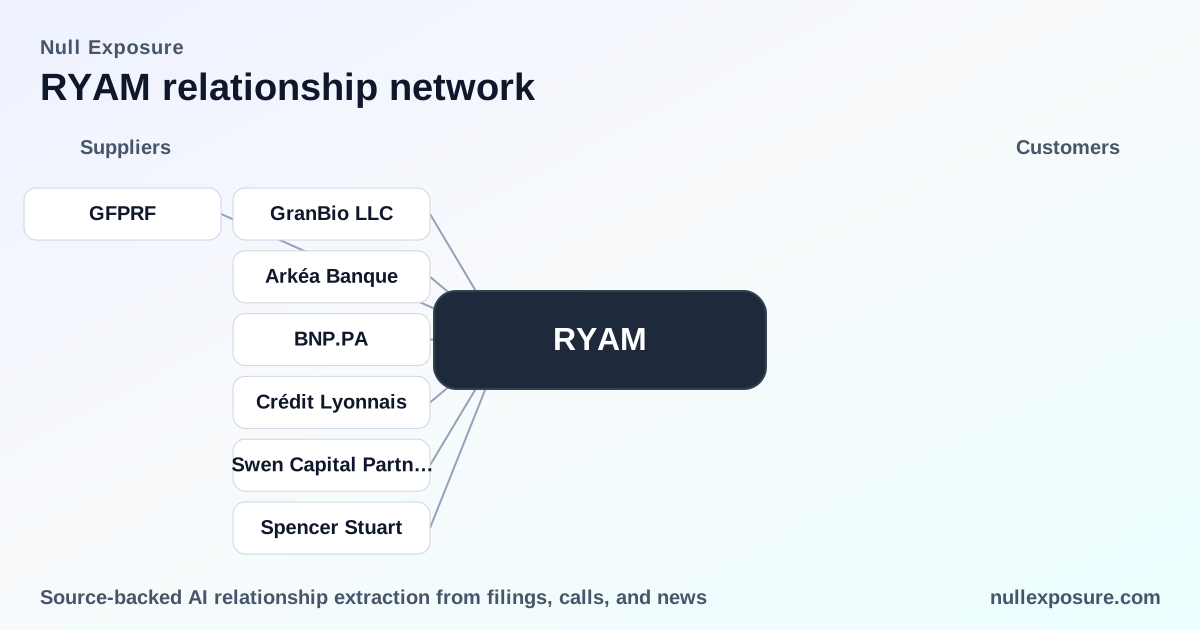
Below I cover every relationship captured in available reporting, with concise plain‑English takeaways and source references.
GranBio LLC
Rayonier Advanced Materials has engaged with GranBio on technology licensing for advanced biofuels and biochemicals; if a pilot proceeds, RYAM would receive a license to GranBio’s Celer2L™ yeast and AVAP® technologies to produce ethanol and other sugars at its Jesup site, indicating a strategic move into high-growth biofuel value chains (Pulp & Paper News, reporting FY2025 developments: https://www.pulpapernews.com/20250804/16880/ryam-explore-aviation-fuel-its-jesup-site).
Arkéa Banque
Arkéa participated in a Euro 37 million tranche of secured term loans that were part of a Euro 67 million green financing package used to fund RYAM’s biomaterials strategy; this positions Arkéa as a debt provider in a structured green financing facility (LesProm coverage of the FY2024 transaction: https://www.lesprom.com/en/news/Rayonier_Advanced_Materials_raises_Euro_67_million_green_capital_to_invest_in_its_biomaterials_strategy_116001/).
BNP Paribas
BNP Paribas joined Crédit Lyonnais and Arkéa in providing secured term loans within the same Euro 37 million debt component of RYAM’s green financing, exposing the bank to the credit and project execution risk of RYAM’s biomaterials initiatives (LesProm article on FY2024 financing: https://www.lesprom.com/en/news/Rayonier_Advanced_Materials_raises_Euro_67_million_green_capital_to_invest_in_its_biomaterials_strategy_116001/).
Crédit Lyonnais
Crédit Lyonnais is another lender in the Euro 37 million secured loan tranche supporting RYAM’s biomaterials investments, which suggests French banking partners underwrote project-level credit with an initial floating rate and seven‑year maturity (LesProm coverage of the FY2024 financing: https://www.lesprom.com/en/news/Rayonier_Advanced_Materials_raises_Euro_67_million_green_capital_to_invest_in_its_biomaterials_strategy_116001/).
Swen Capital Partners
Swen Capital Partners committed Euro 30 million of preferred equity to acquire a 20% stake in the newly formed subsidiary RYAM BioNova S.A.S., signaling that impact-oriented private capital is underwriting the company’s move into biomaterials while taking an equity position with upside participation (LesProm report on the FY2024 deal: https://www.lesprom.com/en/news/Rayonier_Advanced_Materials_raises_Euro_67_million_green_capital_to_invest_in_its_biomaterials_strategy_116001/).
Spencer Stuart
The board has engaged Spencer Stuart to lead a CEO search following the announced retirement of De Lyle Bloomquist in May 2026, representing an active executive search relationship to manage leadership transition risk and ensure continuity of strategic execution (LesProm reporting on the FY2025 leadership transition: https://www.lesprom.com/en/news/Rayonier_Advanced_Materials_CEO_De_Lyle_Bloomquist_to_retire_in_May_2026_121629/).
GreenFirst
RYAM has a 20‑year wood chip and residual fiber supply agreement with GreenFirst, with remaining purchase obligations of approximately $206 million (about $12 million per year through 2041), making GreenFirst a material, long-duration feedstock supplier that underpins mill operations and represents concentrated procurement exposure (Company 2024 Form 10‑K, FY2024 filing: ryam-2024-12-31).
What these relationships imply for risk and strategy
- Operational criticality: The long-term GreenFirst contract concretely ties raw-material availability and price exposure to RYAM’s pulp operations; this reduces supply volatility but raises dependency on a single contract flow that is material to cash requirements (10‑K, FY2024).
- Capital and governance mix: The combination of secured bank loans and preferred equity—BNP Paribas, Crédit Lyonnais, Arkéa, and Swen Capital—demonstrates a blended financing strategy: banks provide senior secured term debt while impact investors take preferred equity in new subsidiaries, effectively ring‑fencing project risk and stretching corporate balance sheet capacity (LesProm, FY2024).
- Strategic transition financing: Technology licensing discussions with GranBio indicate a deliberate pivot toward biofuel and biochemical markets, where RYAM expects to monetize facility conversion and higher-margin product streams; the company is using third‑party technology and external capital to accelerate that pivot (Pulp & Paper News, FY2025).
Key takeaways for investors and operators
- Supply risk is concrete and contractual. Long-term feedstock commitments reduce short‑term procurement risk but create fixed obligations that limit flexibility if demand or prices shift.
- Financing partners provide deal-level risk transfer. The green loan package and preferred equity structure shift some execution and capital risk to institutional lenders and impact investors while preserving RYAM’s upside in new ventures.
- Leadership transition is underway. Board-level use of an executive search firm indicates organized succession planning but also a near-term governance event to monitor.
If you need a bespoke supplier-risk brief or counterparty heat map for RYAM, start here: https://nullexposure.com/. For deeper diligence on how these contracts translate into cash-flow stress tests, contact our team via https://nullexposure.com/ to request tailored analysis.
Final assessment
Rayonier Advanced Materials combines a mature, capital‑intensive pulp business with high‑commitment supply contracts and a clear strategic tilt toward biomaterials financed through mixed debt and equity instruments. The primary investor question is whether the company can execute the technology and JV elements fast enough to lift margins before long-term procurement obligations and existing working-capital commitments pressure free cash flow. Monitor GreenFirst contract performance, execution milestones on RYAM BioNova, and covenant/repayment terms of the Euro financing as the immediate drivers of supplier and financing risk.