Ryerson Holding Corp (RYI): Supplier relationships, concentration risk, and working-capital pressure
Ryerson is a North American industrial-metals processor and distributor that monetizes by buying metal inventories, performing value‑added processing, and reselling product to industrial customers, capturing distributor margins and processing fees while carrying meaningful working‑capital and warehousing costs. The company's supplier relationships and short-term purchase profile drive both its cost of goods sold volatility and its dependence on external financing to fund inventory; these are the two levers investors should prioritize when assessing supplier counterparty risk and operational resilience. Learn more about supplier mapping and counterparty analytics at https://nullexposure.com/.
The quick read: what the supplier footprint means for investors
Ryerson’s procurement footprint is highly concentrated and primarily domestic, with a small number of suppliers accounting for the majority of spend. The firm runs a mix of short‑dated purchase obligations and long-standing commercial relationships, and it uses bank financing to support working capital — a combination that amplifies exposure to supplier pricing and credit conditions. The company’s reported revenue base of $4.57 billion (TTM) and market cap around $907 million underline that procurement dynamics are operationally significant for enterprise value.
What the filings say about concentration and purchasing behavior
- Top 25 suppliers drive a large share of procurement. For the year ended December 31, 2024, Ryerson disclosed that its top 25 suppliers and their subcontractors accounted for approximately 77% of purchase dollars, signaling a concentrated supplier base that increases counterparty and pricing vulnerability (company filing, year‑end 2024).
- Procurement is primarily domestic. Ryerson states it purchases the majority of its inventories from key domestic metals suppliers, indicating regional sourcing that reduces some global-supply uncertainty but raises exposure to North American market cycles (company filing, 2024).
- Short‑term contracted obligations dominate the near term. Ryerson reported approximately $15 million of purchase obligations expiring in 2025, and that fixed‑price non‑cancellable purchase obligations aggregated to the same figure as of December 31, 2024; this demonstrates near-term contractual commitments rather than long‑dated supplier lock‑ins (company filing, Dec 31, 2024).
- Off‑balance arrangements are modest and reported as immaterial. Letters of credit and surety bonds totalled $2 million and $12 million, respectively, and the company reports these off‑balance arrangements are not likely to have a material effect on financial condition or liquidity (company filing, Dec 31, 2024).
Contracting posture and supplier maturity — what to infer
Ryerson’s procurement posture is short-term tactical for near‑term obligations, coupled with long-standing commercial relationships with many North American suppliers. Short-term fixed-price obligations create a window of committed spend that can lock in cost in an inflationary metals cycle, while long-term supplier relationships preserve supply continuity and negotiating leverage on routine commerce. These dynamics produce the following operational characteristics:
- Concentration risk: High share of purchases concentrated in a small supplier set means single‑counterparty disruptions or pricing actions can materially affect margins.
- Working-capital sensitivity: Significant inventory flows and near‑term purchase obligations require committed bank lines or capital markets access to fund operations.
- Maturity mix: Contracting emphasizes short-dated commitments but is backed by durable trade relationships; this reduces long‑term stranded cost risk but increases exposure to short‑run market swings.
For a detailed supplier exposure dashboard and counterparty scoring, see https://nullexposure.com/.
The roster: every reported external relationship and what it means
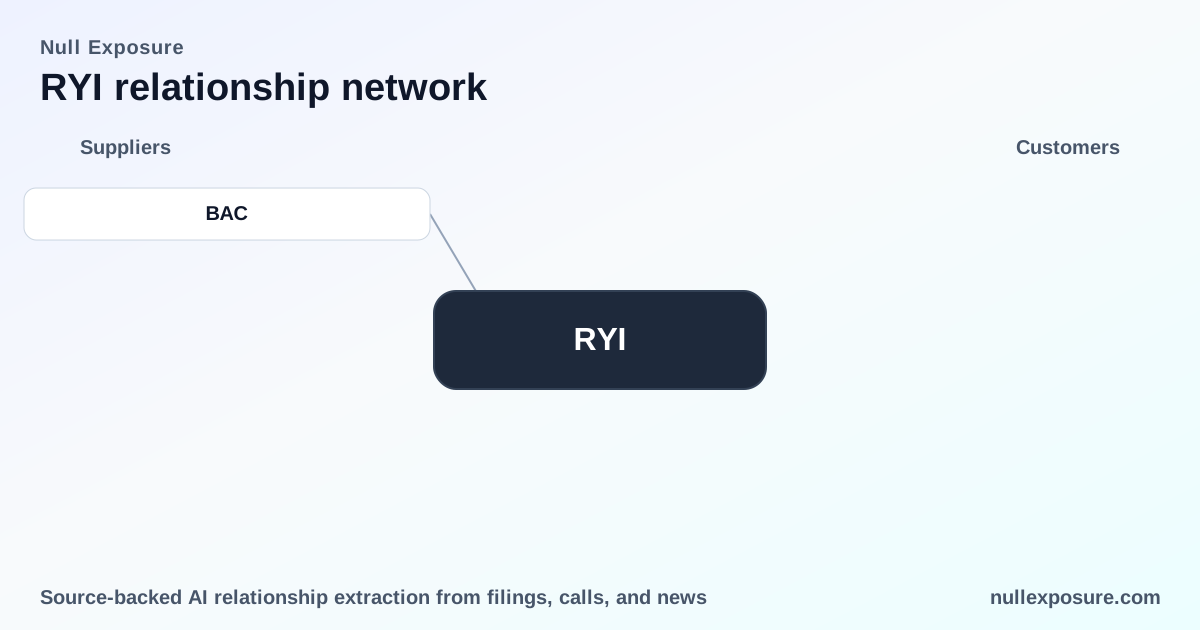
Bank of America — Bank lending and administration. Bank of America serves as the administrative and collateral agent alongside a syndicate of lenders in the company’s credit agreement amendment, a bank‑led financing structure that supports Ryerson’s working capital and inventory financing needs (TradingView report, March 10, 2026). This relationship signals active use of syndicated bank liquidity to fund procurement and inventory cycles.
Why the Bank of America relationship matters to operators and investors
Ryerson’s explicit use of a bank‑led credit facility — with Bank of America acting as administrative and collateral agent — demonstrates dependency on committed bank financing to manage inventory and procurement timing. When procurement spend is concentrated and committed in the near term, banking counterparties effectively underwrite a large portion of operational liquidity. The March 2026 credit‑agreement amendment (reported March 10, 2026) indicates banks are engaged in ongoing covenant and collateral arrangements that investors should monitor for repricing, covenant resets, or increased collateral demands.
Key investment implications and risk map
Ryerson’s supplier profile creates a focused set of investment and operational considerations:
- Supply concentration is a primary risk vector. With 77% of purchase dollars concentrated among the top 25 suppliers, supplier disruption or adverse pricing from a single large vendor will have outsized margin impact (company filing, 2024).
- Short contract duration increases cash‑flow volatility. The $15 million of purchase obligations due in 2025 illustrate near‑term cash commitments that must be funded from cash flow or bank facilities (company filing, Dec 31, 2024).
- Bank syndicate exposure is material to liquidity. The role of Bank of America as administrative and collateral agent underscores that syndicated bank lines are central to working capital; changes in that syndicate’s posture will change Ryerson’s funding cost and flexibility (TradingView, March 10, 2026).
- Off‑balance arrangements are small. Letters of credit and surety bonds are modest relative to total procurement and reported as immaterial; they are not a current source of hidden leverage (company filing, Dec 31, 2024).
Actionable operational items for investors and operators:
- Track supplier concentration trends and which suppliers constitute the top 25 list; small shifts materially change risk exposure.
- Model working‑capital under stress scenarios where bank financing is constrained or repriced.
- Monitor bank covenant language and collateral schedules tied to the credit agreement amendment reported in March 2026.
For a deeper supplier exposure analysis and to benchmark Ryerson against peers, visit https://nullexposure.com/.
Conclusion: how to weigh supplier risk in valuation
Ryerson operates a capital‑intensive distributor model where supplier concentration, short-term contractual commitments, and reliance on syndicated bank financing are the core drivers of operational risk. Investors should price a premium for liquidity and counterparty risk whenever supplier spend is concentrated and working‑capital funding is syndicated. Operators should prioritize supplier diversification or contract repricing strategies to reduce margin volatility and funding dependence.
Explore full supplier maps and credit‑counterparty insights at https://nullexposure.com/ to convert this supplier profile into valuation adjustments and operational remediation plans.