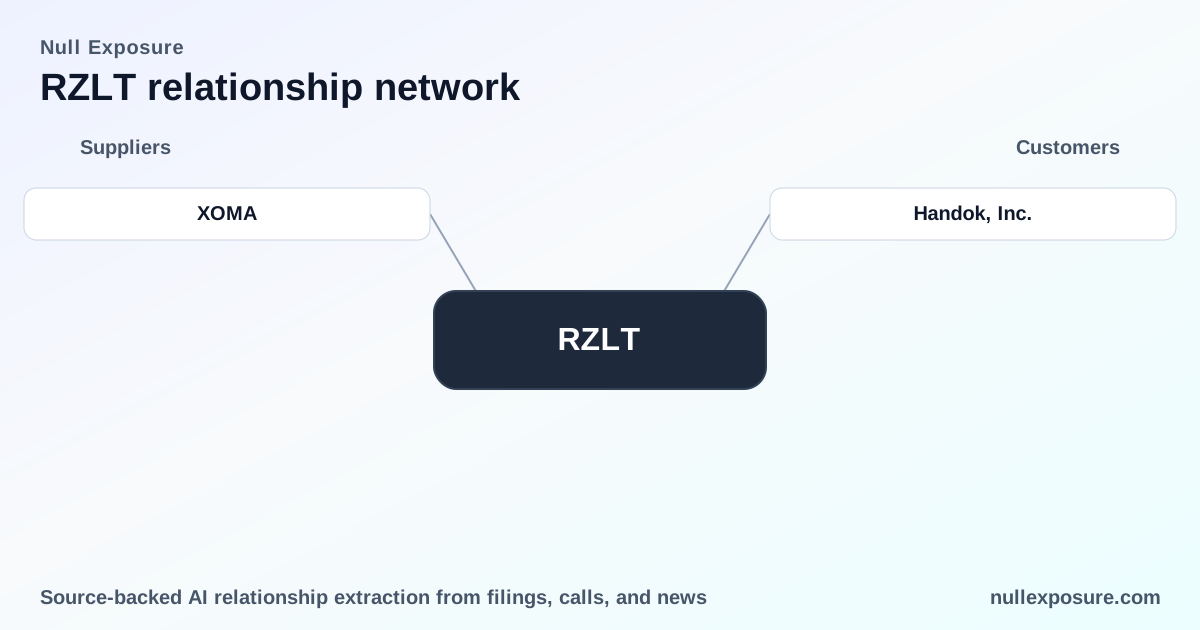
Rezolute (RZLT): What the XOMA License Means for Investors and Operators
Rezolute is a clinical-stage biopharma that builds value by acquiring and advancing licensed rare- and metabolic-disease assets rather than originating discovery at scale. The company monetizes through development milestones, partner-origination of programs (licensing-in assets such as ersodetug), and the upside of regulatory approval or partnering for commercialization; today, with no product revenue and negative earnings, value is concentrated in a licensed clinical asset and clinical outcomes. For a concise supplier-risk scorecard and monitoring playbook, visit https://nullexposure.com/.
How Rezolute’s supplier strategy defines its business model
Rezolute’s operating model is license-and-develop: the firm secures exclusive rights to drug candidates discovered externally, invests in clinical development, and captures upside through regulatory milestones, potential royalties, and commercial deals. That posture implies several structural characteristics investors must price:
- Contracting posture — exclusive licensing. Rezolute holds exclusivity on the ersodetug patents licensed from XOMA, giving it sole development and commercialization rights for that molecule worldwide as described in its license agreement.
- Concentration — single-asset sensitivity. The XOMA license covers the company’s lead molecule; given Rezolute’s reported zero revenue and negative operating margins, the license is the dominant value driver.
- Criticality — strategic dependency on the licensor relationship. Effective exercise of Rezolute’s development plan depends on clear patent coverage, access to regulatory data, and license terms that preserve development flexibility.
- Maturity — clinical-stage execution risk. Rezolute is not a commercial operator; valuation swings will track Phase 2/3 outcomes and any regulatory surprises.
These structural signals should guide both valuation scenarios and operational diligence. Track contract milestones and patent scope as rigorously as trial readouts. For detailed supplier profiles and monitoring, see https://nullexposure.com/.
Supplier relationship on the table: XOMA
XOMA is the discoverer and original owner of the ersodetug program that Rezolute now develops under license. According to a news report, XOMA discovered the molecule and Rezolute licensed it in 2017; the drug functions as a regulator of insulin receptor activity rather than addressing upstream genetics, a mechanism central to Rezolute’s clinical thesis (DrugDiscoveryTrends, March 10, 2026). The company’s own filing — in the “XOMA License Agreement” section — states Rezolute holds a worldwide, exclusive license to patents covering the ersodetug molecule, including 38 issued patents worldwide (four in the U.S.) and pending applications; those patent grants underwrite the program’s IP moat (company filing language excerpted in Rezolute disclosures).
Relationship detail: XOMA — plain-English takeaways for investors
XOMA discovered ersodetug and transferred development rights to Rezolute under an exclusive license, making Rezolute the licensee responsible for clinical development and commercialization activities. According to a DrugDiscoveryTrends article (March 10, 2026), the molecule acts as a dial for insulin receptor activity and recent trial dynamics — including an unexpected 40% placebo response reported in press coverage — materially affected a Phase 3 readout and therefore the program’s near-term risk profile. The license agreement disclosed by Rezolute confirms exclusive global patent coverage (38 patents worldwide) and subject-to-license obligations that shape milestone and royalty exposure (company filing).
Why that license is the company’s fulcrum
The XOMA license is not a peripheral supplier contract — it is the core asset underpinning Rezolute’s valuation. Exclusive patent rights plus clinical-stage advancement equal binary, high-conviction outcome risk. The presence of 38 issued patents globally indicates meaningful IP protection, but that protection interacts with clinical outcomes: strong IP supports long-term commercial value only if efficacy and safety translate to approval.
Key operational implications:
- Balance sheet leverage: With no revenue and negative EBITDA, Rezolute must preserve capital or secure partner financing; license terms that include milestones or step-in rights will influence financing strategy.
- Negotiation pressure: Because the program is concentrated, any failure or delay de-risks the licensor relationship and constrains Rezolute’s ability to negotiate favorable downstream partnerships.
- Data sensitivity: Unexpected trial anomalies (for example, non-inert placebo responses) increase the need for robust endpoint analysis and communication control to preserve investor confidence.
Diligence checklist for investors and operators
To underwrite RZLT exposure, focus due diligence on both the contract and the clinic:
- Review the full license agreement to confirm milestone structure, termination rights, sublicensing permissions, and patent maintenance obligations (company filings reference the "XOMA License Agreement" language).
- Validate the patent estate timing and geography: 38 issued patents worldwide and pending applications are a positive signal, but expiration dates and claims scope determine the real commercial runway.
- Scrutinize trial design and the data behind recent placebo-response headlines; clinical anomalies must be understood at the patient-level before re-rating the program (DrugDiscoveryTrends, March 10, 2026).
- Stress-test financing scenarios given Rezolute’s reported negative earnings and zero product revenue; plan for partner-led funding or dilution.
For a vendor-agnostic monitoring toolkit that tracks license timelines and patent events, revisit https://nullexposure.com/.
Risk map and the investment posture
The primary risks are: single-asset concentration, clinical-readout volatility, counterparty and contractual exposure to XOMA-originated IP, and capital pressure. Offsetting these risks, a strong, exclusive patent estate and a clear development plan create asymmetric upside if clinical outcomes recover or a partnering transaction executes. Investors should treat RZLT as a clinical-stage, binary outcome investment that is driven more by license economics and trial execution than by recurring revenue or commercial operations.
Bottom line — what operators and investors should do next
Rezolute’s relationship with XOMA is not merely a supplier line item; it is the company’s strategic bedrock. Investors should prioritize legal and clinical diligence on the XOMA license and trial data before adjusting exposure. Operators and potential partners should focus negotiations on milestone flexibility, shared funding scenarios, and patent-defense commitments.
For ongoing supplier intelligence and to set automated alerts on license milestones and patent litigation events, visit https://nullexposure.com/ — use that intelligence to keep RZLT on your active watchlist rather than a passive holding.