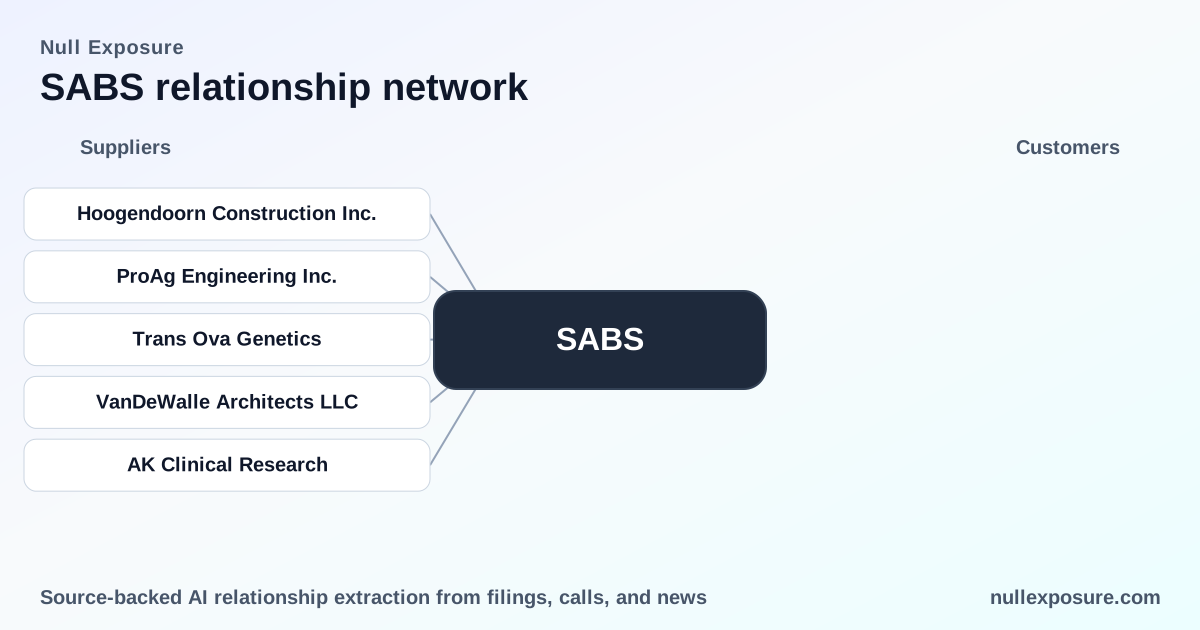
SAB Biotherapeutics (SABS) — supplier network and what it means for investors
SAB Biotherapeutics develops immunotherapies using a transgenic-cattle platform and clinical-stage biologics; the company monetizes through advancing product candidates into clinical trials, partnering or licensing programs, and ultimately commercial supply agreements or direct sales if candidates are approved. Revenue today is negligible and value is driven by clinical progress, platform scalability, and the company’s ability to contract for reliable manufacturing and animal-housing services. For investors evaluating supplier risk, pay attention to long-term real‑estate and equipment leases, active reliance on third‑party manufacturers and CROs, and a small set of locally based construction and agricultural partners that underpin the platform.
Explore supplier intelligence and coverage at https://nullexposure.com/.
A concise operating model for buyers and backers
SAB operates a hybrid model: proprietary biological assets (transgenic herds) combined with outsourced service providers and contractors that build and maintain physical infrastructure and run clinical studies. Critical inputs are physical: animals, GMP manufacturing capacity, and clinical trial execution — these are procured rather than fully insourced. Contracting posture is mixed: the company carries both multi‑year finance and operating leases alongside short‑term facility arrangements, and it explicitly states that it has not secured long‑term manufacturing and supply contracts for product commercialization. That mix creates both optionality and execution risk: long leases stabilize fixed infrastructure, while the absence of long-term commercial manufacturing contracts leaves scale-up exposed to market negotiations and partner selection.
- Capital commitments: evidence of multi‑year leases and a 20‑year finance lease tied to an animal facility indicate durable fixed-cost exposure.
- Service dependency: the company explicitly relies on third‑party contract manufacturers and CROs for clinical and potential commercial supply.
- Spend profile: operating lease expense is material at the company level (~$0.8m in 2024), while many governance and board-related payments fall below $100k — a pattern of concentrated infrastructure spend with many lower-cost service relationships.
If you need broader supplier mapping and risk scoring, visit https://nullexposure.com/ for deeper analysis.
Vendor-by-vendor: what investors should know
Hoogendoorn Construction Inc.
A Sioux Falls Business article covering SAB’s expansion notes that Hoogendoorn Construction served as the general contractor on an expansion project tied to an 80‑acre site, indicating SAB’s use of regional construction partners to scale physical operations. This positions Hoogendoorn as a one‑off capital contractor rather than an ongoing operational supplier. (Source: Sioux Falls Business, article on SAB Biotherapeutics expansion, reported Mar 2026.)
ProAg Engineering Inc.
The same local report identifies ProAg Engineering of Jackson, Minnesota as a services provider on the construction program, suggesting SAB contracts regionally for engineering and site services when expanding facilities. This is consistent with episodic capital project engagement rather than recurring manufacturing supply. (Source: Sioux Falls Business, Mar 2026.)
VanDeWalle Architects LLC
VanDeWalle Architects of Sioux Falls is listed alongside the general contractor and engineering firm, confirming SAB’s reliance on local architectural services for facility design and expansion. This relationship is a typical capital‑project supplier rather than a clinical or manufacturing partner. (Source: Sioux Falls Business, Mar 2026.)
Trans Ova Genetics
Sioux Falls reporting states that SAB’s transgenic cattle herd has been housed at Trans Ova Genetics in Sioux Center, Iowa, which underlines the operational dependence on a third‑party livestock housing and herd‑management provider for the company’s core biologic platform. For platform risk, cattle housing and herd health are operationally critical. (Source: Sioux Falls Business, Mar 2026.)
AK Clinical Research
A GlobeNewswire press release describing the first patient dosed in SAB’s SAFEGUARD trial thanks participants and collaborators and names AK Clinical Research among the clinical collaborators, indicating SAB partners with regional clinical sites and CRO collaborators to run trials. This confirms active third‑party clinical operations supporting headline programs. (Source: GlobeNewswire press release, Dec 2025.)
How these relationships translate into investor-visible constraints
Collectively, supplier evidence and company disclosures reveal a clear operating posture:
- Contracting maturity and tenure: The company carries long‑term obligations (for example, a disclosed finance lease repaying $4m in construction costs over 20 years at 8%), alongside shorter-term leases used when necessary. That structure reduces near‑term renegotiation risk for owned infrastructure but locks in fixed costs over long horizons. (Company filings; lease disclosures, fiscal years noted in corporate reports.)
- Manufacturing and supply openness: SAB states that it has not entered into long‑term manufacturing and supply agreements; instead, it intends to rely on third‑party manufacturers and CROs for clinical and potential commercial supply. That creates execution risk at scale but preserves flexibility and potential for favorable contract terms if clinical data drives demand. (Company risk disclosures.)
- Concentration and criticality: The vendor list is small and local for capital projects and animal housing, while clinical execution depends on CROs and specialized clinical sites; animal‑housing and GMP manufacturing are mission‑critical single points of failure. (Operational descriptions and third‑party reliance disclosures.)
- Spend profile: Operating lease expense is approximately $0.8m in 2024, and many governance/small service payments fall under $100k — indicating infrastructure spend sits in the mid‑six figure band while routine supplier spend is fragmented and low individually. (Company financial disclosures.)
Investment implications and risk checklist
SAB’s supplier footprint carries three actionable investor signals:
- Execution sensitivity to third parties. Clinical milestones and eventual commercial value require reliable CRO and CMOs; absence of long-term manufacturing contracts means partnership selection during scale-up will materially affect margins and timelines.
- Fixed‑cost leverage from long leases. Long finance leases and operating lease expense create committed cash outflows; these stabilize infrastructure but increase cash burn risk if programs stall.
- Operational concentration in animal services. Transgenic herd housing at third‑party farms is core to the platform; any disruption to herd partners would immediately affect pipeline timelines.
For investors prioritizing downside protection, focus due diligence on the company’s pipeline timelines, the contractual terms with CMOs/CROs once disclosed, and the contingency planning around herd management and facility backup capacity.
Final read and next steps
SAB Biotherapeutics runs a capital‑intensive, outsourced operating model where a handful of construction and agricultural partners underpin physical expansion while clinical and manufacturing execution is delegated to CRO/CMO partners. Key investor priorities are partner selection for GMP supply, the structure of manufacturing agreements when they are signed, and the management of long‑term lease obligations.
For continued supplier mapping and to monitor contract exposures as SAB advances its clinical programs, visit https://nullexposure.com/ — the homepage provides access to deeper supplier profiles and alerts. If you want a tailored supplier-risk briefing or ongoing monitoring for SABS, start here: https://nullexposure.com/.