Sonic Automotive (SAH): Supplier Relationships that Drive Inventory, Services, and Margin
Sonic Automotive operates as a large, multi-brand automobile retailer and used-car platform that monetizes through vehicle sales, finance & insurance products, service operations, and a growing used-car channel (EchoPark). The company extracts margin from manufacturer floor‑plan assistance, dealer services, and concentrated aftermarket agreements, while using branded partnerships and digital services to scale non-franchise revenue. For investors evaluating supplier exposure, the critical questions are concentration with luxury/import manufacturers, reliance on a single aftermarket provider, and short-term financing arrangements that underwrite inventory turns. Learn more at https://nullexposure.com/.
A concise operating thesis for investors
Sonic runs a two‑pronged retail model: franchised new‑vehicle dealerships that buy inventory from major manufacturers and a complementary used‑car channel (EchoPark) that hedges franchise volatility. Profitability depends on stable manufacturer supply terms (floor‑plan assistance) and scale in aftermarket/service contracts, while working capital is driven by short‑dated inventory financing. Given the mix of franchised luxury and import brands, supplier dynamics directly influence revenue mix and margin volatility.
Visit the research hub for more supplier intelligence: https://nullexposure.com/.
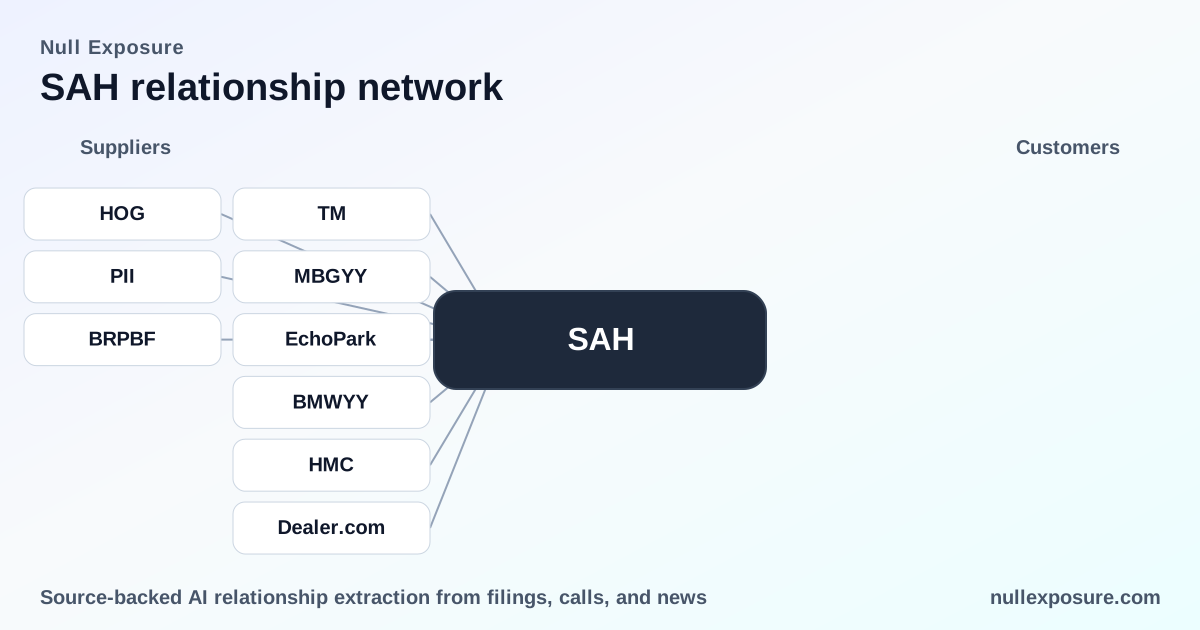
Who Sonic does business with — relationship roll call
Below is a complete, plain-English summary of each supplier/partner noted in the reviewed records, with contemporary source references.
Toyota
Toyota is one of the core manufacturers contributing to Sonic’s new-vehicle revenue mix; along with other import and luxury brands, Toyota helps constitute a material share of franchised sales. According to an analyst note cited by Sahm Capital (Feb 19, 2026), Toyota sits among the manufacturers that account for a substantial portion of new‑vehicle revenue. Source: Sahm Capital analyst write‑up (2026-02-19), https://www.sahmcapital.com/news/content/sonic-automotive-stock-a-deep-dive-into-analyst-perspectives-4-ratings-2026-02-19.
Mercedes
Mercedes is also identified as a meaningful manufacturer for Sonic’s franchise operations, included with other luxury brands that together represent the bulk of new‑vehicle revenue; this concentration speaks to pricing power and margin exposure. Source: Sahm Capital analyst write‑up (2026-02-19), https://www.sahmcapital.com/news/content/sonic-automotive-stock-a-deep-dive-into-analyst-perspectives-4-ratings-2026-02-19.
BMW
BMW is listed among the luxury/import manufacturers materially contributing to Sonic’s franchised new‑vehicle revenue, reinforcing a heavy tilt toward higher ASP brands in the company’s portfolio. Source: Sahm Capital analyst write‑up (2026-02-19), https://www.sahmcapital.com/news/content/sonic-automotive-stock-a-deep-dive-into-analyst-perspectives-4-ratings-2026-02-19.
Honda
Honda is named alongside the other core manufacturers supplying Sonic’s franchises, indicating non‑luxury import exposure within the broader franchise mix that together accounts for a large share of new‑vehicle revenue. Source: Sahm Capital analyst write‑up (2026-02-19), https://www.sahmcapital.com/news/content/sonic-automotive-stock-a-deep-dive-into-analyst-perspectives-4-ratings-2026-02-19.
EchoPark
EchoPark is Sonic’s owned used‑car platform and explicitly described by the company as a complementary revenue stream and a hedge to the franchise dealership segment, providing diversified gross profit and cash conversion characteristics. Source: Sonic Automotive investor site — company information (FY2020), https://ir.sonicautomotive.com/company-information.
Dealer.com
Dealer.com supplies Sonic with website and digital retailing services; the platform is cited on Sonic press releases as the vendor behind web presence and related digital tools, reflecting a service relationship that supports customer acquisition and online retailing. Sonic press releases mention “Website by Dealer.com” in multiple filings, including quarterly results and senior hires (FY2021 and FY2024). Source: Sonic Automotive press releases (FY2021/FY2024), https://ir.sonicautomotive.com/news-events/press-releases/.
Harley‑Davidson
Sonic Powersports represents on‑ and off‑road powersports brands including Harley‑Davidson, and recent company statements cite collaborative retail activity and event‑driven sales performance tied to Harley‑Davidson partnerships. Sonic’s company information and FY2025 press coverage reference these powersports relationships. Source: Sonic Automotive company information (FY2020) and FY2025 press release, https://ir.sonicautomotive.com/company-information and https://ir.sonicautomotive.com/news-events/press-releases/detail/335/sonic-powersports-shatters-sales-records-at-the-85th.
Polaris
Polaris is listed among the powersports manufacturers Sonic represents through its Sonic Powersports division, contributing to the company’s diversified recreational vehicle and powersports revenue stream. Source: Sonic Automotive company information (FY2020), https://ir.sonicautomotive.com/company-information.
BRP
BRP (Bombardier Recreational Products) is another powersports OEM that Sonic represents within its Sonic Powersports business, supporting a non‑automotive dealer channel that supplements the core franchised operations. Source: Sonic Automotive company information (FY2020), https://ir.sonicautomotive.com/company-information.
Constraints that shape Sonic’s supplier risk profile
These are company‑level operational constraints drawn from public filings and excerpts; they are not assigned to individual suppliers unless explicitly stated.
- Short‑term contract exposure: Sonic discloses short‑dated arrangements (example: a contract dated Feb 26, 2024 maturing Feb 26, 2025), signaling working‑capital instruments and supplier financing that roll annually and require refinancing. Evidence: contract start/mature dates excerpt in corporate filings.
- Large enterprise counterparties for hedging and finance: The company’s interest‑rate caps and similar instruments are with large financial institutions, highlighting counterparty concentration risk in Sonic’s financial programs. Evidence: disclosure about counterparties to interest rate cap agreements.
- Manufacturer role in the value chain: Sonic buys new vehicles directly from manufacturers and receives floor‑plan assistance (direct payments/credits), meaning OEM relationships influence inventory cost, timing of recognition, and gross margins. Evidence: filings describing floor‑plan assistance and new vehicle purchases.
- Aftermarket/service provider concentration: Sonic uses a single third‑party provider for most extended warranties, service contracts, and aftermarket products, concentrating operational and earnings risk if that vendor underperforms or pricing changes. Evidence: disclosure about working with a single third‑party provider for warranty and aftermarket products.
These constraints drive the company’s contracting posture: high reliance on rolling finance terms, concentrated counterparty relationships, and a mix of manufacturer price leverage plus a single‑sourced aftermarket channel.
What investors should prioritize next
- Concentration risk in franchise revenue: Luxury and import brands account for the majority of new‑vehicle franchise revenue; any OEM supply disruptions or policy shifts will directly compress gross profit. (See Sahm Capital, Feb 2026.)
- Refinancing and working‑capital liquidity: Short maturities on key financing contracts require monitoring of Sonic’s liquidity and access to capital markets at cyclical troughs. (See contract date evidence in filings.)
- Single provider for aftermarket products: A single third‑party provider relationship represents an operational risk to F&I income; investors should track contract renewal terms and replacement costs. (See company disclosures.)
For targeted supplier risk research and ongoing alerts, visit https://nullexposure.com/.
Bottom line
Sonic Automotive’s supplier ecosystem is a mix of highly material manufacturer relationships that drive inventory and margin, strategic owned channels like EchoPark that diversify revenue, and concentrated service/finance providers that create operational leverage — both positive and negative. Investors evaluating SAH should focus on OEM concentration, the maturity profile of floor‑plan and hedging arrangements, and the stability of single‑vendor aftermarket contracts. For deeper supplier mapping and continuous monitoring, check the platform at https://nullexposure.com/.