Saia Inc (SAIA): How the LTL Engine Monetizes Network Reach and Supplier Relationships
Saia operates as a North American less‑than‑truckload (LTL) carrier that monetizes a dense regional network, time‑definite routing and scale pricing to convert freight volume into recurring revenue and margin. The company generates revenue by moving parcelized freight across a proprietary hub-and-spoke LTL network, supplements capacity through purchased transportation, and extracts operating leverage as volume and yield improve. For deeper supplier and counterparty intelligence, visit https://nullexposure.com/.
Business model in one line: asset-light route density plus purchased capacity to balance overnight service commitments, priced to capture yield and network utilization.
How Saia actually makes money and where value comes from
Saia sells time‑sensitive, regional to national freight services to shippers that require the efficiency of LTL versus full truckload. Revenue is driven by freight yield per shipment and network utilization; cost structure is dominated by labor, fuel and purchased transportation. The company reported trailing revenue of $3.23 billion and EBITDA of $588 million, with a profit margin of 7.89% and an operating margin near 6.5% (latest twelve months). Market expectations price growth into the share: Saia’s market cap is roughly $8.74 billion with a trailing P/E of 33.7 and a forward P/E around 30.3. Those multiples reflect the premium the market assigns to reliable LTL networks and execution risk around fuel, capacity and technology.
Saia’s go-to-market relies on dense terminals and scheduled departures to produce predictable transit times; where owned capacity is insufficient the company purchases transportation and leverages third‑party interline partners to preserve service commitments. This operating posture lets Saia scale service into lower-density geography without the fixed cost of network expansion, while creating supplier dependencies that investors should model explicitly.
Constraints and operating model characteristics investors need to embed in valuation
Company filings and public disclosures deliver a set of clear operating signals that shape risk and upside.
-
Geographic concentration and network reach: Saia provides direct service to the 48 contiguous states and extends LTL to Canada and Mexico through relationships with third‑party interline carriers, creating a near‑North America footprint that is broad but dependent on partners for cross‑border lanes. This is a company-level signal from Saia’s public descriptions.
-
Role as a service provider with purchased capacity: Saia’s operating strategy explicitly relies on purchased transportation to maintain capacity across its network. That contracting posture reduces incremental capital intensity but increases counterparty and rate exposure—a company-level signal that impacts margins under tight capacity markets.
-
Relationship stage and segmentation: The firm positions these supplier interactions as active elements of operations and growth, particularly within the services segment where purchased transportation and interline partnerships are integral to offering end‑to‑end coverage.
-
Maturity and brand history: Saia traces its operating roots to an established trucking subsidiary established decades ago, reinforcing operational maturity while also signaling legacy operational practices and integration complexity for new technologies or fleet transitions.
Together, these signals imply a hybrid contracting posture—moderate capital intensity, material supplier dependence, low single-party concentration but elevated cross‑border and purchased‑transportation risk—which should be reflected in scenario analyses for margins, working capital and capacity costs.
What the supplier relationships in the public record say (two items)
Below I cover each published relationship tied to Saia in the provided results, with succinct plain‑English summaries and source references.
-
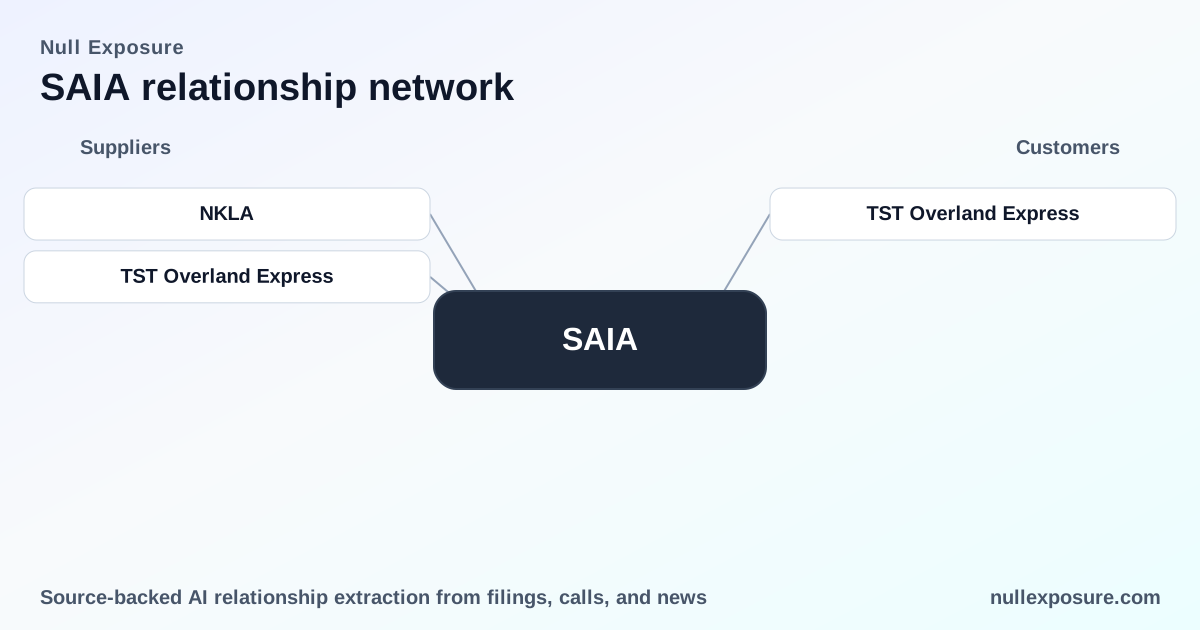
Nikola — Saia announced plans to purchase or lease 100 Nikola Tre heavy‑duty battery‑electric vehicles following a demonstration program, signaling a battery‑electric fleet trial and potential electrification of regional / heavy lanes. This was reported in March 2026 by TruckingInfo in the context of Saia’s fleet modernization initiatives (TruckingInfo, March 10, 2026).
-
TST Overland Express — Saia confirmed a cross‑border operational relationship whereby TST Overland will handle Saia’s LTL freight entering Canada, formalizing a third‑party interline arrangement for cross‑border fulfillment (TruckingInfo, March 10, 2026).
Each relationship is operationally meaningful: the Nikola deal is a supplier connection for fleet technology and capex/lease exposure, while TST Overland is a structural interline partner for cross‑border service continuity.
Why these relationships matter for investors and operators
The Nikola engagement signals strategic fleet transition and a potential shift in operating cost structure over time. Electrification introduces a different cost base—higher upfront capex or lease payments offset by lower energy and maintenance costs—but also new supplier risk tied to vehicle delivery, performance and charging infrastructure. The purchase/lease of 100 units is material to near‑term pilot economics and to investor expectations around environmental positioning; treat it as a staged adoption rather than an immediate fleet‑wide transformation (TruckingInfo, March 10, 2026).
The TST Overland arrangement highlights Saia’s dependency on third‑party interline carriers for international reach. Cross‑border service continuity is critical to revenue retention on lanes that cross the Canada–US border, and any interruption or rate shift by interline partners could compress margins or force Saia to substitute more expensive purchased transportation. Company disclosures explicitly state that Saia uses third‑party interline carriers for Canada and Mexico service, underscoring this as a persistent operational constraint.
If you want ongoing tracking and supplier risk scoring for relationships like these, see the coverage and tools at https://nullexposure.com/.
Investment implications and risk checklist
-
Opportunity: Fleet electrification can reduce operating costs and create marketing and contract advantages with shippers focused on emissions reduction; early adoption can be a competitive differentiator if total cost of ownership delivers savings over diesel. The Nikola relationship is a tangible step in that direction (TruckingInfo, March 10, 2026).
-
Risk: Dependence on purchased transportation and interline partners increases exposure to rate volatility and counterparty performance; cross‑border lanes are explicitly fulfilled via third‑party carriers, which elevates operational concentration risk at the lane level (company filings).
-
Execution sensitivity: Saia’s financial profile—solid revenue base with mid‑single digit operating margins—implies that small changes in purchased transportation costs or utilization materially affect profit. Model stress cases should include higher purchased‑transportation rates and delays in electrification cost parity.
If you want a supplier-level breakeven analysis or a tailored counterparty risk memo for Saia’s partners, request a custom report at https://nullexposure.com/.
Bottom line: what investors and procurement teams should do next
Saia is a mature LTL operator extracting value from density while deliberately outsourcing cross‑border and incremental capacity. Monitor the Nikola trial for delivery schedules and total cost of ownership reporting, and treat interline performance (e.g., TST Overland) as a principal operational lever for cross‑border revenue resilience. For investors, model modest margin improvements from electrification only after evidenced lifecycle savings; for operators, build contingency plans for purchased‑transportation rate shocks.
For supplier monitoring, counterparty scoring and ongoing updates about Saia’s partnerships, visit https://nullexposure.com/ — the fastest route to structured supplier intelligence and scenario modeling.