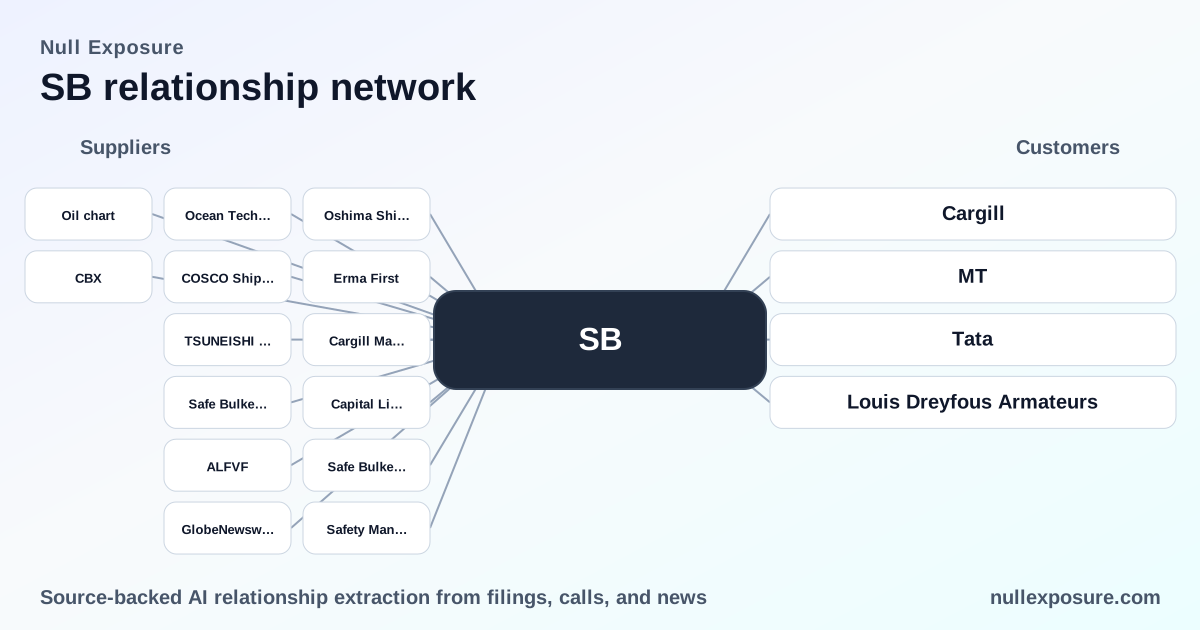
Safe Bulkers Inc (SB): supplier map and commercial relationships that shape fleet economics
Safe Bulkers is a Monaco-headquartered owner-operator of dry bulk vessels that monetizes by owning and chartering modern bulk carriers and capturing freight market upside through time and voyage charters while outsourcing technical and commercial management to regional subsidiaries. The company's economics are driven by fleet renewal, fuel and emissions-capex programs, and stable third‑party service relationships that support operations and investor communications. Investors should focus on supplier counterparty risk around shipbuilders, fuel partners and retrofit vendors because those relationships determine capex timing and regulatory compliance costs.
Learn more about supplier intelligence at https://nullexposure.com/.
Fleet renewal: Japanese builders and recent orders set the tone
Safe Bulkers has pushed a modernization program in recent years that increases the role of Japanese yards in delivering large Kamsarmax-class vessels.
-
Oshima Shipbuilding (Cyprus Mail, Apr 24, 2025) — Safe Bulkers took delivery of the 82,000 dwt Kamsarmax ‘EFROSSINI’, built by Oshima, reflecting continued reinforcement of its medium‑size vessel fleet. Source: Cyprus Mail (2025) https://cyprus-mail.com/2025/04/24/cyprus-flagged-vessel-joins-safe-bulkers-growing-fleet
-
Oshima Shipbuilding (K News / Kathimerini, Jan 2024 ceremony reported) — Two newly constructed vessels, MV AMMOXOSTOS and MV KERYNIA, were unveiled at Oshima’s yard underscoring a multi-year build relationship for modern, environmentally aware tonnage. Source: K News (FY2024) https://knews.kathimerini.com.cy/en/business/safebulkers-inc-boosts-cypriot-fleet-with-modern-ships
-
TSUNEISHI SHIPBUILDING Co., Ltd. (Vesselfinder, FY2026) — Safe Bulkers contracted for two Kamsarmax methanol‑fueled carriers in a deal that includes Itochu, signaling a strategic push into alternative‑fuel newbuilds. Source: Vesselfinder (FY2026) https://www.vesselfinder.com/news/26997-Tsuneishi-Shipbuilding-Receives-Order-for-Two-Kamsarmax-Methanol-Fueled-Bulk-Carriers-from-Itochu-Corporation-and-Greek-Shipowner-Safe-Bulkers
Takeaway: Safe Bulkers deploys repeat shipyard relationships with Japanese builders to reduce delivery risk and advance an emissions-aligned newbuild program.
Fuel supply and retrofit partners: managing emissions exposure
Fuel sourcing and scrubber/BWTS programs are direct cost and compliance drivers that affect cashflow and vessel availability.
-
Cargill Marine Fuels (MarineLog, FY2022) — Safe Bulkers partnered with Cargill on a blended bio‑bunker trial, positioning the company to test lower‑carbon marine fuels and gauge operational impact. Source: MarineLog (FY2022) https://www.marinelog.com/news/safe-bulkers-partners-with-cargill-on-biofuel-trial/
-
Oil chart (MarineLog duplicate entry, FY2022) — Reporting lists Cargill Marine Fuels and related suppliers as the sources of blended bio bunkers used in trials. Source: MarineLog (FY2022) https://www.marinelog.com/news/safe-bulkers-partners-with-cargill-on-biofuel-trial/
-
COSCO Shipping Heavy Industry Co. Ltd. (MarineInsight, FY2018) — Safe Bulkers agreed a schedule with COSCO for installing Alfa Laval PureSOx scrubbers across roughly half its fleet, illustrating a contractual retrofit program to meet sulphur rules. Source: MarineInsight (FY2018) https://www.marineinsight.com/shipping-news/safe-bulkers-agrees-with-cosco-shipping-to-install-alfa-laval-puresox-scrubbers/
-
Alfa Laval (MarineInsight, FY2018) — Alfa Laval is named as a technology partner used in the scrubber installations that COSCO executed, tying Safe Bulkers to global OEM service scopes. Source: MarineInsight (FY2018) https://www.marineinsight.com/shipping-news/safe-bulkers-agrees-with-cosco-shipping-to-install-alfa-laval-puresox-scrubbers/
-
Erma First (In‑Cyprus reporting and earlier MarineInsight reports, FY2017–FY2019) — Safe Bulkers has a global agreement since 2017 for Erma First ballast water treatment systems (USCG‑approved) across its fleet, reflecting an ongoing compliance retrofit program. Sources: In‑Cyprus / Philenews (FY2022) https://in-cyprus.philenews.com/insider/business/safe-bulkers-inc-carrying-the-cypriot-flag-in-the-worlds-seas/ and MarineInsight (FY2018/FY2019) https://www.marineinsight.com/shipping-news/safe-bulkers-agrees-with-cosco-shipping-to-install-alfa-laval-puresox-scrubbers/ and https://cyprusshippingnews.com/2019/10/25/safe-bulkers-inc-develops-its-ship-management-activities-in-cyprus/
Takeaway: Fuel and retrofit vendors are critical to regulatory compliance and capex cadence—these partners directly influence downtime and cost profiles.
Operational partners: ship management, crewing and training
Onshore management companies and training vendors are central to Safe Bulkers’ technical and commercial operations.
-
Safe Bulkers Management Ltd. (Cyprus Mail & Philenews, FY2025 & FY2022) — The company’s Cyprus-based management arm handles technical, commercial and administrative operations for the fleet, anchoring local operational control. Sources: Cyprus Mail (FY2025) https://cyprus-mail.com/2025/04/24/cyprus-flagged-vessel-joins-safe-bulkers-growing-fleet and Philenews (FY2022) https://in-cyprus.philenews.com/insider/business/safe-bulkers-inc-carrying-the-cypriot-flag-in-the-worlds-seas/
-
Safety Management Overseas S.A. (Philenews, FY2022) — The Greek-based management company provides full technical and administrative services, indicating a two‑jurisdiction management model. Source: Philenews (FY2022) https://in-cyprus.philenews.com/insider/business/safe-bulkers-inc-carrying-the-cypriot-flag-in-the-worlds-seas/
-
Ocean Technologies Group (OTG) (Maritime Executive, FY2022) — Safe Bulkers signed for OTG’s learning platform (Seagull, Videotel, Marlins, MTS) to power training and assessments across its seagoing staff. Source: Maritime Executive (FY2022) https://maritime-executive.com/corporate/safe-bulkers-management-and-safety-management-overseas-sign-with-otg
Takeaway: The company maintains in‑house control through regional management entities while relying on specialist vendors for crewing and training—this hybrid model lowers administrative friction but concentrates operational dependence on a small set of managers.
Investor communications and market plumbing
These vendors manage market-facing disclosures and the company’s public equity presence.
-
Capital Link, Inc. (Yahoo Finance / QuiverQuant, FY2022 & FY2025) — Capital Link is listed as the company’s IR/media contact (Nicolas Bornozis), used repeatedly in press releases and investor engagement. Sources: Yahoo Finance (FY2022) https://finance.yahoo.com/news/safe-bulkers-inc-sets-date-123000427.html and QuiverQuant (FY2025) https://www.quiverquant.com/news/Safe+Bulkers%2C+Inc.+Authorizes+Stock+Repurchase+Program+for+Up+to+10+Million+Shares
-
GlobeNewswire (QuiverQuant entry, FY2025) — Press releases distributed via GlobeNewswire are summarized in third‑party feeds, showing a typical public‑company disclosure channel. Source: QuiverQuant (FY2025) https://www.quiverquant.com/news/Safe+Bulkers%2C+Inc.+Authorizes+Stock+Repurchase+Program+for+Up+to+10+Million+Shares
-
NYSE listing reference (QuiverQuant, FY2025) — Public filings note that Safe Bulkers’ common and preferred shares trade on the NYSE under SB and related symbols, confirming market access and liquidity routes. Source: QuiverQuant (FY2025) https://www.quiverquant.com/news/Safe+Bulkers%2C+Inc.+Authorizes+Stock+Repurchase+Program+for+Up+to+10+Million+Shares
Takeaway: Investor relations are outsourced to established IR distributors and agencies, which supports market visibility but creates reliance on third‑party dissemination for timely communication.
Company-level signals and constraints for investors
The supplier relationship payload contains no explicit contractual constraints or restrictive covenants flagged against specific vendors; that absence itself is an informative signal. At the company level, Safe Bulkers shows:
- Contracting posture: repeat newbuild and retrofit contracts with reputable Japanese yards and global OEMs indicate structured, multi‑year procurement rather than spot buying.
- Concentration: supplier relationships concentrate around a handful of shipyards and retrofit vendors, creating supplier‑side execution risk during peak shipyard cycles.
- Criticality: shipbuilders, BWTS/scrubber OEMs and fuel suppliers are mission‑critical—failure or delay materially affects revenue timing and compliance costs.
- Maturity: several partnerships date to 2017–2019, showing multi‑year operational continuity rather than transient vendor engagements.
If you want a deeper supplier risk profile and exposure mapping, visit https://nullexposure.com/ for tailored analysis.
Investment implications — what to watch
- Capex timing and vessel deliveries: newbuild schedules with Oshima and Tsuneishi will determine depreciation and financing needs.
- Regulatory capex: ongoing BWTS and scrubber programs with Erma First and Alfa Laval/COSCO impact dry‑dock schedules and cashflow.
- Fuel transition: trials with Cargill and methanol newbuilds show proactive positioning but create execution and fuel‑availability risk.
- Shareholder mix: insider ownership ~47% and institutions ~33% (company data) indicate a concentrated ownership base that influences strategic choices including repurchases and dividends.
Explore our supplier intelligence and due‑diligence services at https://nullexposure.com/ to convert these relationship signals into actionable investment decisions.
Conclusion: Safe Bulkers operates with a controlled, repeat‑vendor procurement model that supports fleet modernization and regulatory compliance, but investors must monitor shipyard execution, retrofit schedules and fuel supply arrangements as the primary operational risks affecting near‑term cashflow and long‑term competitiveness.