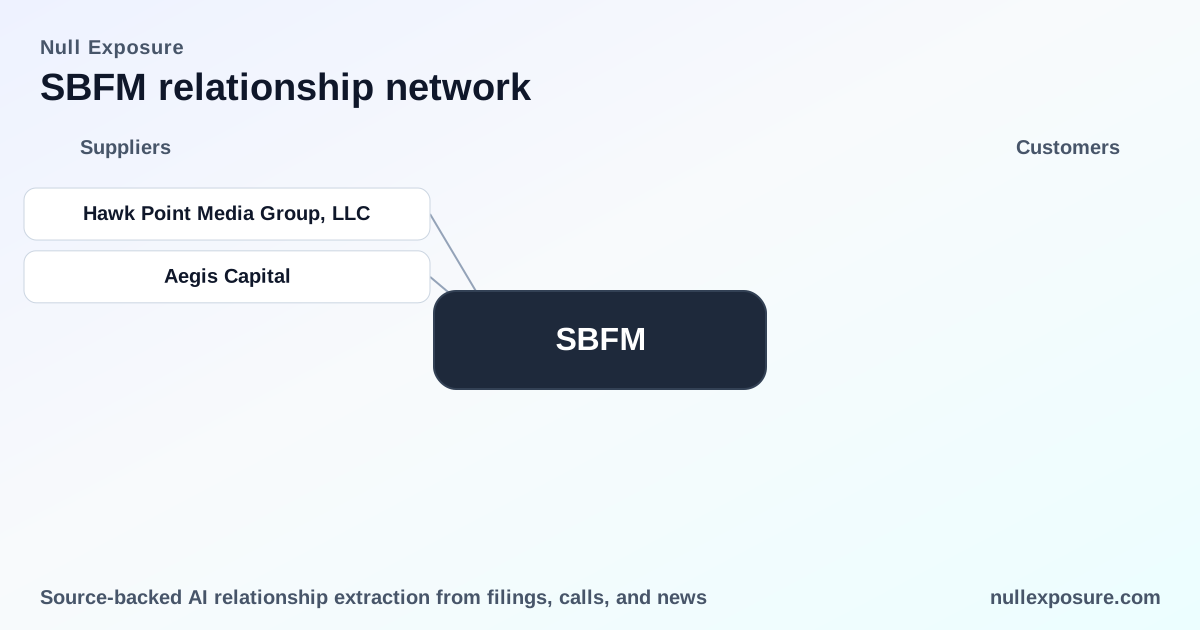
Sunshine Biopharma (SBFM): supplier relationships that shape execution and capital strategy
Sunshine Biopharma develops and commercializes pharmaceutical products with a focus on anticancer candidates; it monetizes through product sales, licensing and strategic partnerships while running a lean public-company cost base. Revenue is generated from finished-goods sales and partner agreements, while investor communications and capital-structure actions are outsourced to specialist firms that support liquidity and market access. For investors, supplier engagements reveal execution priorities: communications, short-term capital programs, and an outsourced manufacturing footprint that carries global supply risk.
Learn more about supplier intelligence at https://nullexposure.com/.
Why these supplier relationships matter to an investor
Sunshine’s supplier profile is not ancillary: it signals how management allocates limited cash, how public messaging is managed, and how capital transactions that affect shareholders are executed. The constraints extracted from corporate disclosures define a company-level operating posture: long-term contracted occupancy, a manufacturing model reliant on international partners, variable usage-based lease costs, and mid-range supplier spend. These are not isolated facts — they translate into a set of predictable behaviors:
- Contracting posture — durable but not inflexible. Long-term lease commitments and long-term manufacturing contracts create fixed-cost obligations and operational continuity, while variable lease payments indicate periodic cost exposure tied to occupancy.
- Concentration and geography — globally distributed supply. Manufacturing largely occurs outside North America, making revenue sensitive to cross-border disruptions.
- Criticality and maturity — core vendors are operationally important. Manufacturing and licensing partners supply finished goods; communications and capital-marketing firms are strategically important for investor relations and financing outcomes.
- Spend and lifecycle — material but manageable. Lease maturities and recurring rent place Sunshine in the $100k–$1M supplier spend band, consistent with a small-cap biotech managing fixed and variable costs.
These constraints are company-level signals and structure how suppliers are selected and managed across the business.
Supplier roster: direct relationships surfaced in public filings and press
Below are every supplier relationship identified in the available results, with plain-English summaries and source citations.
Hawk Point Media Group, LLC — press and digital media engagement (OpenPR)
Hawk Point Media was engaged via Meza Media to provide press-release, editorial, digital-media, and consulting services for Sunshine Biopharma, indicating the company actively outsources investor and public communications. According to an OpenPR release first seen in March 2026, HPM provided these services as part of Sunshine’s media program. (OpenPR, March 2026)
Hawk Point Media Group, LLC — paid content and syndication (FinancialContent / WRAL)
A separate disclosure shows Hawk Point Media received a wire payment of USD $10,000 for content creation and syndication delivered between October 10–20, 2025, demonstrating a low-to-moderate cash allocation to paid investor outreach. This payment was reported in a Markets.FinancialContent/WRAL article published October 16, 2025. (Markets.FinancialContent / WRAL, Oct 2025)
Aegis Capital — warrant solicitation agent for a short-term program (TradingView)
Sunshine engaged Aegis Capital as a warrant solicitation agent under a three-month agreement that pays a 10% fee on gross exercise proceeds, reflecting an active capital-structure management tactic designed to accelerate warrant exercises and potentially raise cash. This engagement was reported on TradingView in March 2026 and signals reliance on third-party broker-dealers to execute short-duration financing mechanics. (TradingView, March 2026)
What these relationships reveal about strategy and risk
These supplier engagements together reveal a clear operating and capital strategy.
- Investor communications are outsourced and inexpensive. The repeated use of Hawk Point for press and syndication, including a documented $10k payment, shows management prioritizes consistent market messaging while keeping costs modest. This is consistent with a small-cap public company that must signal progress without committing large marketing budgets.
- Capital transactions are delegated to specialist intermediaries. The Aegis agreement with a high contingent fee (10% of gross exercise proceeds) indicates the company uses fee-for-performance intermediaries to mobilize near-term capital; this is a tactic that preserves cash up front but increases transaction costs on success and could accelerate dilution.
- Operational continuity depends on long-term external manufacturing and a fixed-lease base. The constraints point to long-term manufacturing contracts and multi-year leases, which support supply reliability but create fixed obligations and exposure to global supply-chain disruptions. Supply interruptions outside North America would materially affect revenue.
- Spend discipline is visible but trade-offs exist. The company sits in a mid-range spend band for suppliers; it controls recurring costs but accepts higher effective fees (e.g., warrant solicitation) when it needs liquidity quickly.
These are actionable signals for investors: communications spend is low relative to commercial and manufacturing commitments, while capital-cost trade-offs are being made in exchange for immediate access to funding.
Learn more about strategic supplier signals at https://nullexposure.com/.
Monitoring checklist — what to watch next
Investors evaluating SBFM supplier relationships should prioritize the following:
- Outcome of the Aegis warrant solicitation: track exercise volumes and the cash raised versus dilution realized; this directly impacts cash runway and share count.
- Frequency and tone of paid media: continued paid syndication suggests management will use earned and paid channels to manage investor expectations.
- Manufacturing and supply notices: any disruption outside North America will affect revenue given the company’s international manufacturing footprint.
- Lease obligations and cash flow profile: near-term lease maturities and variable lease costs will influence operating leverage and burn.
Each of these items connects directly to the supplier signals surfaced above and the company-level constraints that define Sunshine’s operating reality.
Learn more about supplier risk monitoring at https://nullexposure.com/.
Bottom line for investors
Sunshine Biopharma runs a capital- and communications-light operating model while relying on outsourced manufacturing and specialist financial intermediaries. The supplier relationships disclosed—paid media via Hawk Point and a fee-for-proceeds warrant solicitation with Aegis—illustrate a pragmatic approach: keep recurring spend modest, use targeted paid outreach for market visibility, and accept higher transactional fees to unlock short-term liquidity. These choices reduce near-term cash outlay but concentrate execution risk in third-party partners and increase sensitivity to global supply dynamics and financing outcomes. Monitor Aegis’s warrant program, Hawk Point activity cadence, and any supply notifications closely; those signals will lead indicators of operational continuity and dilution pressure.