Starbucks (SBUX) — supplier relationships and what they mean for investors
Starbucks operates and monetizes a global coffeehouse and retail ecosystem by combining company-operated stores, licensed partners, and packaged consumer products; it generates revenue from beverage and food sales in retail locations, licensing fees and royalties, and branded packaged goods sold through distributors and grocery channels. Strategic moves such as converting licensed stores into company-operated locations shift revenue recognition, concentrate operational control, and alter supplier exposure. For investors evaluating counterparty and supplier risk, focus on contract tenor, product criticality (coffee first), and the company’s balance-sheet tools that underwrite working-capital and procurement flexibility.
Explore how these supplier signals fit into a commercial risk framework at https://nullexposure.com/.
Why supplier relationships matter for Starbucks' cash flow and margins
Starbucks’ economics depend on two linked vectors: retail throughput and supply cost control. The company drives top-line growth by expanding and optimizing store-level sales and captures margin through procurement scale and product mix. Supplier relationships are not peripheral — coffee and certain manufactured goods directly control cost of goods sold and gross margin. The FY2025 10‑K explicitly links procurement posture to profitability, warning that coffee price increases or supply disruptions could materially affect results.
The 10‑K also makes two structural points about contract posture that shape risk:
- Predominantly long-term vendor commitments for many non-coffee SKU categories, which provide price and supply stability for packaged and ready-to-drink items and imply mature supplier relationships and negotiating frameworks.
- Use of short-term financial facilities such as commercial paper for liquidity, which supports working-capital needs tied to inventory and store expansions and signals reliance on market-access for short-term funding.
These are company-level signals drawn from Starbucks’ FY2025 disclosure and the corporate indenture exhibits. The filing also notes a long-standing auditor relationship, a governance signal consistent with an established supplier and service-provider ecosystem.
What Starbucks disclosed about named counterparties
Below is the complete list of named counterparties that appear in the supplier-scope results for SBUX, with concise plain‑English summaries and source references.
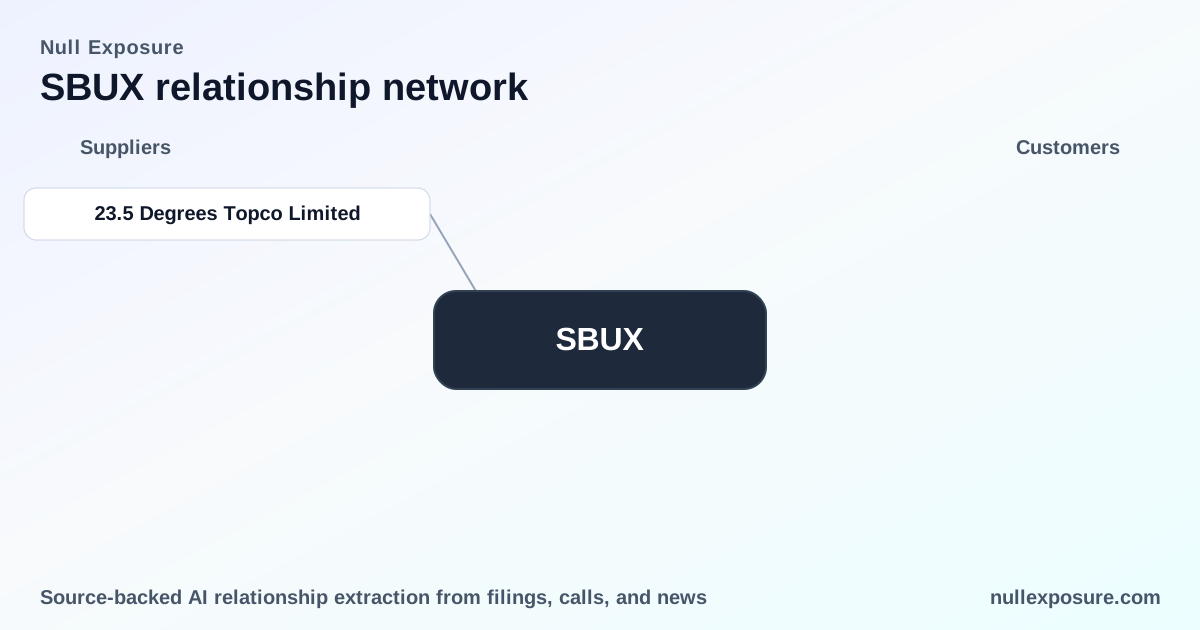
- 23.5 Degrees Topco Limited — Starbucks acquired this company and converted 113 licensed stores to company-operated stores in the first quarter of fiscal 2025 following the transaction, increasing Starbucks’ direct operational footprint. According to Starbucks’ FY2025 Form 10‑K (fiscal year ended September 28, 2025), this conversion was explicitly recorded as store conversions tied to the acquisition.
This is the full set of named relationship entries surfaced in the supplier review for SBUX; the FY2025 10‑K is the primary source for the disclosure cited above.
How these disclosures change the supplier risk profile
Converting licensed stores to company-operated locations has immediate and downstream supplier implications. Company-operated stores take supply purchasing and inventory control in-house, which centralizes procurement and increases Starbucks’ direct contracting volume with manufacturers, distributors, and logistics providers. That centralization amplifies negotiating leverage in categories where Starbucks achieves scale, but it also concentrates execution risk: operational disruptions at company level translate more directly to inventory and cost outcomes than under licensing.
The company’s disclosure that many non-coffee products are bought under long-term contracts signals mature supplier relationships and predictable supply lines for items such as teas, packaged beverages, and proprietary food components. These long-tenor commitments reduce price volatility for those SKUs and protect margins, but they create exposure to contract-break costs if demand or specifications change.
At the same time, Starbucks explicitly flags coffee as material to operations and reports limited ability to fully hedge coffee-price risk. This creates a strategic tension: long-term contracts for many inputs coexist with a highly price-sensitive, less-hedged commodity in coffee. Investors should treat coffee as a core commodity exposure that drives gross-margin variability.
Finally, short-term financing arrangements such as commercial paper dealer agreements are tools Starbucks uses to finance working capital and inventory cycles tied to store operations and seasonal demand. The company’s capital markets access supports procurement flexibility but links supplier risk to market-liquidity conditions.
(Company-level signals drawn from Starbucks’ FY2025 Form 10‑K, which includes contract exhibits and commentary on procurement and financing.)
Explore supplier intelligence and counterparty risk analysis at https://nullexposure.com/.
Practical implications for investors and operators
- Operational consolidation increases direct supplier exposure. More company-operated stores mean Starbucks negotiates and controls more purchase orders directly, increasing importance of vendor performance metrics and contingency plans.
- Long-term supply contracts for many SKUs reduce volatility but limit tactical flexibility. These contracts are consistent with a mature procurement model and support stable margins on packaged and ready-to-drink lines.
- Coffee is a material, high‑impact commodity exposure. Starbucks’ limited hedging capability for coffee prices is a primary margin risk and should be tracked alongside inventory and cost-of-goods disclosures.
- Short-term funding supports procurement cycles but creates market-risk linkage. Reliance on commercial paper and similar facilities ties working-capital capacity to capital-market conditions.
- Established service-provider relationships reflect governance maturity. A long-tenured auditor relationship is a governance signal consistent with large-cap consumer companies.
How to act on this intelligence
For investors: prioritize monitoring coffee-price trends, gross-margin trends reported in quarterly results, and disclosures about store counts and conversion activity that shift procurement volumes. For operators and procurement professionals: reassess supplier SLAs and contingency capacity for categories that will scale with company-operated growth, and stress-test long-term contracts against demand shifts.
If you want a deeper read on how supplier concentration, contract tenor, and commodity exposure translate into earnings sensitivity, schedule a briefing or run a tailored supplier-risk model at https://nullexposure.com/.
Final takeaways
Starbucks’ FY2025 disclosures show active portfolio moves that increase company-operated exposure and a procurement strategy anchored in long-term contracts for many categories while retaining a material commodity exposure in coffee. Investors should treat procurement metrics and capital-market liquidity as first-order variables for future margin and cash-flow performance. For ongoing monitoring and structured supplier intelligence, visit https://nullexposure.com/ and review the SBUX supplier profile.