Scage Future (SCAG): Supplier Map and What It Means for Investors
Scage Future designs, produces, and tests heavy-duty new energy vehicles (NEVs) targeted at logistics, mining, and port operations, monetizing through the sale of purpose-built equipment and related systems under its ADS structure. The company is a small-cap, loss-making industrial OEM with concentrated ownership and an emerging supply-chain posture that is evolving via targeted component partnerships—an investor should treat supplier developments as product-enablement events that directly affect commercial competitiveness and margin recovery. For an up-to-date view of SCAG supplier relationships and sourcing signals, visit https://nullexposure.com/.
Quick operating summary to set the thesis
Scage Future is a NASDAQ-listed issuer headquartered in Nanjing that sells heavy-duty NEVs. Revenue for the trailing twelve months is roughly $11.1M, but the business is operating at a loss (negative gross profit and EBITDA), and insiders control a large majority (≈71.6%) of shares outstanding. Supplier relationships therefore function as force multipliers: component deals that accelerate product acceptance (for example battery partnerships) directly support order flows and can materially change earnings prospects faster than organic scale alone.
Key public metrics investors use to weight supplier risk and opportunity:
- Market capitalization: $116.9M
- Revenue TTM: $11.1M; Gross profit TTM: - $713k
- Shares outstanding: 72.61M; Float: 25.5M
- Insider ownership: 71.606%; Institutional ownership: 0.003%
What the supplier landscape currently shows
SCAG’s publicly surfaced supplier engagements are limited but strategic. The company’s product set—heavy NEVs for industrial customers—depends on performance-critical components such as batteries and power electronics. A single high-quality component partnership can improve uptime, reduce total cost of ownership for end customers, and materially strengthen order conversion. Investors should interpret early supplier announcements as commercial enablers rather than mere marketing: for a small OEM with negative margins, component partnerships accelerate product readiness and buyer confidence.
Explore a consolidated supplier intelligence view at https://nullexposure.com/ while assessing implications for revenue and margin scaling.
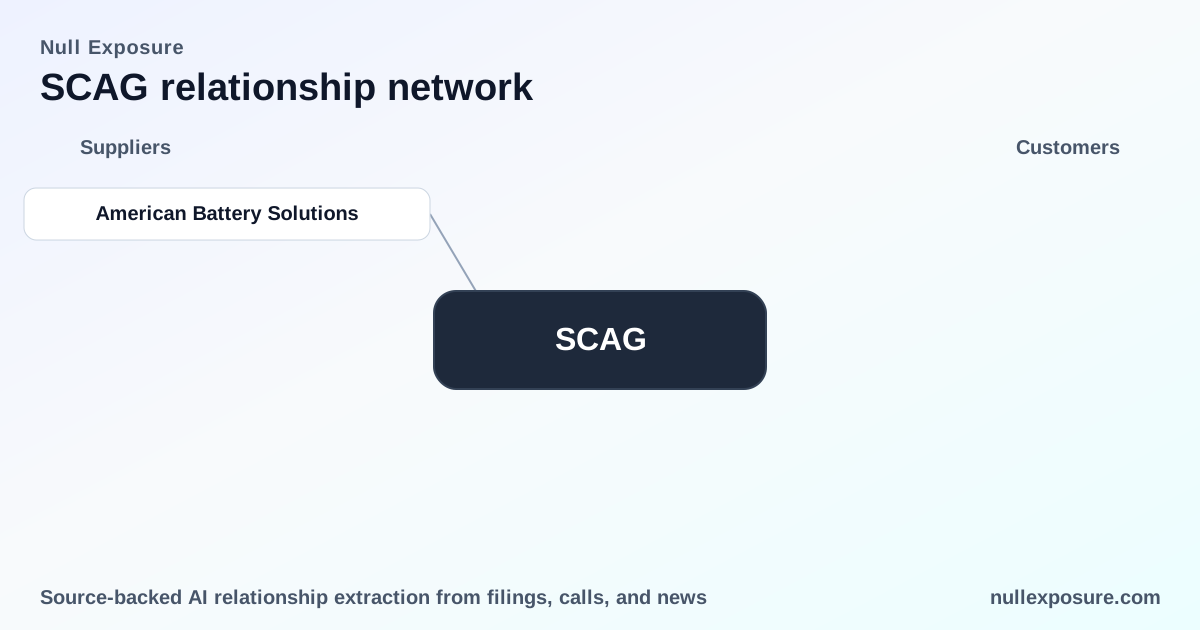
Relationship: American Battery Solutions — battery partnership for commercial mowers
American Battery Solutions announced a strategic partnership with SCAG Power Equipment to supply lithium-ion battery systems for the new Scag RC Extreme Slope mower. The PR Newswire release dated March 10, 2026, describes the deal as a supplier arrangement to provide intelligent lithium-ion technology for an all-new product line, positioning battery performance as a key product differentiator. According to the release, SCAG Power Equipment is referenced as a division of Metalcraft of Mayville Inc., and the collaboration is presented as a product-enablement agreement that integrates ABS battery modules into mower platforms (PR Newswire, March 10, 2026).
How to read this relationship for valuation and operations
- The American Battery Solutions tie is a product-critical supplier relationship: advanced lithium-ion packs materially influence range, reliability, and total cost of ownership for industrial NEVs and powered equipment. For an OEM with constrained internal R&D and manufacturing scale, partnering with a specialized battery supplier reduces time-to-market and lowers technical risk for customers.
- Because SCAG’s revenue base is small and margins are negative, each supplier partnership carries outsized leverage to product adoption and incremental revenues. The ABS collaboration is therefore not just product marketing; it is a revenue-enablement vector that directly affects the company’s commercial story.
- Investors should monitor implementation milestones (field trials, supplier delivery schedules, warranty and support terms) as these will determine how the partnership converts to orders and after-sales economics.
Company-level constraints and operating signals investors must weigh
No specific contractual constraints were captured in the supplier relationship dataset; the absence of public constraint disclosures is itself a signal that supplier terms are not yet material enough to trigger public filing-level obligations. Company-level signals that influence contracting posture and supplier risk:
- Concentrated ownership and tiny institutional base: With insiders holding roughly 71.6% of shares and institutional ownership effectively negligible, corporate governance dynamics and supplier-selection decisions are likely to be controlled by insiders. That governance posture shortens decision cycles but raises questions about independent oversight of supplier terms.
- Small scale and negative margins: Trailing revenues of $11.1M and negative gross profit mean SCAG relies on supplier partnerships to bootstrap product credibility rather than scale production efficiencies. This dynamic increases the strategic value of battery and systems partnerships and raises the cost of supplier failure.
- Low float and limited liquidity: A modest public float and a 50/200-day moving average that sits near low single-digit levels indicate equity liquidity constraints; market reactions to supplier announcements can therefore be amplified and volatile.
- Product criticality and supplier concentration risk: The company’s product set uses a limited number of high-value, high-complexity components (batteries, powertrains). That structure creates single-point supplier concentration risk unless SCAG implements multi-sourcing strategies or secures robust commercial terms including service, replacement, and performance guarantees.
Investment implications and actionable monitoring points
For investors and operators evaluating SCAG supplier exposure, focus on three readouts that convert supplier news into valuation signals:
- Delivery and validation: Confirm field deployments and third-party performance data for the battery systems; demonstrated uptime and performance will accelerate commercial adoption.
- Contract terms and exclusivity: Watch for indications of exclusivity or multi-year supply commitments in public filings or supplier press releases; exclusivity can lock in competitiveness but increases vendor dependency.
- After-sales economics: Monitor warranty reserves, spare-parts provisioning, and service-contract language; these items drive the margin profile of NEV sales and determine whether the partnership is a revenue-accretive or cost-absorbing event.
For a deeper supplier risk assessment and ongoing monitoring of SCAG’s commercial partnerships, go to https://nullexposure.com/.
Bottom line — how this shapes the equity case
The American Battery Solutions engagement is a tangible commercial enabler for SCAG’s product roadmap and should be valued as such by investors; however, the company’s small scale, negative profitability, and concentrated ownership mean supplier deals alone will not de-risk execution without demonstrable order conversion and scalable margin improvement. Monitor delivery milestones, warranty economics, and any public signs of supplier exclusivity to determine whether partnerships produce sustainable revenue growth or simply amplify operational exposure.
To track future supplier developments and assess supplier-related financial risk across small-cap industrials, visit https://nullexposure.com/ for the latest curated intelligence.