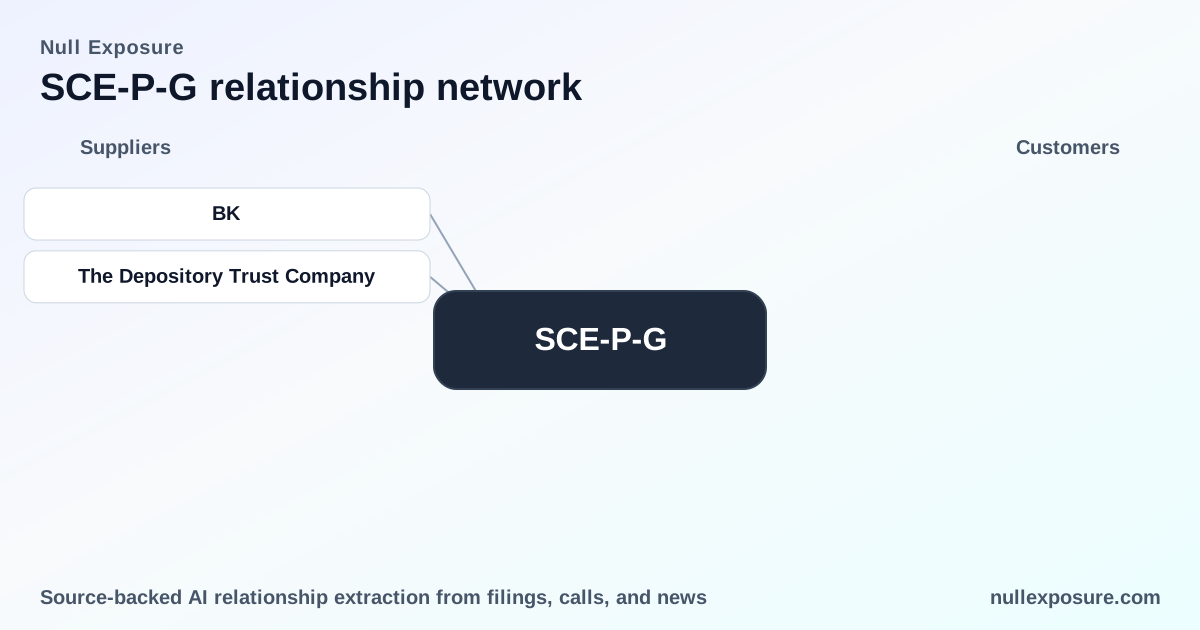
SCE Trust II Trust Preferred Securities (SCE-P-G): Counterparties, Redemption Mechanics, and Investor Implications
Thesis: SCE Trust II Trust Preferred Securities are NYSE-listed trust-preferred instruments that generate investor returns through scheduled distributions until a corporate redemption is executed; the issuer’s operational model monetizes by servicing a fixed-to-floating coupon and executing discrete redemption events, with settlement and payment execution routed through established trustee and clearing channels. Investors should treat this instrument as interest-bearing paper whose value and liquidity hinge on redemption mechanics and the integrity of trustee/clearing relationships. For deeper supplier and counterparty intelligence, visit https://nullexposure.com/.
Why the counterparties matter for preferred security investors
The trust structure puts execution and payment obligations into a narrow operational pipeline: certificate surrender, trustee processing, and clearing-house settlement. That creates high operational criticality around the counterparties that process redemptions and payments. Below I document every relationship flagged in public releases and what each role means for holders.
The Bank of New York Mellon Corporate Trust — FY2024
For trust preference securities not held through DTC, holders were instructed to surrender certificates to The Bank of New York Mellon Corporate Trust in Pittsburgh to collect the redemption price and accrued distributions through November 28, 2024. According to Southern California Edison’s press release on its newsroom (FY2024), BNY Mellon acted as the designated trustee and remitter for non-DTC holders. Source: Edison Newsroom press release (FY2024) — https://newsroom.edison.com/releases/southern-california-edison-announces-redemption-of-sce-trust-iii-5-75-fixed-to-floating-rate-trust-preference-securities.
The Depository Trust Company — FY2024
Trust preference securities held through The Depository Trust Company were to be redeemed according to DTC’s standard procedures, meaning holders in street name should expect automated book-entry credit rather than physical check redemptions. This instruction is documented in the same Southern California Edison release (FY2024). Source: Edison Newsroom press release (FY2024) — https://newsroom.edison.com/releases/southern-california-edison-announces-redemption-of-sce-trust-iii-5-75-fixed-to-floating-rate-trust-preference-securities.
The Bank of New York Mellon — FY2026
For a separate redemption notice, holders not in DTC were again directed to surrender certificates to The Bank of New York Mellon Corporate Trust at its Pittsburgh address to collect the redemption price and accrued distributions through March 15, 2026, reflecting the trustee’s ongoing role in executing redemption logistics. This instruction is recorded in a syndicated Yahoo Finance release (FY2026). Source: Yahoo Finance (sg.finance.yahoo.com) press release (FY2026) — https://sg.finance.yahoo.com/news/southern-california-edison-announces-redemption-213100300.html.
The Bank of New York Mellon Corporate Trust — FY2025
A previous redemption communication required non-DTC holders to surrender securities to The Bank of New York Mellon Corporate Trust for payment of the redemption amount and accrued distributions through December 18, 2025, showing recurring trustee-handled redemptions across consecutive years. This is documented in a Yahoo Finance distribution of the issuer’s release (FY2025). Source: Yahoo Finance (finance.yahoo.com) press release (FY2025) — https://finance.yahoo.com/news/southern-california-edison-announces-redemption-210500053.html.
The Depository Trust Company — FY2025
In the FY2025 redemption announcement, The Depository Trust Company’s procedures again governed redemption processing for securities held at DTC, underscoring that street-name holders rely on DTC’s settlement and crediting practices for timely receipt of proceeds. Source: Yahoo Finance (finance.yahoo.com) press release (FY2025) — https://finance.yahoo.com/news/southern-california-edison-announces-redemption-210500053.html.
The Depository Trust Company — FY2026
The FY2026 notice reiterates that DTC-held trust preference securities will be redeemed under The Depository Trust Company’s procedures, confirming continuity in operational routing for institutional and retail custodial holdings. Source: Yahoo Finance (sg.finance.yahoo.com) press release (FY2026) — https://sg.finance.yahoo.com/news/southern-california-edison-announces-redemption-213100300.html.
Key operating-model signals investors should extract
The release excerpts and the pattern of communications produce a clear set of company-level signals about how SCE Trust II operates and what that implies for counterparty risk and operational exposure:
- Contracting posture: The issuer uses standardized trustee and clearinghouse channels for execution; redemption flows are prescriptive (certificate surrender for non-DTC, DTC procedures for street-name holdings), indicating formal, contract-driven settlement mechanics.
- Concentration: The operational stack is concentrated; payments and redemptions route through a small, well-defined set of counterparties (trustee and the primary clearinghouse), creating single points of process reliance at the company level.
- Criticality: These relationships are operationally critical—failure or delay at the trustee or clearinghouse directly affects investor cash flows and the timing of receipt of redemption proceeds.
- Maturity: The counterparties invoked are mature custodial and trust institutions, implying institutional resiliency for standard redemption processing; however, institutional maturity does not eliminate settlement timing or administrative risk.
No additional constraints were flagged in the public signals reviewed; that absence itself is a company-level signal—there are no new contractual caveats or extraordinary operational qualifications disclosed in these notices beyond routine redemption instructions.
For institutional subscribers who want automated monitoring and a full counterparty map, see https://nullexposure.com/ for service details.
Investment implications and downside scenarios
The practical takeaways for portfolio managers and operators:
- Redemption timing and holder status is decisive. Holders in DTC will receive automated credits per DTC rules, while holders of physical certificates must follow trustee submission rules to receive payment. This split creates a liquidity and operational distinction between custodial investors and direct registrants.
- Operational concentration is a manageable but real risk. The reliance on a single trustee and the central clearinghouse reduces bilateral counterparty variability but raises exposure to processing errors, cut-off miscommunications, or administrative delays that could transiently affect settlement windows.
- Market signals are simple: the paper is being called. Multiple consecutive redemption notices across FY2024–FY2026 indicate active reduction of outstanding trust-preferred obligations; investors should price for diminishing float and the discrete event risk of redemption dates (Nov 28, 2024; Dec 18, 2025; Mar 15, 2026) as listed in the issuer’s releases.
The security’s intra-year price range (52-week high 19.75, low 16.03) gives a trading band to consider when assessing liquidity and price sensitivity ahead of redemption actions.
Final read and recommended next steps
Actionable checklist for holders and analysts: confirm whether your position is DTC-held; verify custodial reporting ahead of redemption dates; document certificate-surrender workflows if you hold registered paper; and monitor trustee notices for any change in payment instruction. For a consolidated view of counterparties and ongoing supplier intelligence, explore our platform at https://nullexposure.com/.
Bottom line: SCE Trust II’s payment mechanics are straightforward and anchored to industry-standard trustee and clearing processes, but they concentrate operational execution into a narrow set of providers—understand your holder status and settlement path to avoid missed payments around redemption events.