Charles Schwab (SCHW) — Supplier Relationships and Operational Constraints
Charles Schwab operates as a diversified brokerage, custody, and investment-services platform that monetizes through client asset servicing, net interest spread on client cash sweeps, asset-management fees, and transactional support services to banks and intermediaries. Its supplier posture reflects a mix of long-term funding arrangements and recurring, usage-based service relationships, while operational dependency on outsourced providers and cleared derivatives infrastructure drives ongoing counterparty and operational risk.
For a closer read on supplier exposures and contract signals, visit the Null Exposure homepage: https://nullexposure.com/
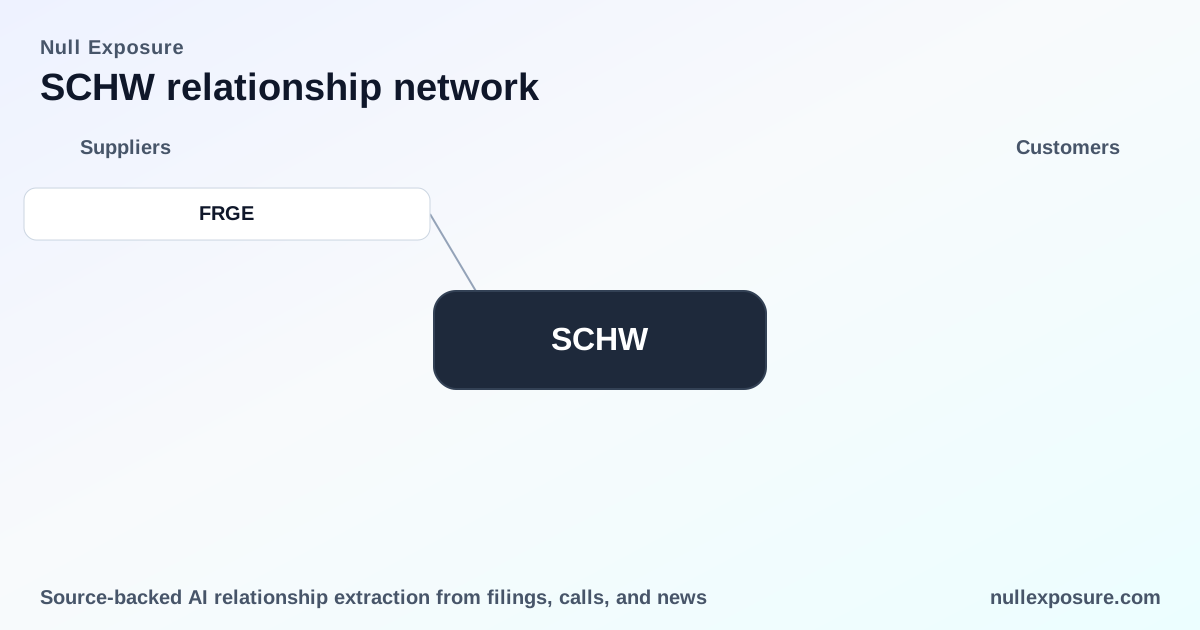
The single supplier relationship disclosed in this pull — what happened with Forge Global
- Charles Schwab completed the acquisition of Forge Global Holdings (FRGE) in early March 2026, integrating private-market access capabilities into Schwab’s platform. This transaction was reported in a March 4, 2026 news article noting the acquisition completion (Sahm Capital, March 4, 2026: https://www.sahmcapital.com/news/content/charles-schwab-adds-forge-to-platform-as-private-access-meets-valuation-gap-2026-03-04).
How the disclosed constraints frame Schwab’s operating model
The company-level constraint evidence in the records provides a coherent portrait of Schwab’s supplier and financing posture. These are company signals, not tied to a specific vendor unless explicitly named in the excerpts.
-
Long-term contracting posture and balance-sheet commitments. Schwab carries substantial long-term debt (Senior Notes totaled roughly $22.4 billion at 12/31/2024) and issued $6.2 billion of Senior Notes in 2023 to manage maturities and support liquidity around major integrations such as the Ameritrade conversion weekends. That scale of long-term debt indicates the firm negotiates and maintains multi-year capital relationships with bondholders and institutional lenders, which in turn constrains flexibility around counterparty selection and cash management timelines.
-
Usage-based commercial relationships are embedded in cash-sweep mechanics. The 2023 IDA agreement with TD Depository Institutions fixes the service fee on client cash deposits at 15 basis points, an explicit usage-based revenue/expense mechanic that links Schwab’s economics to deposit balances flowing off its balance sheet. This structure demonstrates the company both relies on and pays for large-volume, recurring services rather than one-off purchases.
-
Short-term funding and repo reliance for liquidity management. Schwab uses collateralized repurchase agreements and other short-term secured funding as execution-level liquidity tools; these are presented gross on the balance sheet and create rolling counterparty exposures to external financial institutions.
-
Access to central bank facilities as a backstop. The firm’s banking subsidiaries maintain access to the Federal Reserve discount window—an informational signal that short-term liquidity channels include government facilities when markets dislocate.
-
Outsourced service-provider reliance and cleared-derivatives plumbing. Schwab outsources key functions and uses cleared interest-rate swaps via CCPs and FCM intermediaries, requiring posted initial margin and collateral pledging. This increases operational and settlement dependencies on a narrow set of financial-market intermediaries.
-
Scale of contractual spend and purchase obligations. Reported short-term purchase obligations (
$726 million) and long-term purchase obligations ($499 million) as of 12/31/2024 place Schwab in a >$100 million annual spend band for supplier commitments, which shapes procurement leverage and vendor concentration risk.
These characteristics together imply a platform that is capital-structure intensive, reliant on recurring and usage-based third-party services, and exposed to both short-term liquidity cycles and long-term contractual maturities.
For more supplier-level intelligence on Schwab and peer platforms, see https://nullexposure.com/
Practical implications for investors and operator counterparties
-
Counterparty criticality is elevated. Firms that provide clearing, FCM, CCP, or large-scale custodial deposit services are functionally critical; disruption or unfavorable re-pricing with those vendors would have immediate balance-sheet and settlement impacts.
-
Supplier negotiation leverage is asymmetrical. Long-term debt, large-scale sweeps, and required margining mean Schwab needs continuity more than it needs flexible pricing on certain core services; however, the scale of Schwab’s spend (>$100m band) preserves bargaining power on non-critical services.
-
Liquidity and funding risk translates directly into supplier risk. Reliance on repo markets and Fed facilities means market-wide stress increases the probability of accelerated supplier claims or changed collateral terms, raising operational exposure for both Schwab and its vendors.
-
Regulatory and operational maturity reduce idiosyncratic counterparty risk but concentrate vendor importance. Outsourcing essential functions is common in the sector; Schwab’s model mitigates internal complexity but concentrates systemic dependency on a handful of service providers and infrastructure providers (clearinghouses, major custodial banks).
Relationship table (every relationship in the results)
Forge Global Holdings (inferred ticker FRGE, FY2026)
- Charles Schwab completed the acquisition of Forge Global, adding private-market access capabilities to its platform; the transaction was reported in a news article dated March 4, 2026 (Sahm Capital, March 4, 2026: https://www.sahmcapital.com/news/content/charles-schwab-adds-forge-to-platform-as-private-access-meets-valuation-gap-2026-03-04).
What investors and counterparties should monitor next
- Monitor Schwab’s upcoming debt maturities and any new bond issuance cadence; the senior-note schedule through 2025–2034 shapes refinancing risk.
- Track balances swept to TD Depository Institutions and whether the 15 bps service-fee structure shifts in renegotiations that run to 2034.
- Watch repo-market spreads and FCM/CCP margin requirements; increases here directly raise working capital and collateral needs.
- Observe any regulatory filings that disclose changes in outsourced-provider relationships or concentrated vendor exposures.
Near-term actionable item: if you manage counterparty exposure or vendor contracts with Schwab, prioritize continuity clauses, margin mechanics, and settlement-latency metrics in negotiation.
For regular updates on supplier relationships and exposure analysis, visit the Null Exposure homepage: https://nullexposure.com/
Bottom line
Charles Schwab runs a capital-intensive, service-centric platform where long-term funding commitments, usage-based deposit economics, and reliance on cleared-derivatives and outsourced service providers create a distinct supplier-risk profile: high criticality with concentrated vendor dependencies, predictable usage fees on swept balances, and sensitivity to short-term funding markets. Investors and counterparties should price in the systemic importance of Schwab’s core infrastructure relationships and keep a close watch on margining practices and debt-refinancing timelines.
If you want continuous supplier intelligence and constraint-driven monitoring for Schwab and peers, start here: https://nullexposure.com/