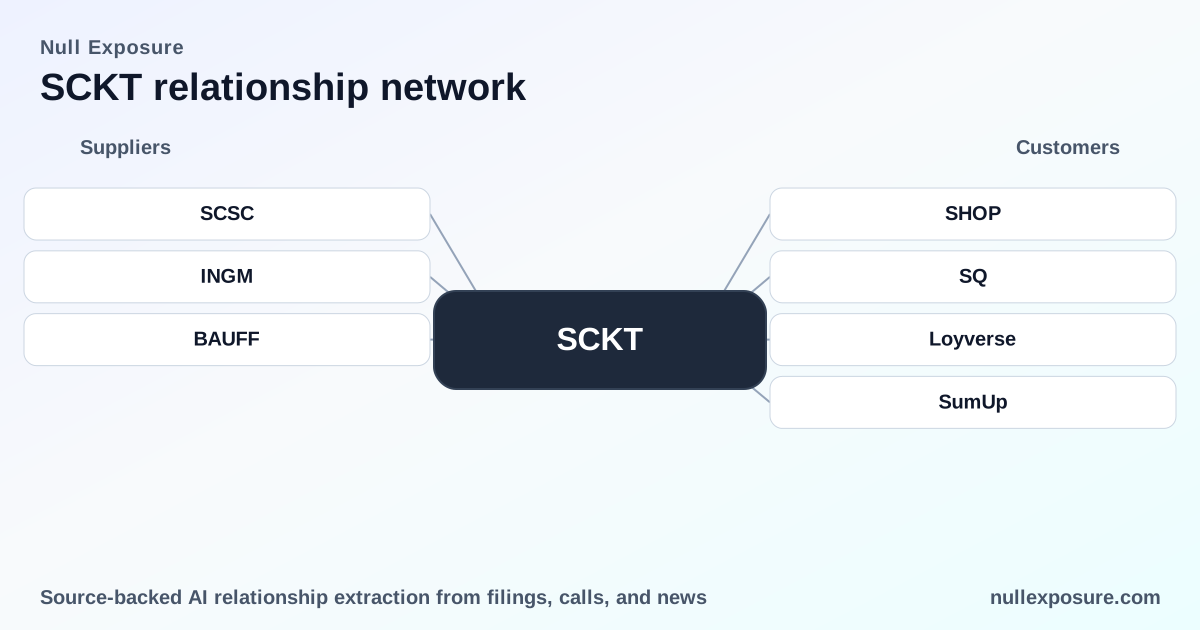
Socket Mobile (SCKT) — supplier map and operational implications for investors
Socket Mobile sells mobile data-capture hardware into enterprise channels and monetizes through product sales to distributors and resellers supported by a global contract-manufacturing footprint. The company outsources product assembly to independent contract manufacturers, channels finished goods through a small set of large distributors, and drives revenue by scaling that distribution network to enterprise mobility customers. This structure creates concentrated supplier and distribution linkages that are central to revenue delivery and operational risk. Explore the full supplier profile at https://nullexposure.com/.
How Socket Mobile gets products to market and where the margin lives
Socket Mobile designs handheld barcode scanners and related peripherals and relies on a two-tier commercial model: third-party manufacturers produce components and finished units, and global distributors convert inventory into enterprise sales through a worldwide reseller network. Financials show modest revenue (Revenue TTM roughly $15.95M) and negative operating margins, demonstrating that the company's economics depend on scaling distribution while keeping manufacturing and channel costs tightly controlled. According to the latest public filings, Socket’s gross profit is concentrated in product sales routed through a handful of partners and its balance sheet shows supplier concentration that affects working capital. For a complete supplier signal snapshot, visit https://nullexposure.com/.
The distributor trio that carries Socket into enterprise accounts
Socket Mobile names three distributors as its largest channel partners: Ingram Micro, ScanSource, and Blue Star. These relationships are not peripheral; they are the primary route to market and thus central to any operational assessment.
ScanSource (SCSC)
ScanSource is identified by Socket as one of its largest distributors, supporting a worldwide network of online resellers that sell Socket hardware into enterprise verticals. This places ScanSource squarely in the path of revenue conversion from manufactured product to customer invoice. According to Socket Mobile’s FY2024 10‑K, ScanSource is explicitly listed among the largest distributors.
Ingram Micro (INGM)
Ingram Micro is listed alongside ScanSource and Blue Star as a primary distributor that supports Socket Mobile’s global reseller footprint, providing scale and logistics to reach enterprise customers across regions. In Socket Mobile’s FY2024 10‑K, Ingram Micro is named as a top distributor.
Blue Star (BAUFF)
Blue Star completes the trio of major distribution partners; the company is listed by Socket Mobile as a key channel that helps support a worldwide reseller network and thus contributes materially to the company’s ability to sell finished goods. The FY2024 10‑K lists Blue Star as one of the largest distributors.
What the supplier constraints tell investors about operational risk
Socket’s filings present several company-level signals that shape supplier risk and negotiating posture:
- Global manufacturing footprint, subcontracted: Socket contracts manufacturing to independent third‑party facilities in the United States, Mexico, Taiwan, Singapore, Malaysia and China, which gives the company geographic diversification but also creates multi-jurisdictional supply-chain complexity and quality‑control dependency. This is stated directly in the FY2024 10‑K.
- High supplier concentration: As of December 31, 2024, 26% of accounts payable were concentrated with the top two suppliers, and 63% of inventory purchases in 2024 came from the top four suppliers. Those numbers indicate a concentrated procurement base that can constrain bargaining leverage and amplify operational disruption risk.
- Manufacturing role is outsourced and critical: The company explicitly subcontracts the manufacturing of all product components, making third‑party manufacturers critical to product availability and lead times.
- Use of external service providers for security and risk testing: Socket engages external cybersecurity and risk‑management experts, reflecting recognition of evolving threat landscapes and the need for third‑party validation of control environments.
Collectively these constraints define a supplier posture that is concentrated, operationally critical, and globally distributed—factors that compress margin upside unless managed through scale, diversification, or longer-term contracting.
Why concentration matters to investors and operators
Concentration in both procurement and distribution creates a two‑way risk: if manufacturing hiccups occur, distributors will have limited alternate supply; if a distributor changes terms or reduces purchase cadence, Socket’s revenue conversion can slow quickly. The financials corroborate this risk profile: operating margin is negative and working capital sensitivity is elevated, which means supplier terms and inventory turn directly affect liquidity and performance. Investors should view distributor and supplier relationships as first‑order risk factors for SCKT’s near‑term financial outcome.
Practical remediation levers for management and partners
Operators and procurement professionals should evaluate the following levers to improve resiliency and margin capture:
- Negotiate greater multi‑source guarantees or dual‑sourcing clauses with critical contract manufacturers to reduce single‑point exposure.
- Expand negotiated distribution commitments with the largest distributors to secure minimum purchase volumes and predictable lead times.
- Tighten vendor-managed inventory or consignment programs with strategic distributors to lower inventory carrying costs and improve cash conversion.
- Increase third‑party validation cadence for cybersecurity and quality control to shorten time‑to-resolution on incidents.
If you want a ready reference of supplier relationships for due diligence or procurement planning, review the Socket Mobile supplier profile at https://nullexposure.com/.
Bottom line for investors
Socket Mobile is a design‑centric hardware company that depends on outsourced manufacturing and a narrow set of major distributors to convert product into revenue. That combination creates concentrated operational risk that directly impacts margins and cash flow. Current filings show significant supplier concentration and global subcontracting, which requires active vendor management and distribution agreements to stabilize performance. For investors evaluating SCKT, operational execution with suppliers and distributors is the principal lever to improve economics; monitor changes in distributor commitments, top‑supplier payment concentrations, and any shifts in manufacturing geography.
For a deeper look at supplier relationships and constraints across public companies, visit https://nullexposure.com/ for more profiles and analysis.
Key takeaway: Socket Mobile’s path to profitability runs through its suppliers and distributors—managing concentration and securing commitments from the top partners is essential to turning design wins into consistent revenue and margin. Finalize supplier diligence by checking the full supplier page at https://nullexposure.com/.