Scienture Holdings (SCNX): Supplier relationships that define near-term commercialization risk and execution
Scienture monetizes by taking novel therapeutics from development to commercial launch through strategic outsourcing: the company licenses or secures exclusive U.S. commercialization rights to approved products, contracts third parties to manufacture and supply finished medicine, and leverages distribution and digital pharmacy partners to reach patients. Revenue upside is tightly linked to a small number of commercial collaborations (notably for REZENOPY and ARBLI) and contingent on third‑party manufacturing and distribution performance. For investors and operators evaluating supplier exposure, the picture is concentrated and execution‑sensitive — review partner contracts, minimums and manufacturing control clauses before sizing exposure.
Explore more supplier intelligence at https://nullexposure.com/.
How Scienture’s supplier posture converts R&D into revenue
Scienture’s model is asset-light on in‑house manufacturing: it secures regulatory approvals and commercialization rights, then relies on external manufacturers and channel partners to produce and deliver product. That contracting posture concentrates operational risk externally but reduces capex and balance‑sheet burden. Key implications:
- Concentration risk: Commercial success depends on a few counter‑parties to supply and distribute critical products.
- Control and criticality: Contracts give manufacturers like Kindeva operational control of production activities, which elevates their strategic significance.
- Financial commitments: Minimum purchase obligations and fixed‑payment alternatives create predictable spend floors and downside liquidity obligations for Scienture.
If you are evaluating counterparties or counterparty risk for SCNX, see the company’s supplier roll‑up below and how contract excerpts shape operational constraints.
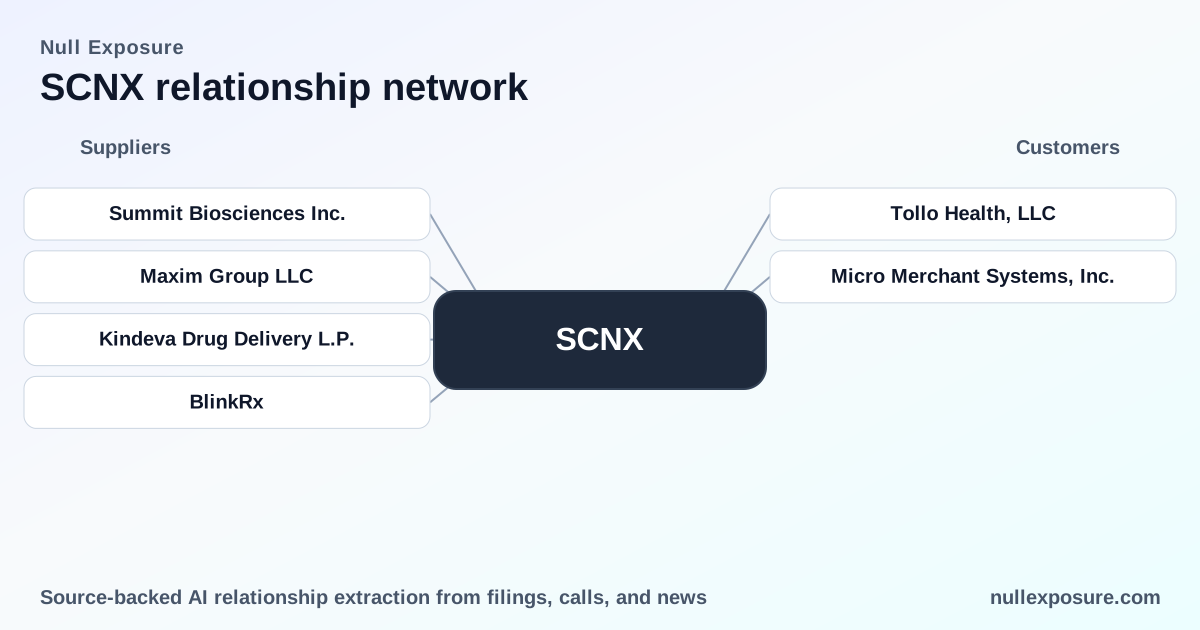
Who Scienture is working with (concise supplier roll‑call)
-
Summit Biosciences Inc. — Scienture, LLC entered an Exclusive Commercial and Supply Agreement in March 2025 giving Scienture exclusive U.S. commercialization rights to REZENOPY (naloxone HCl) Nasal Spray 10 mg; multiple press releases and filings reiterate that Summit will manufacture and commercially supply the product. Source: Scienture’s FY2024 10‑K and subsequent press releases detailing the March 2025 agreement and commercialization terms (company filing and media distribution, FY2025–FY2026).
-
Kindeva Drug Delivery L.P. — Under the collaboration terms disclosed in an SEC exhibit, Kindeva will manufacture and commercially supply REZENOPY, and retain control of manufacturing activities and related non‑clinical or clinical studies, making the manufacturer operationally critical. Source: SEC exhibit (exhibit to company filing, FY2025).
-
Maxim Group LLC — Maxim Group acted as sole placement agent in Scienture’s $3.9 million registered direct offering of common stock, playing a capital markets intermediary role rather than a manufacturing or distribution function. Source: Transaction announcement reported via investor news outlets (FY2025).
-
BlinkRx — Scienture established a strategic collaboration with BlinkRx to enhance patient access, fulfillment and adherence via a digital pharmacy and hub service platform, positioning BlinkRx as a channel and patient‑services partner for ARBLI and related products. Source: Commercial update press release distributed through media outlets (FY2026).
Contracting constraints that matter for valuation and operations
Scienture’s public filings and press materials expose several constraints that investors should fold into risk-adjusted valuation and operational diligence.
-
Geographic manufacturing discussions are global. Scienture has stated it is in discussions with CMOs in North America, Europe and Asia; this signals a deliberate international sourcing strategy that can diversify but also complicate supply chains and regulatory interfaces (company commentary in filings; confidence flagged across NA/EMEA/APAC).
-
Manufacturing control is ceded in key agreements. The Kindeva exhibit confirms Kindeva “will retain control of all activities associated with manufacturing the Product,” a clause that elevates the supplier to a strategic bottleneck for REZENOPY supply and quality outcomes (SEC exhibit, FY2025). Operational control at the vendor level increases execution risk if capacity, quality, or scheduling issues emerge.
-
Material commercial minimums with hard spend floors. Under the Kindeva agreement Scienture agreed to minimum order quantities (three batches of 450,000 units per year beginning in 2027) or pay a fixed alternative (~$1.242 million per year) unless the company terminates pursuant to contract terms. This creates a predictable cash outflow or inventory commitment and sets a baseline downside obligation (contract excerpt summarized in filings; spend band ~$1m–$10m).
-
Outsourced service providers extend beyond manufacturing. Scienture outsources significant elements of IT infrastructure and has executed a Master Services Agreement with Anthem Biosciences Pvt. Ltd. for development services on a biosimilar candidate; these arrangements position service providers as essential to development timelines and regulatory filings (Master Services Agreement, October 29, 2024). Diversity of third‑party roles (CMO, digital pharmacy, IT/service providers) increases the number of discrete failure modes to monitor.
If you want consolidated visibility into these partner provisions and their operational impact, visit https://nullexposure.com/ for supplier mapping and contract signal summaries.
Financial and strategic implications for investors
Scienture’s supplier strategy delivers low capital intensity but creates event risk:
- Upside is concentrated: Successful commercialization of REZENOPY and ARBLI depends on partners executing to schedule and meeting commercial volumes. Positive launches will magnify revenue given exclusivity, but miss‑execution compresses valuation quickly.
- Cash flow sensitivity: Minimum purchase or fixed‑payment clauses lock in cash obligations even if demand lags—this affects runway and dilution decisions.
- Operational leverage through partners: Vendor control over manufacturing processes reduces Scienture’s operational overhead but shifts reputational and compliance risk to suppliers.
Final assessment and recommended next steps
Verdict: Scienture’s supplier ecosystem is coherent and purpose‑built for rapid commercialization, but it is also concentrated and contractually binding in ways that make supplier performance determinative of short‑term outcomes. Investors should prioritize diligence on manufacturing capacity, quality systems at Kindeva/Summit, and the effectiveness of BlinkRx’s fulfillment model before increasing exposure.
- Review the Kindeva/Summit manufacturing timelines and lot release cadence in any diligence.
- Stress test cash runways against the minimum payment alternative in the Kindeva agreement.
- Monitor commercial launch metrics for REZENOPY and ARBLI, and confirm BlinkRx channel conversion rates post‑launch.
For a deeper supplier risk profile and contract signal feed, go to https://nullexposure.com/. For tailored diligence or to commission a supplier risk brief on SCNX, see https://nullexposure.com/ and contact our researcher team.
Key takeaway: Scienture is de‑risked from heavy manufacturing capex but is economically exposed to a handful of suppliers whose performance will determine whether regulatory approvals convert into recurring revenue.