SCPX (Scorpius Holdings, Inc.) — Supplier relationships and operational constraints investors should price in
Thesis: Scorpius Holdings, Inc. operates as a publicly traded biomanufacturing and services supplier that monetizes through contract manufacturing and fee-for-service laboratory work, supported by leased manufacturing sites across the United States and capital market activity to fund growth. Revenue is driven by third-party manufacturing and R&D services, while funding and market access are supported by equity offerings and AMEX liquidity. Learn more about supplier relationship analytics at https://nullexposure.com/.
Quick read: what investors need to know
Scorpius runs its operations from leased facilities in North Carolina, Texas, and New Jersey and markets specialized manufacturing and analytical services for cell, gene and large-molecule biologics. Its business model is service-driven, highly dependent on third-party inputs and real estate relationships, and capital-dependent given public offering activity. That combination creates operational leverage when utilization is high, and downside sensitivity when key suppliers or leases are disrupted.
What the public relationships reveal — direct evidence
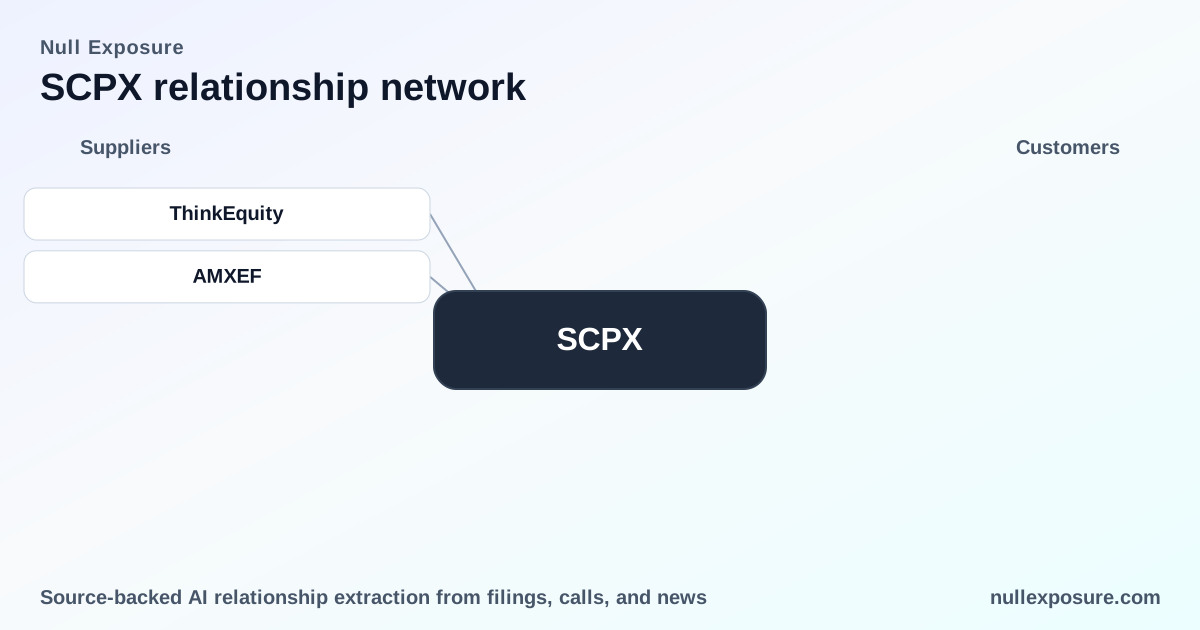
ThinkEquity: Scorpius engaged ThinkEquity as the sole book-running manager for a public offering, signaling direct capital markets activity and engagement with a dedicated placement agent to access equity financing; this is documented in the company’s offering update reported in August 2024 by GlobeNewswire.
AMEX (American Stock Exchange listing info): Scorpius trades on AMEX and is publicly quoted in U.S. markets, with a reported market capitalization and share count noted in a January 2026 market commentary by Meyka; the listing provides visible liquidity and market valuation reference points for investors.
How those relationships drive value and risk
ThinkEquity’s role as sole book-runner is a positive signal for capital access: when a dedicated underwriter leads an offering, the company can raise capital more efficiently but also becomes more visible to short-term market pressure. The AMEX listing confirms public-market scrutiny and valuation volatility; small market cap metrics reported in market notes translate to disproportionate price moves when operating or contractual shocks occur.
Operational constraints that matter to underwriting and counterparty assessment
The public materials and company disclosures reveal three structural constraints that investors must fold into models:
- Geographic concentration (North America focus). Scorpius conducts operations from leased facilities in Morrisville, NC; San Antonio, TX; and North Brunswick, NJ and emphasizes U.S.-sourced equipment and materials, which concentrates operational risk and regulatory exposure in North America while simplifying supply-chain oversight. This is a company-level signal drawn from corporate disclosures describing facility locations and domestic sourcing practices.
- High supplier and landlord dependence. The company explicitly depends on third-party suppliers for critical materials and services used in R&D and manufacturing, and has experienced lease termination activity, which indicates a material dependency on service providers and landlords for continuity of operations (company disclosure dated March 24, 2025 describes notice of lease termination for the San Antonio facility).
- Non-profit lessor relationships and atypical counterparty types. The firm’s filing notes that Merchants Ice II, LLC is a nonprofit entity investing in a building intended to encourage emerging technology development; this creates a non-standard landlord counterparty that can affect renegotiation dynamics and remedies compared with traditional commercial lessors.
Taken together, these constraints imply a contracting posture that is lease-heavy and vendor-reliant, concentration risks around North American facilities, elevated criticality of a small set of suppliers and landlords, and an operating maturity consistent with early-to-mid stage public firms where capital raises are a recurrent feature.
Relationship-by-relationship breakdown (complete list)
ThinkEquity — ThinkEquity served as the sole book-running manager on a Scorpius public offering, indicating the company used an underwriter-led equity raise to fund operations or growth; this was disclosed in an August 2024 GlobeNewswire filing about the offering.
AMEX — Scorpius is listed and trades on the AMEX, with market commentary in January 2026 reporting sharecount and market-cap metrics; the listing is the primary public market channel for valuation and liquidity (market commentary by Meyka, January 2026).
What investors should stress-test now
- Lease continuity and relocation cost exposure. The March 24, 2025 lease termination notice for the San Antonio site is an active operational risk; model scenarios should quantify downtime, recapture costs, and customer churn if manufacturing capacity is disrupted.
- Supplier single-source risk. Given stated dependence on third-party suppliers for critical materials and services, investors must assess supplier concentration and qualify backup sourcing timelines and cost impacts under stress.
- Capital access and dilution risk. The ThinkEquity-led offering demonstrates an ongoing need for capital; investors should factor in future equity raises, underwriter terms, and dilution when valuing the company.
For a concise vendor-exposure dashboard and to monitor changes to these supplier relationships, visit https://nullexposure.com/ and evaluate supplier-level intelligence for SCPX.
Tactical implications for portfolio positioning
- Buyers seeking growth upside should target periods of firming utilization and secured long-term contracts with customers and landlords; positive contract flow materially de-risks the leverage embedded in leased capacity.
- Risk-averse holders should demand transparency on supplier concentration, lease renewal status, and the company’s contingency plans for the San Antonio manufacturing space.
- Active investors should monitor equity activity and underwriter announcements as leading indicators for financing needs and potential dilution.
Final read: what to track in the next 12 months
Monitor three categories closely: (1) lease resolutions and whether the San Antonio capacity is back online or replaced; (2) supplier qualification and multi-sourcing progress to reduce single-source exposure; and (3) capital markets engagement—any new offerings or changes in underwriting relationships will change the financing and governance picture. For ongoing supplier relationship monitoring and to capture updates in real time, return to https://nullexposure.com/ for curated signals and relationship summaries.
Key takeaway: SCPX’s value is levered to its ability to maintain uninterrupted leased manufacturing capacity and diversified supplier access while managing recurring capital raises — these are the levers investors must model precisely.