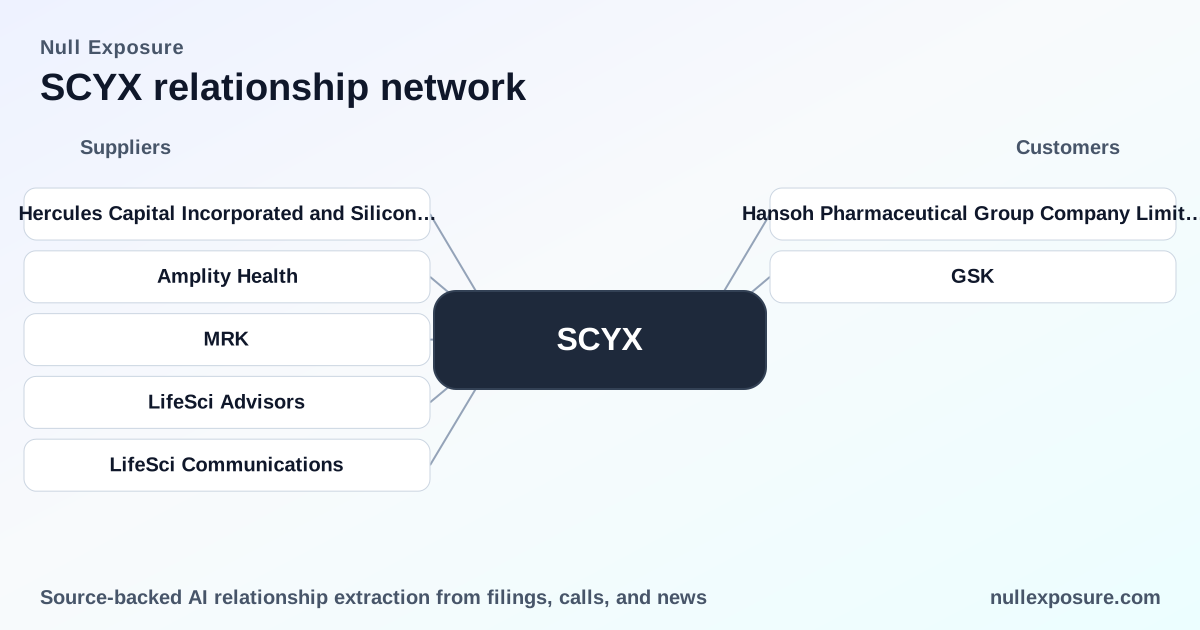
Scynexis (SCYX) — Supplier relationships, operating posture, and what investors should watch
Scynexis is an asset-light biotechnology company that commercializes the antifungal ibrexafungerp (BREXAFEMME) and relies on third parties for manufacturing, commercialization support, regulatory communications, and investor/media relations. The company generates revenue from product sales but carries negative operating earnings; it licensed the program in earlier collaboration with Merck and outsources substantial portions of development and commercial execution to specialist contractors. For investors, the core thesis is simple: value accrues if product uptake scales under the existing commercial partnership while clinical programs progress on schedule — supplier performance and contractual terms are the operational levers that determine execution risk and timeline.
If you want a consolidated view of SCYNEXIS counterparties and exposure, start here: https://nullexposure.com/
How SCYNEXIS runs the business: an outsourced, partnership-driven model
SCYNEXIS operates as a contracting, non-integrated developer rather than an owner-operator of manufacturing or broad commercial infrastructure. The company explicitly states it does not intend to own manufacturing, storage, or distribution facilities and depends on third-party contract manufacturers and service providers for synthesis, clinical work, and commercial support. This is a company-level signal that shapes counterparty risk: contracts are typically short-term and study-by-study, increasing the need for active vendor management and contingency planning.
Key operating characteristics:
- Contracting posture: Outsourced manufacturing and clinical services create operational dependency on external suppliers for both late-stage development and commercial supply.
- Concentration and criticality: Manufacturing and key service relationships are critical to revenue recognition and clinical timelines; any disruption in those contracts can materially impact product supply and trial progress.
- Maturity: SCYNEXIS has historically relied on third parties for clinical compound synthesis and drug product manufacture, indicating an established operating pattern rather than a recent pivot.
These structural elements change how investors should price execution risk: monitor counterparty stability, contract lengths, and substitution options rather than only internal R&D progress.
Financial posture and strategic implications for suppliers
SCYNEXIS is a small-cap biotech with Revenue TTM $20.6M, negative EBITDA, and a market capitalization near the mid tens of millions. The firm’s profit margins and limited cash-generating history increase the economic importance of commercialization partners and financing counterparties. Royalty obligations and any lender covenants will influence free cash flow to reinvest in commercialization and trials. The FY2024 filing also indicates resumption of a pivotal Phase 3 program after regulatory clearance, which elevates the importance of reliable manufacturing and CRO execution to meet planned timelines.
If you track partner risk and counterparty credit, use these dimensions: supplier financial strength, single-supplier concentration, contract duration, and commercial performance metrics tied to partner fees or revenue-sharing.
Explore further supplier intelligence here: https://nullexposure.com/
Supplier map: every reported relationship and what it means
Below are the relevant relationships called out in company filings and press materials. Each entry captures the relationship context and the published source.
Hercules Capital Incorporated and Silicon Valley Bank (FY2024)
The FY2024 10‑K mentions these counterparties in corporate filings and states SCYNEXIS anticipates restarting the Phase 3 MARIO study after the FDA lifted the clinical hold, with restart expected in the second quarter of 2025. This filing reflects both operational and financing context in the company’s public disclosures. (Source: SCYNEXIS FY2024 10‑K filing.)
Amplity Health (MedCityNews, FY2021)
SCYNEXIS contracted Amplity Health as a commercial partner to support U.S. commercialization of BREXAFEMME, positioning Amplity to execute launch activities and field commercialization. (Source: MedCityNews report, June 2021.)
Amplity Health (GlobeNewswire press release, FY2021)
In official press communications, SCYNEXIS announced Amplity Health as a global contract commercialization organization engaged to support the U.S. launch of BREXAFEMME, with a commercial launch scheduled in the second half of 2021. This confirms Amplity’s role as the primary commercialization vendor for product roll‑out. (Source: GlobeNewswire press release, June 2, 2021.)
Merck (MedCityNews, FY2021)
Ibrexafungerp was discovered under a research collaboration with Merck; Merck transferred program rights to SCYNEXIS in 2013 and SCYNEXIS is contractually obliged to pay royalties to Merck on product sales. That legacy agreement creates an ongoing licensing cost embedded in future margins. (Source: MedCityNews report, June 2021.)
LifeSci Advisors (GlobeNewswire press release, FY2021)
LifeSci Advisors is listed as the investor relations contact in official SCYNEXIS communications, indicating the company uses specialized IR support to manage investor outreach and disclosures. (Source: GlobeNewswire press release, June 2, 2021.)
LifeSci Communications (GlobeNewswire press release, FY2021)
LifeSci Communications is listed as the media relations contact for SCYNEXIS in press materials, evidencing outsourced media and communications engagement for product announcements and corporate news. (Source: GlobeNewswire press release, June 2, 2021.)
LifeSci Advisors (ManilaTimes / GlobeNewswire repost, FY2026)
A 2026 public release reiterates LifeSci Advisors as SCYNEXIS’s investor relations contact for recent program updates, emphasizing continuity in outsourced investor communications across years. (Source: ManilaTimes repost of GlobeNewswire release, January 2026.)
Risk framework: what to watch next
- Manufacturing is a single-point operational risk. SCYNEXIS does not operate manufacturing facilities, so third-party manufacturer performance directly controls supply continuity and trial readiness. Track contract counterparties and any public statements about manufacturing qualifications and capacity.
- Commercialization depends on Amplity’s execution. Early sales growth will be a function of Amplity Health’s field performance and distribution agreements; monitor sell‑through metrics and any change in commercialization scope.
- Royalty obligations reduce gross margin upside. The Merck royalty structure is a persistent claim on product revenue and must be modeled into long‑term margin forecasts.
- Communications and investor relations are outsourced. LifeSci Advisors/Communications handle IR and media; that affects the cadence and quality of disclosures investors receive.
Actionable investor takeaways
- Monitor manufacturing contracts and supplier continuity — supplier substitutions take months and could delay both commercial supply and trial restarts.
- Track Amplity Health’s commercialization KPIs (coverage, prescriptions, repeat rates) as the primary operational determinant of near‑term revenue.
- Model Merck royalties into long‑term margin scenarios and stress test cash flow under slower uptake.
- Watch clinical timelines, especially the MARIO Phase 3 restart window, since successful resumption changes milestone and revenue paths materially.
For a broader map of supplier exposures across small‑cap biotechs, visit https://nullexposure.com/
SCYNEXIS presents a classic outsourced biotech investment profile: high operational leverage to a few critical suppliers, modest near-term revenue, and outsized sensitivity to clinical and commercialization execution. Investors should prioritize supplier stability and contract coverage as much as clinical readouts when sizing risk and upside.