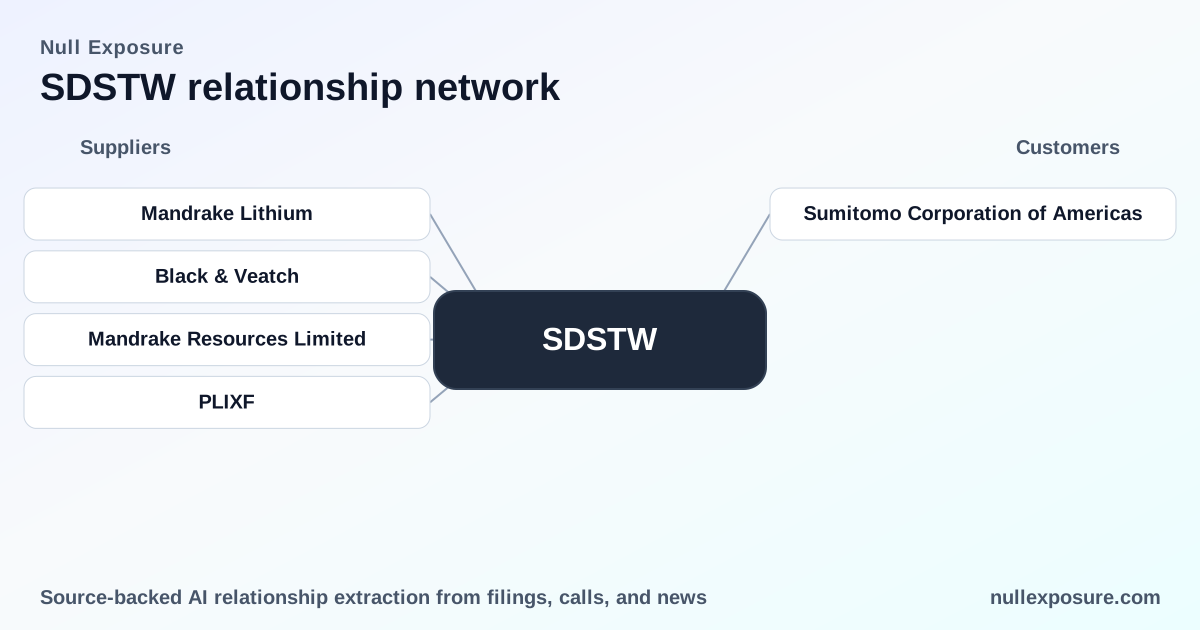
SDSTW (Stardust Power) — Supply relationships mapped and what they mean for investors
Stardust Power (SDSTW) operates as a developer and refiner of battery‑grade lithium carbonate, monetizing by constructing a Muskogee, Oklahoma refinery and securing upstream feedstock and engineered capacity to convert lithium chloride into battery‑grade product for offtake or sale. The company’s economic model depends on locking long‑term feedstock supply and deploying licensed process technology while managing early‑stage engineering risk and capital intensity. For a concise dashboard of supplier exposures and commercial posture, visit https://nullexposure.com/.
The quick take: how suppliers shape the thesis
Stardust’s supplier relationships reveal a hybrid contracting posture: a mix of binding engineering and equipment commitments, non‑binding LOIs for feedstock, and third‑party independent engineering reviews that de‑risk project execution for capital providers. That mix drives three investment imperatives: (1) confirm long‑term feedstock volume and price, (2) validate technology licensing exclusivity and procurement dependencies, and (3) monitor engineering milestones that trigger capital deployment. For deeper counterparty analysis and relationship monitoring, see https://nullexposure.com/.
Who Stardust is working with now — relationship details
Below are every supplier or service relationship surfaced in available reporting, each followed by a concise, source‑linked summary.
Mandrake Lithium / Mandrake Resources Limited
Stardust executed arrangements with Mandrake to secure lithium chloride feedstock; a November 2025 Letter of Intent with Mandrake Resources Limited targets 7,500 metric tons per annum (LCE) from Mandrake’s Utah project as feedstock for refining operations. According to the company announcement (Sahm Capital, Nov 3, 2025), the LOI is intended to underpin commercial supply but is described as a non‑binding agreement. Source: https://www.sahmcapital.com/news/content/stardust-power-strengthens-us-lithium-supply-chain-with-mandrake-lithium-2025-11-03
Prairie Lithium
Stardust reports executing a supply agreement with Prairie Lithium as part of a pair of post‑quarter contracts that together secure 13,500 metric tons LCE of lithium chloride feedstock for the Muskogee refinery. The Q3 2025 financial release referenced these executed agreements, positioning Prairie as a named supplier to satisfy initial feedstock requirements. Source: https://news.futunn.com/hk/post/64901781/stardust-power-announces-q3-2025-financial-results (Q3 2025)
Black & Veatch
Stardust engaged Black & Veatch to perform an Independent Engineering (IE) Red Flag Report assessing plans for a 50,000 mtpa lithium carbonate facility (Phase 1 = 25,000 mtpa). The engagement is a classic project‑finance mitigant: an independent, third‑party assessment to validate design, schedule and cost assumptions ahead of major capital commitments (Sahm Capital, Dec 10, 2025). Source: https://www.sahmcapital.com/news/content/stardust-power-receives-independent-review-of-its-muskogee-lithium-refinery-2025-12-10
(Note: Black & Veatch is reported in both English and Arabic postings of the same December 2025 IE engagement; both reflect the same scope and timing. Sources: https://www.sahmcapital.com/ar-sa/news/content/stardust-power-receives-independent-review-of-its-muskogee-lithium-refinery-2025-12-10 and https://www.sahmcapital.com/news/content/stardust-power-receives-independent-review-of-its-muskogee-lithium-refinery-2025-12-10)
Operating constraints and what they signal about risk and optionality
Stardust’s public disclosures and filings surface company‑level constraints that shape counterparty risk and execution certainty:
- Contracting posture: The company uses a mix of exclusive licensing, LOIs and engineering contracts. An exclusive license with KMX Technologies requires Stardust to purchase KMX VMD units exclusively for the term (evidence from a February 7, 2025 license excerpt). That creates a procurement dependency and single‑vendor exposure for critical separation technology.
- Commercial maturity: Several supplier relationships remain at prospect/LOI stage—non‑binding letters and MOUs are prominent; the company explicitly notes that no formal offtake agreements or material due diligence expenses had been incurred for some prospects as of December 31, 2024. This underscores transitional commercial risk between headline LOIs and binding supply.
- Execution criticality: Stardust has active engineering contracts (for example, a FEL‑3 engagement with Primero USA and an OG&E electric service agreement that includes engineering design services), showing capital‑project execution is underway and third‑party services are already billed in the low millions. These active contracts are critical path items that will influence schedule and funding requirements.
- Spend profile: Reported service agreements fall in the $1m–$10m band (e.g., a ~$4.7m Primero FEL‑3 contract and up to $1.05m in advisory fees to a VCP affiliate), suggesting early‑stage project spend focused on engineering and setup rather than full plant construction yet.
- Relationship roles: Public text flags Stardust as both buyer and licensee (purchasing feedstock and holding exclusive rights to licensed unit suppliers), and it expects to source brine and feedstock from a mix of sellers including oil & gas producers. This combination affects bargaining leverage: Stardust is capital‑and‑execution‑constrained while needing to lock supply.
These constraints are company‑level signals; they are not attributed to any specific supplier unless the excerpt names that supplier directly.
Investment implications — what to watch next
- Confirm binding supply and pricing: Headlines referencing LOIs and executed supply agreements must be validated into binding offtake contracts with clear pricing and delivery schedules. Feedstock volume certainty directly drives refinery throughput and revenue visibility.
- Monitor technology exclusivity risk: The KMX exclusive license creates a single‑source equipment dependency; contract enforcement or supply delays at the licensor level would have outsized project impacts.
- Track engineering milestones: Completion of the IE Red Flag Report from Black & Veatch and the FEL‑3 deliverable from Primero are the binary triggers that will determine financing readiness. Independent engineering outcomes materially influence valuation and funding terms.
For active monitoring and counterparty scoring that investors use to model execution risk, visit https://nullexposure.com/ for a structured supplier view.
Final read: balance of commercial promise and execution risk
Stardust’s relationships paint a clear operating picture: procurement and engineering activity is active and capitalized at a modest scale today, while meaningful feedstock supply is transitioning from LOIs to executed agreements. That profile creates a high optionality upside if binding offtakes and engineering validation land on time, and a concentrated counterparty and technology risk if the exclusive licensing and single‑vendor procurement frictions crystallize.
Investors should prioritize documentary confirmation of commercial terms and independent engineer findings before assuming any revenue run‑rate from the Muskogee refinery. For a pragmatic, counterparty‑focused due diligence package tailored to project finance and supplier concentration analysis, go to https://nullexposure.com/.