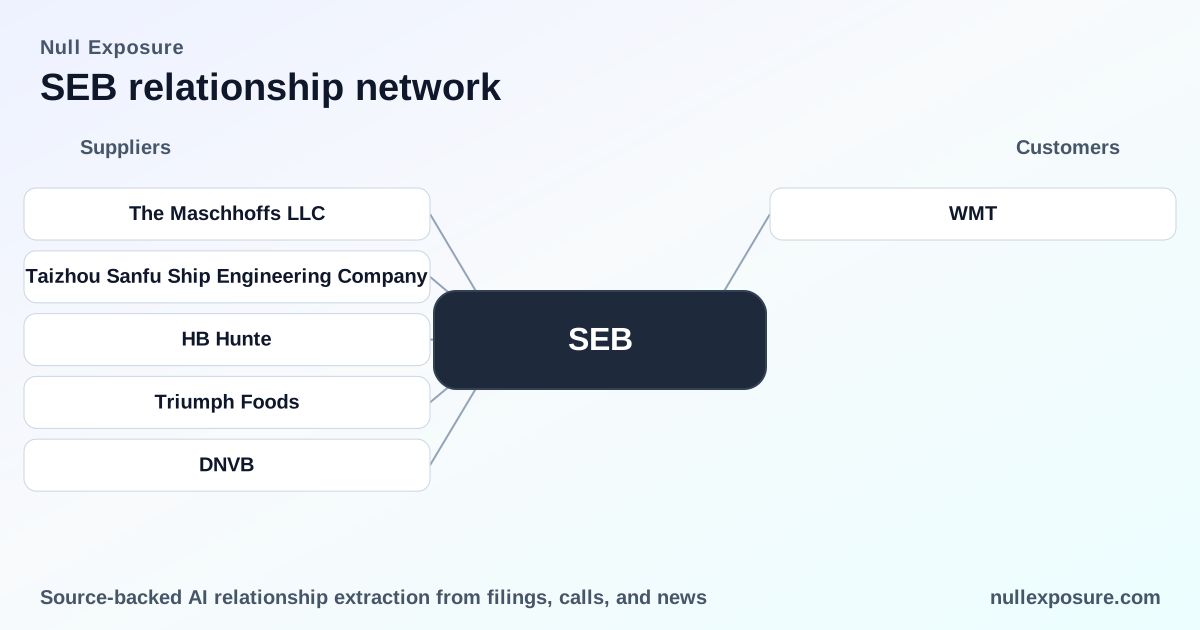
Seaboard Corporation (SEB) — supplier relationships that shape capital allocation and operational risk
Seaboard is a vertically integrated agribusiness and transportation conglomerate that monetizes through commodity sales (pork, grains), freight and marine services, and related trading and processing margins. Revenue derives from owning production assets, purchasing and processing livestock and grain, and operating a fleet that moves product to market — a business model that combines asset intensity with recurring procurement flows. Review Seaboard’s supplier and partner footprint to assess capital commitments, counterparty concentration, and operational criticality that drive both earnings stability and price exposure. For a concise supplier-risk dashboard, visit https://nullexposure.com/.
Why suppliers matter for Seaboard’s thesis
Seaboard’s P&L is sensitive to three supplier categories: livestock and grain sellers (inputs that determine gross margin), shipyards and naval architects (capital projects that determine fleet capabilities), and classification/technical partners (safety and regulatory continuity). Large one-off purchases and long-term fuel commitments translate into multi-year cash flow implications for the marine and pork segments; conversely, close marketing relationships protect downstream margin capture.
Canonical supplier relationships (what the record shows)
Below I cover every supplier or partner reference in the aggregated results, with a concise plain-English summary and source.
The Maschhoffs LLC
Seaboard acquired hog inventory and certain hog farms from The Maschhoffs LLC for $58 million in cash during FY2022, reflecting strategic procurement and asset acquisition to secure feedstock for its pork operations. Source: Meat+Poultry article on the transaction (FY2022): https://www.meatpoultry.com/articles/27532-seaboard-acquires-maschhoffs-hog-operation.
Taizhou Sanfu Ship Engineering Company
Seaboard ordered LNG-fueled containerships built in China from Taizhou Sanfu Ship Engineering Company, signaling ongoing fleet expansion and a shift toward gas-fueled vessels in the container business. Source: Maritime Executive coverage of Seaboard Marine’s LNG-fueled containerships (FY2024): https://maritime-executive.com/article/seaboard-marine-integrates-lng-fueled-containerships-into-fleet.
HB Hunte
HB Hunte of Germany provided the naval architecture and design for Seaboard Marine’s new class of LNG-fueled vessels, indicating reliance on specialist European ship designers for naval engineering. Source: Maritime Executive (FY2024): https://maritime-executive.com/article/seaboard-marine-integrates-lng-fueled-containerships-into-fleet.
Triumph Foods
Seaboard Foods sources and markets fresh pork processed by Triumph Foods’ St. Joseph, Mo., plant, distributing product under brands like PrairieFresh Premium Pork domestically and Seaboard Farms internationally — demonstrating commercial partnerships that support downstream sales channels. Source: FoodBusinessNews coverage describing processing and channel arrangements (FY2015): https://www.foodbusinessnews.net/articles/6110-seaboard-triumph-foods-to-build-pork-plant.
DNV
Seaboard’s new LNG-fueled containerships have been classed by DNV and reported with a design speed of 19.5 knots, underscoring third‑party class society involvement for safety and regulatory certification. Source: Maritime Executive (FY2024): https://maritime-executive.com/article/seaboard-marine-integrates-lng-fueled-containerships-into-fleet.
What the relationship map implies about Seaboard’s operating model
The documented supplier ties reveal a company that balances vertical asset ownership with strategic external partnerships. Key operating-model characteristics:
- Contracting posture: Filings show Seaboard uses long-term fuel supply agreements to support natural-gas propulsion for barges and future vessels, indicating a preference for multi-year supply contracts to reduce price and availability risk in fuel-intensive operations (company-level signal).
- Buyer role and procurement scale: Seaboard’s pork segment contracts for hog purchases and recorded large grain purchases reflect a buyer posture with material procurement spend, including contracts that fall into the $100M+ spend band — this is a structural input cost driver that controls margin volatility.
- Criticality and maturity: Partnerships with shipyards, naval architects, and class societies are high-criticality, capital-intensive relationships; replacement cycles for ships and processing plants are long, so contract terms and delivery timelines materially affect capacity and route economics.
- Concentration and governance: High insider ownership (about 74.6% per public filings) concentrates control — this benefits long‑term strategic decisions (e.g., fleet renewals) but reduces activist oversight on supplier selection and pricing negotiation.
For investors focused on supplier risk, these points should direct due diligence toward contract terms, counterparty financial health (shipyard completion risk), and Hog/grain procurement pipelines. Learn more about supplier risk factors at https://nullexposure.com/.
Investment implications and principal risks
- Capex and timing risk: Shipbuilding orders and LNG conversions require sizable capital and long lead times; classification by DNV and design work by HB Hunte reduce technical risk but do not eliminate delivery or cost escalation risk.
- Input-price exposure: Owning hog inventory (e.g., the Maschhoffs acquisition) reduces immediate procurement spot exposure but increases balance-sheet cyclicality and working capital needs; large-scale grain and hog purchases are a principal margin lever.
- Operational counterparties: Relationships with specialized suppliers (Taizhou Sanfu, HB Hunte, DNV) are operationally critical; disruption or delays at a single shipyard can cascade through fleet deployment and freight revenue.
- Governance profile: Concentrated insider ownership accelerates strategic execution but limits independent shareholder pressure on supplier diversification or contract renegotiation.
Seaboard’s public financials support these points: a Market Capitalization near $3.85B, Revenue TTM around $9.82B, profit margin roughly 4%, and EV/EBITDA around 6.8x — an earnings profile where input cost control and fleet utilization materially affect ROE and cash generation.
What investors should do next
- Obtain copies of long-term fuel and shipbuilding agreements to evaluate pricing formulas, escalation clauses, and delivery covenants.
- Stress-test pork and grain procurement economics under adverse price scenarios given the company’s $100M+ procurement footprint.
- Monitor shipyard progress and DNV class milestones as leading indicators for fleet contribution to revenue.
- For a concise supplier-risk scorecard and monitoring tools, visit https://nullexposure.com/.
Bottom line
Seaboard’s supplier relationships reflect a deliberate mix of vertical integration and selective external partnerships: asset ownership secures input flow while specialist suppliers deliver technical capability. Investors must weigh the benefits of secured feedstock and modernized tonnage against capex timing, large procurement commitments, and the concentrated governance that shapes procurement strategy. For ongoing tracking of supplier exposures and contract signals, see https://nullexposure.com/.