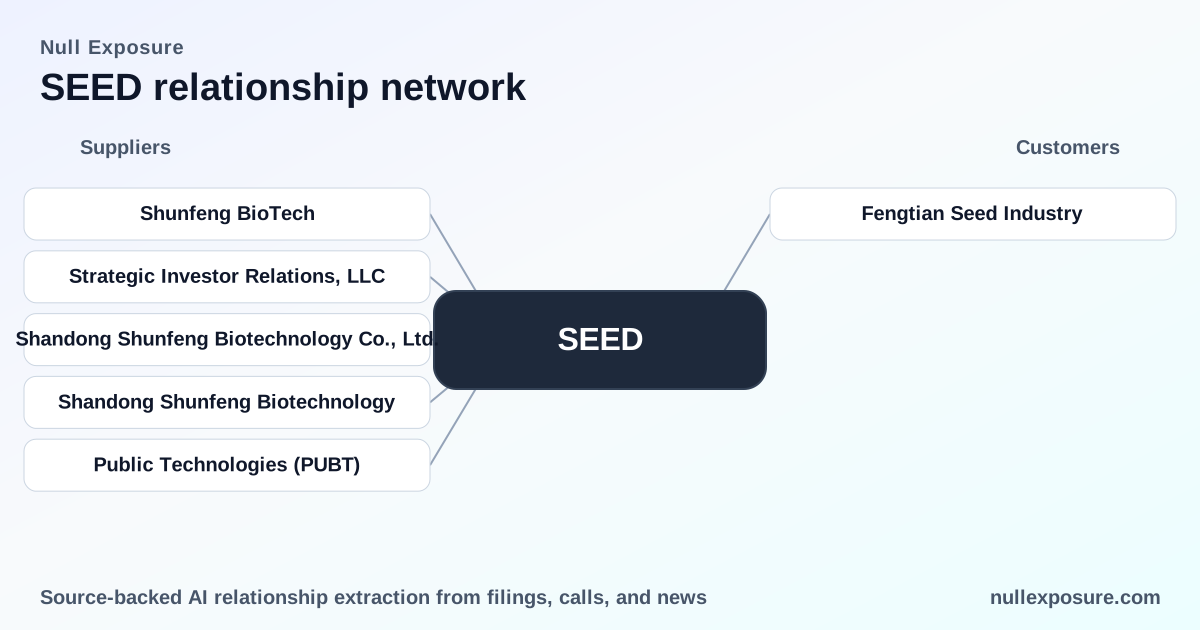
Origin Agritech (SEED): Supplier relationships, strategic implications, and investor checklist
Origin Agritech operates as a Chinese agricultural biotechnology and e‑commerce company that commercializes proprietary seed genetics, gene‑editing technology, and direct online crop‑input sales. The firm monetizes through seed and trait sales, licensing of gene‑editing tools, and e‑commerce distribution to Chinese growers; current financials show meaningful top‑line scale with negative operating leverage, making strategic supplier and IP relationships central to re‑rating potential. For a concise view of SEED’s supplier exposures and to monitor material partner news, visit https://nullexposure.com/.
Why the Shunfeng license changes the operating map
Origin has executed a patent license with Shandong Shunfeng Biotechnology for the Cas‑SF01 gene‑editing tool, a clear strategic move to accelerate trait development without building the IP stack in‑house. This license converts a portion of R&D from pure internal discovery into a technology-sourcing model, shortening time‑to‑market for edited traits while shifting some legal and technical risk to an IP licensor. Multiple press reports confirmed the agreement in early 2026 (press distribution and trade outlets, March 2026).
Supplier and advisor relationships investors should know
- Shunfeng BioTech / Shandong Shunfeng Biotechnology Co., Ltd. — Origin signed a patent license agreement for the Cas‑SF01 gene editing tool, which gives Origin access to an established editing platform and supports faster trait development and commercialization. This was announced in company releases and covered by industry outlets in March 2026 (global‑agriculture.com; vir.com.vn; MarketScreener).
- Strategic Investor Relations, LLC — Matthew Abenante of Strategic Investor Relations is the company’s investor relations contact for recent corporate updates and the FY2025/2026 business update and earnings call notices, indicating an active IR engagement strategy to reach U.S. and international investors (PR News Asia distribution; Manilatimes; MarketScreener, FY2025–FY2026).
- Public Technologies (PUBT) — Several Origin press announcements were distributed via Public Technologies on October 15, 2025, which points to outsourced press distribution channels for corporate communications and market outreach (MarketScreener, Oct 2025).
What these relationships imply for operations and risk
- Contracting posture: Origin is executing licensing deals rather than acquiring core IP or building all capabilities internally, which signals a pragmatic contracting stance that prioritizes time to commercialization over ownership of every technology layer. The Shunfeng license is a textbook example of leveraging third‑party IP to accelerate product cycles.
- Concentration and criticality: The Cas‑SF01 license is strategically critical because gene‑editing capability is core to Origin’s seed innovation roadmap; reliance on a small number of specialized licensors increases operational concentration and supplier criticality.
- Maturity and commercialization: Origin’s financials show revenue of $91.29M TTM with gross profit of $6.39M but negative EBITDA and diluted EPS, which places the company in a commercially active but financially immature stage where partner deals materially impact near‑term product economics.
- Communications and investor access: Use of Strategic Investor Relations and public‑distribution partners like PUBT demonstrates a proactive investor communications program designed to manage liquidity and informational flow to U.S. investors despite limited institutional ownership. These are company‑level signals, not supplier‑specific constraints.
Mid‑article action: for ongoing tracking of these relationships and new supplier filings, consult https://nullexposure.com/ to receive structured updates.
Financial context that makes supplier choices consequential
Origin’s cost structure and liquidity situation amplify the importance of supplier and licensing strategy. With negative EBITDA and operating margin pressure, the company cannot absorb long development cycles or expensive proprietary builds without diluting shareholders or stretching cash reserves. Licensing IP and outsourcing communications reduces immediate capital intensity but increases dependency on third‑party timelines and terms. Other notable financial signals: insider ownership above 54% and institutional ownership below 1% create a governance profile where strategic supplier decisions are likely driven by a concentrated insider group and public communication intermediaries.
Investment implications — upside and hard risks
- Upside: Faster time‑to‑market for edited traits via the Shunfeng license could improve revenue mix and gross margin over successive seasons if trait performance and regulatory acceptance in China follow the company’s roadmap.
- Risk: Supplier concentration on a single gene‑editing licensor increases operational vulnerability if licensing terms change or if regulatory developments constrain use of the licensed technology. Negative EBITDA and thin market cap limit the company’s ability to self‑fund long, capital‑intensive product cycles.
- Market/liquidity note: thin float and low institutional ownership compress trading liquidity and heighten price sensitivity to each partner announcement.
What to watch next — catalysts and monitoring signals
- Track product launches that explicitly use Cas‑SF01 traits and subsequent channel adoption metrics reported in quarterly updates.
- Monitor licensing terms disclosures for scope, exclusivity, field‑of‑use, and payment structure (upfront vs. milestone vs. royalties) in follow‑on company releases.
- Watch investor relations activity for guidance changes and capital‑raise signals; the company’s use of Strategic Investor Relations suggests the firm will actively push updates to the market.
- Regulatory developments in China relevant to gene‑editing and seed approvals will determine commercialization timelines and addressable market size.
Near‑close action: to monitor these developments in real time and evaluate how new supplier deals change SEED’s risk/return profile, visit https://nullexposure.com/.
Final takeaways for investors and operators
- The Shunfeng license is a material operational accelerator for Origin’s gene‑editing program, but it increases supplier concentration and dependency on third‑party IP.
- Origin’s current financial profile—positive top line but negative profitability—makes supplier terms and royalty structures determinative for future margins and capital needs.
- Active IR and press distribution channels indicate a deliberate push to broaden investor awareness, which will amplify the market impact of supplier announcements.
For an analytics‑driven view of supplier relationships and to receive alerts on material partner changes for SEED, go to https://nullexposure.com/.