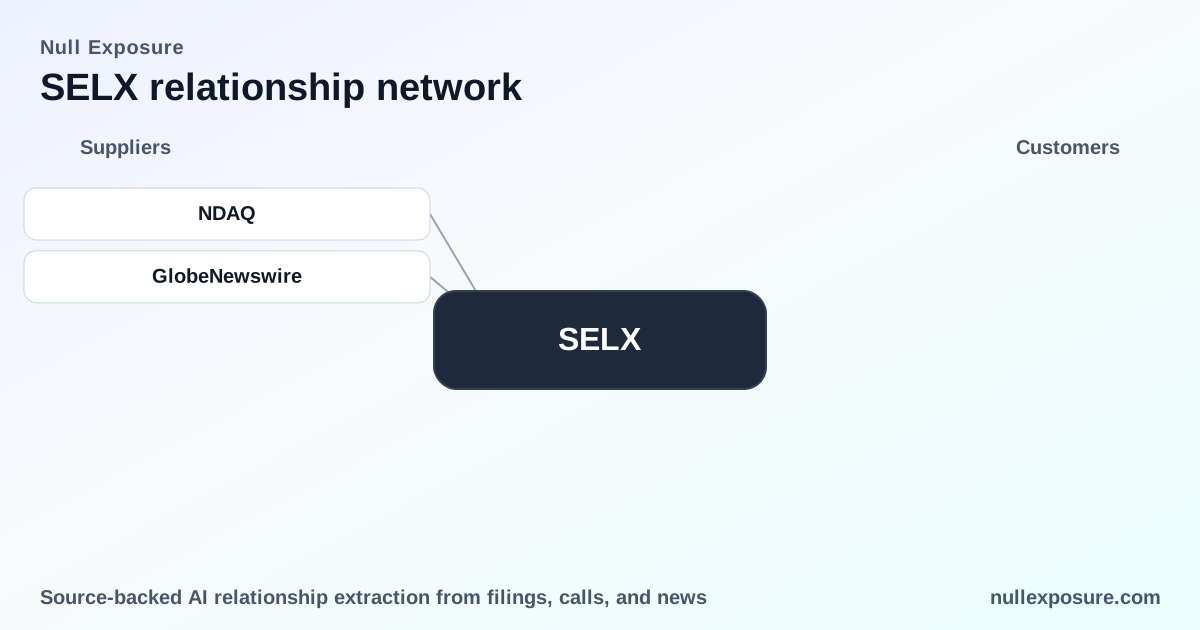
Semilux International Ltd. (SELX): Listing pressure raises supplier risk and operational scrutiny
Semilux International Ltd. is a Taiwan-based manufacturer of advanced lighting products that generates revenue through the sale of energy-efficient lighting solutions across commercial, industrial, and residential channels. The company monetizes primarily through product sales of high-performance lighting hardware sold globally via its ordinary shares listed on Nasdaq. Recent disclosure activity around Nasdaq listing compliance, combined with a persistent loss profile and concentrated ownership, elevates counterparty risk for buyers, creditors, and strategic suppliers and warrants immediate operational reappraisal.
Learn more about monitoring supplier risk and public-company supplier relationships at https://nullexposure.com/.
What the Nasdaq notices mean for counterparties
Three public notices and press reports document the same underlying fact set: Semilux received a Nasdaq deficiency notice tied to its Market Value of Listed Securities (MVLS). Each source contributes the same essential information from a different channel:
The Nasdaq Stock Market — MVLS deficiency letter. According to a FinancialContent report on the Nasdaq notice (FY2026), Nasdaq’s listing qualifications staff notified Semilux that its MVLS fell below the $35 million minimum required for the Nasdaq Global Market for the period from November 13, 2025 to December 30, 2025. This is an explicit regulatory compliance action that places the company on a listing remediation timeline. (FinancialContent, January 8, 2026)
Nasdaq reference in press coverage. A Globe and Mail press release reiterated that Semilux is a Taiwan-based foreign private issuer trading on the Nasdaq Global Market under ticker SELX and is subject to Nasdaq’s continued-listing standards. The report framed the compliance issue as material to U.S. market access and shareholder liquidity. (Globe and Mail coverage of the press release, FY2026)
Company communication via GlobeNewswire. Semilux itself distributed the notice via GlobeNewswire on January 8, 2026, making the Nasdaq deficiency an announced corporate event and thus part of the public record that counterparties can rely on when reassessing contract exposure. (GlobeNewswire, January 8, 2026)
All of the supplier-related relationships in the record
Below are the individual relationship entries from the public record; each is summarized plainly for procurement and investor due diligence:
-
The Nasdaq Stock Market (NDAQ) — Nasdaq issued a Market Value of Listed Securities deficiency notice for the period Nov 13–Dec 30, 2025, indicating Semilux’s MVLS dropped below the $35 million threshold required for the Nasdaq Global Market. This notice starts a defined remediation process that affects public liquidity and listing status. Source: FinancialContent report on the Nasdaq notice (FY2026).
-
Nasdaq (as referenced in media coverage) — Press coverage identified Semilux as a foreign private issuer listed on the Nasdaq Global Market under SELX and highlighted the compliance deadline tied to the MVLS deficiency, underscoring how market reporting frames listing compliance as a market-access and investor-relations issue. Source: Globe and Mail coverage of the January 2026 press release.
-
GlobeNewswire (company disclosure channel) — Semilux published the Nasdaq deficiency notice via GlobeNewswire on January 8, 2026, formally notifying stakeholders and creating a time-stamped public disclosure that counterparties can use to evaluate near-term listing and liquidity risk. Source: GlobeNewswire press release, January 8, 2026.
Company-level signals that shape supplier contracting posture
There are no supplier-scoped contractual constraints listed in the source material; however, company-level financial and ownership signals define Semilux’s operating posture and deserve attention by counterparties:
-
Contracting posture: With a small market capitalization (~$17.0 million) and a public Nasdaq deficiency, Semilux operates under capital stress that increases the probability of accelerated payment negotiations or requests for longer supplier credit. Suppliers should assume tighter cash management and a higher propensity to renegotiate payment terms.
-
Concentration: Insider ownership is extremely high at 59.8%, while institutional ownership is low at 7.6% and shares float under 9 million. That ownership profile indicates founder or management control that can produce rapid strategic shifts without broad institutional governance pressure.
-
Criticality: Semilux’s product set—lighting components and finished lighting products—can be critical to commercial and industrial customers, but the company’s negative gross profit and operating losses indicate limited margin buffer to absorb supply-chain shocks or absorb price increases.
-
Maturity and earnings profile: Revenue TTM is $116.2 million, but gross profit is negative (-$28.4 million) and EBITDA is deeply negative (-$143.7 million), with quarterly revenue declining year-over-year by ~24.6%. Those figures indicate an immature recovery profile and potential stress on liquidity and working capital.
These signals collectively argue for stricter supplier protections: advance payments, shorter payment windows, stronger personal or parent guarantees where available, or inventory consignment arrangements when continuity is critical.
Learn how to operationalize supplier risk rules for public issuers at https://nullexposure.com/.
What operators and investors should prioritize now
Semilux’s combination of a Nasdaq deficiency notice and adverse financial metrics creates specific, actionable priorities for stakeholders:
- Revisit contract terms: Add payment triggers tied to public disclosures (e.g., listing notices), require accelerated payments on covenant breaches, and reserve rights to suspend shipments.
- Stress-test receivables and inventory: Model 60–120 day disruptions to determine buffer needs; given negative margins, plan for rapid working-capital tightening.
- Monitor liquidity and listing milestones: Treat Nasdaq remediation deadlines as operational risk events; loss of Nasdaq listing would materially impact liquidity and could accelerate supplier exposure.
- Use ownership structure to guide escalation: With concentrated insider control, pursue direct negotiation channels with executives and consider board-level engagement if contracts are material.
Bottom line: suppliers must price and contract for near-term stress
Semilux operates a core lighting-manufacturing business with real revenue, but the company is operating at a loss with weak market capitalization and an active Nasdaq MVLS deficiency. For suppliers and counterparties, the appropriate posture is defensive and contractual: tighten payment terms, secure collateral or guarantees where possible, and structure continuity plans for critical supply lines. Investors should treat the Nasdaq notice not as an isolated compliance footnote but as an operational signal that amplifies credit and performance risk.
For a structured review of supplier exposures and comparable public-company supplier signals, visit https://nullexposure.com/.