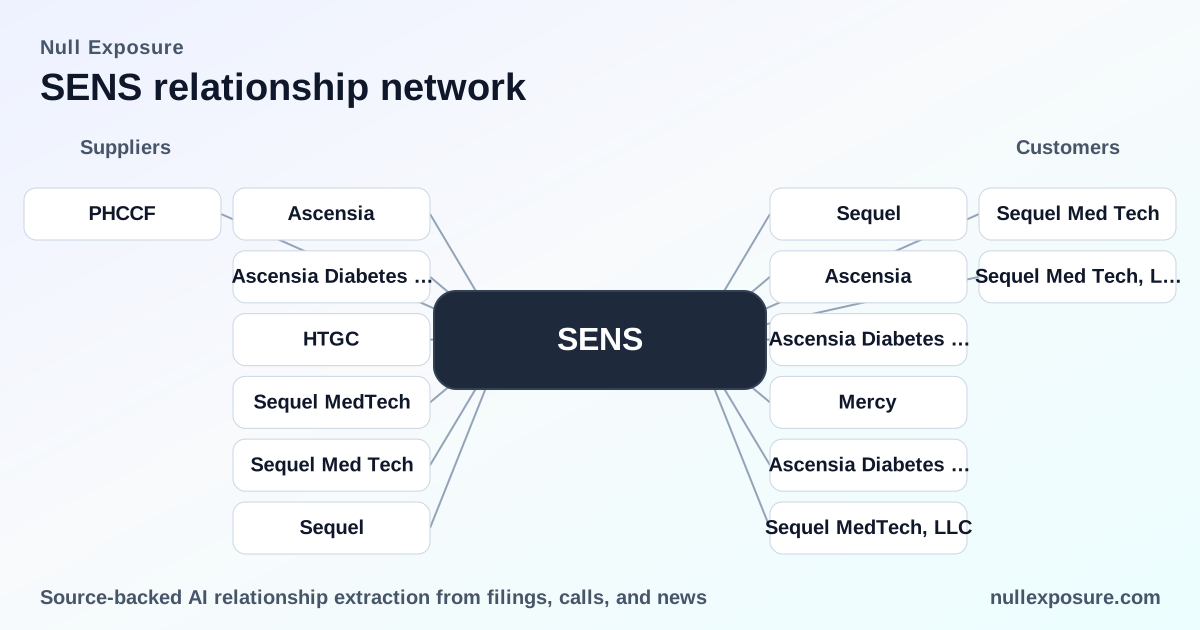
Senseonics (SENS) — supplier relationships that shape commercialization and risk
Senseonics monetizes by selling the Eversense family of implantable continuous glucose monitoring (CGM) systems to clinics, distributors and payors while licensing and integrating sensor data into partner insulin-delivery platforms. The company combines product sales, commercial distribution and select service arrangements to generate revenue, while financing growth through a mix of equity, non-dilutive debt facilities and strategic shareholder support. Key commercial shifts in 2025–2026 transitioned Senseonics from a channel-led model to direct commercial responsibility, reduced revenue-sharing, and deeper integration with insulin-delivery partners — each change materially affecting supplier and partner risk. Learn more at https://nullexposure.com/.
How Senseonics operates and where suppliers fit in
Senseonics sells a hardware-plus-service CGM: an implantable sensor with associated on-body electronics and clinician-facing procedures. Revenue derives from sensor and transmitter sales, recurring accessories and future revenue uplift from integrated Automated Insulin Delivery (AID) systems. The business relies on third-party manufacturing, distribution partners and clinical suppliers, so supplier continuity directly affects product availability and commercial execution.
Operational posture and business-model constraints:
- Outsourced manufacturing is core: Senseonics outsources all Eversense component manufacturing to contract manufacturers across North America and Europe, establishing a supplier-dependent production model that compresses margin levers and increases execution risk (company filing, 2024 10‑K).
- Supplier materiality is real: The company itself warns that supplier or service disruptions would adversely impact product delivery and customer access, elevating single-supplier or concentrated-manufacturing risk (company filing, FY2024).
- Commercial concentration and transition risk: The shift from third-party commercialization (Ascensia) to in‑house operations alters revenue recognition, working-capital needs and margin capture while creating short-term execution risk during the handover (earnings call, Q4 2025).
- Capital posture influences supplier flexibility: Availability of non-dilutive debt and strategic investor support expands optionality for inventory financing and transition costs, reducing immediate cash‑drain but creating repayment and covenant considerations (Q4 2025 commentary).
If you want a structured supplier-risk scorecard for SENS relationships, see this resource: https://nullexposure.com/.
The relationships that matter — what investors should know
Ascensia / Ascensia Diabetes Care
Senseonics historically partnered with Ascensia for global commercialization and sales operations, and purchased modest clinical supplies from Ascensia (Senseonics paid Ascensia $0.1 million in FY2024 for trial supplies). In 2025 Senseonics completed an asset purchase and assumed full U.S. commercial responsibility effective January 1, 2026, transitioning European rights to non‑exclusive arrangements and eliminating prior revenue sharing with Ascensia — a structural change to revenue capture and go‑to‑market risk (Senseonics 2024 Form 10‑K; Q4 2025 earnings call; press coverage, FY2026).
Sequel MedTech / Sequel
Senseonics executed a commercial development agreement to integrate Sequel MedTech’s twiist™ AID system with the Eversense 365 CGM and reported first commercial usage of the integrated system in the U.S. This collaboration represents the company’s strategy to pair sensing with insulin delivery and create differentiated clinical value that drives adoption (company press release and Q2 2025 results; news coverage, FY2026).
Hercules Capital (HTGC)
Senseonics expanded its debt facility with Hercules Capital to a $100 million commitment, providing access to up to an additional $65 million of non‑dilutive capital intended to fund higher operating expenses tied to integration and commercialization. This facility materially changes Senseonics’ capital structure by providing growth liquidity without immediate equity dilution (Q4 2025 earnings call; news coverage, FY2026).
PHC (PHCCF)
PHC remains a meaningful shareholder and is contractually supporting European commercialization under transition-service agreements while Senseonics establishes its own in‑country operations. PHC’s ongoing involvement reduces some execution risk in Europe during the commercial transition by providing local commercial support and continuity (Q4 2025 earnings call; news coverage, FY2026).
(Each relationship summary draws on the company’s disclosures and contemporaneous press/earnings coverage cited above.)
What these relationships mean for investors — the tradeoffs
- Positive: greater revenue capture and product integration. Taking U.S. commercial responsibility from Ascensia and integrating with Sequel’s AID system increases gross margin potential and positions Senseonics to capture more of the end‑to‑end clinical value chain.
- Negative: elevated execution and supply risk during transition. The shift to in‑house commercialization increases short‑term operational strain while underlying manufacturing remains outsourced; any disruption to contract manufacturers directly threatens supply and revenue (company 2024 filing).
- Positive: access to non-dilutive capital lowers immediate equity pressure. The Hercules facility supplies runway to execute commercial integration and inventory build without issuing stock, but introduces repayment and covenant monitoring as a new constraint on flexibility.
- Neutral-to-positive: strategic shareholder support in Europe. PHC’s transition‑service role stabilizes European rollout but underscores that local commercialization still depends on third‑party execution until Senseonics’ in‑country operations are fully established.
If you’re modeling SENS, stress-test scenarios where manufacturing disruption delays launches by 3–6 months and where commercialization costs remain elevated through FY2027; both materially alter revenue and cash-flow paths. For deeper commercial-risk profiles, visit https://nullexposure.com/.
Practical due‑diligence checklist for operator and investor teams
- Confirm contract-manufacturer capacity, geographies and single‑sourcing clauses; get lead-time and change-order penalties in writing.
- Review the Ascensia asset purchase terms and transition-service agreements to identify remaining vendor obligations and contingent liabilities.
- Assess Hercules Capital facility covenants, draw schedule and interest terms relative to cash‑burn scenarios.
- Validate Sequel integration regulatory pathway and any co‑marketing or exclusivity terms that could limit other pump partnerships.
- Evaluate PHC transition-service timelines and cutover milestones for European country organizations.
Bottom line — investment posture and next steps
Senseonics’ supplier and partner landscape is now the strategic engine for growth: integration with AID partners and internalized U.S. commercialization materially increase upside, while outsourced manufacturing and transition execution present the primary operational risk. Non‑dilutive financing from Hercules and PHC’s transitional support materially lower near‑term financing risk but introduce new covenant and dependency vectors.
For investors focused on operational risk and partner concentration, the next 12 months of supply-performance data and the pace of commercial transition are the clearest catalysts. To monitor changes to supplier relationships and mitigate execution risk, consider subscribing to targeted supplier-tracking analyses at https://nullexposure.com/.
If you want a concise supplier-risk brief or scenario analysis for SENS tailored to portfolio exposure, visit https://nullexposure.com/ for custom research and monitoring solutions.