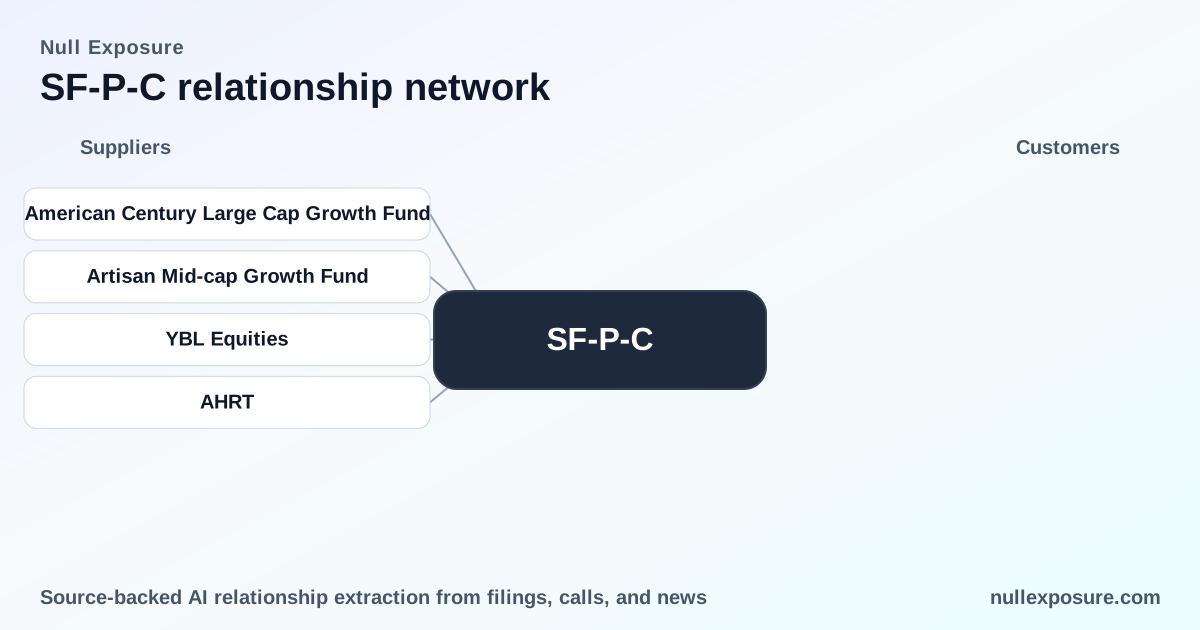
SF-P-C — Supplier relationships and what they signal for investors
SF-P-C operates as a preferred-stock instrument tied to an asset manager that delivers institutional investment solutions; the business monetizes through management and performance fees, custody and portfolio services, and ancillary client solutions tied to institutional mandates. For investors and operator-partners assessing counterparty exposure, the observable supplier relationships show a blend of fund-selection/legal risk and real-estate landlord ties that shape short- and medium-term operational risk and reputation. Learn more about supplier risk monitoring at https://nullexposure.com/.
Why supplier ties matter for preferred-stock investors
Preferred holders price income stability and recovery priority, not growth. For SF-P-C, supplier relationships influence that stability through two channels: investment-product governance (which drives litigation and fiduciary risk) and real-estate/occupancy relationships (which affect operating expense and continuity). The public signals collected here are limited but meaningful: they point to active litigation pressure around fund choices and ongoing office-lease commitments with institutional landlords. Both are cash-flow relevant for the parent operating entity and therefore relevant to preferred security resilience.
Company-level constraints and operating posture
There are no explicit constraint excerpts provided in the linkage data. At the company level, that absence is itself a signal: no recorded supplier-level contractual constraints were surfaced, which suggests either a lower public profile for supplier contracts or limitations in disclosure coverage. From the relationship mix and public filings characteristic of similar firms, investors should treat the operating model as:
- Contracting posture: centralized and fiduciary-driven. The firm acts as manager/advisor and selects external funds and property leases as part of client and corporate operations, implying contractual commitments that are governed by fiduciary and commercial norms.
- Concentration and criticality: mixed. Litigation references point to product selection as a concentrated source of reputational risk; real-estate leases represent critical operational contracts but are more diversified across landlords.
- Maturity and governance: institutional-grade, but governance choices are material. The presence of ERISA-related litigation implies that fund selection governance is a principal line of operational oversight investors must monitor.
If you want a continuous feed of supplier signals and constraint monitoring for portfolio stress-testing, visit https://nullexposure.com/ for service details.
Relationship ledger — every supplier tie observed
American Century Large Cap Growth Fund
A news report from 401(k) Specialist (March 10, 2026) states that Stifel failed to remove the American Century Large Cap Growth Fund from a 401(k) plan despite more than a decade of weak relative performance, creating the factual basis for an ERISA breach claim. Source: https://401kspecialistmag.com/stifel-401k-plan-subject-of-new-134-million-erisa-case-over-fund-performance/?amp=1
Artisan Mid-cap Growth Fund
The same 401(k) Specialist article documents failure to remove the Artisan Mid-cap Growth Fund from the plan alongside the American Century fund, again cited as poor-performing holdings over a long period and used in ERISA litigation alleging imprudent fund line-up decisions. Source: https://401kspecialistmag.com/stifel-401k-plan-subject-of-new-134-million-erisa-case-over-fund-performance/?amp=1
YBL Equities
A ConnectCRE piece covering Baltimore leasing activity (first seen March 2026, fiscal period listed as FY2024) quotes YBL Equities leadership praising investments to improve tenant experience and noting Stifel as a lease-extension tenant, showing a direct landlord–tenant relationship affecting occupancy and facilities management. Source: https://www.connectcre.com/stories/stifel-financial-extends-21k-sf-lease-at-one-south-street/
Armada Hoffler (AHRT)
According to ConnectCRE reporting, Stifel Financial leased 35,000 square feet at Wills Wharf in Baltimore in a deal with developer-operator Armada Hoffler, confirming another active real-estate supplier relationship with an identifiable REIT operator. This is a material facilities relationship that influences fixed-cost profile and geographic footprint. Source: https://www.connectcre.com/stories/stifel-financial-corp-signs-35k-sf-office-lease-in-baltimore/
What the relationships concretely imply for investors
The fund-related entries are governance and fiduciary risk vectors. The ERISA suit referenced creates direct legal exposure and reputational friction that investors must treat as a potential drag on cash available to preferred securities (through defense costs, settlements, or managerial distraction). The landlord relationships are operational risk and cost structure drivers: lease roll, presence in key markets, and tenant-credit considerations influence short-term operating cash flow and longer-term real-estate expense inflation.
- Legal and fiduciary risk is immediate and quantifiable as a contingent exposure. The ERISA complaint cited by 401(k) Specialist establishes a public claim tied to fund-selection decisions.
- Operational stability is anchored by longer-term office leases. Landlord quotes and lease announcements confirm occupancy commitments that impact SG&A and facility costs.
If you want to contextualize these supplier ties against a broader peer set and track emerging legal actions, see offerings at https://nullexposure.com/.
Risk checklist investors should monitor right now
- Litigation trajectory: watch filings, discovery schedules, and potential settlement language tied to fund-selection ERISA claims. Litigation outcomes will alter cash reserves and reputational capital.
- Governance responses: monitor board minutes, proxy statements, and any policy changes to fund due-diligence processes; these are the primary mitigants for future fiduciary exposures.
- Lease renewals and foot-print strategy: track lease expiry schedules and subleasing activity to assess fixed-cost flexibility.
- Counterparty credit and concentration: assess landlord covenant strength (e.g., Armada Hoffler credit metrics) and fund-manager reputations for remedies or replacement of underperforming strategies.
Each of these vectors affects preferred-share valuation through income stability, recovery prospects, and issuer creditworthiness.
Conclusion — actionable next steps for investors and operators
SF-P-C’s supplier landscape shows a clear split between fund governance exposure and real-estate operational commitments. For preferred investors, prioritize monitoring the ERISA litigation and any formal governance reforms, while also tracking lease roll and occupancy risk that can alter operating cash flow. For operators and counterparties, reinforce vendor governance and lease flexibility to preserve balance-sheet optionality.
For a systematic supplier-risk feed and bespoke diligence tailored to preferred instruments, explore solutions at https://nullexposure.com/. If you want a targeted brief on the ERISA case and its potential balance-sheet impact, contact the team via https://nullexposure.com/ for a customized engagement.