SFL Corporation Ltd: supplier relationships, commercial posture, and what investors should price in
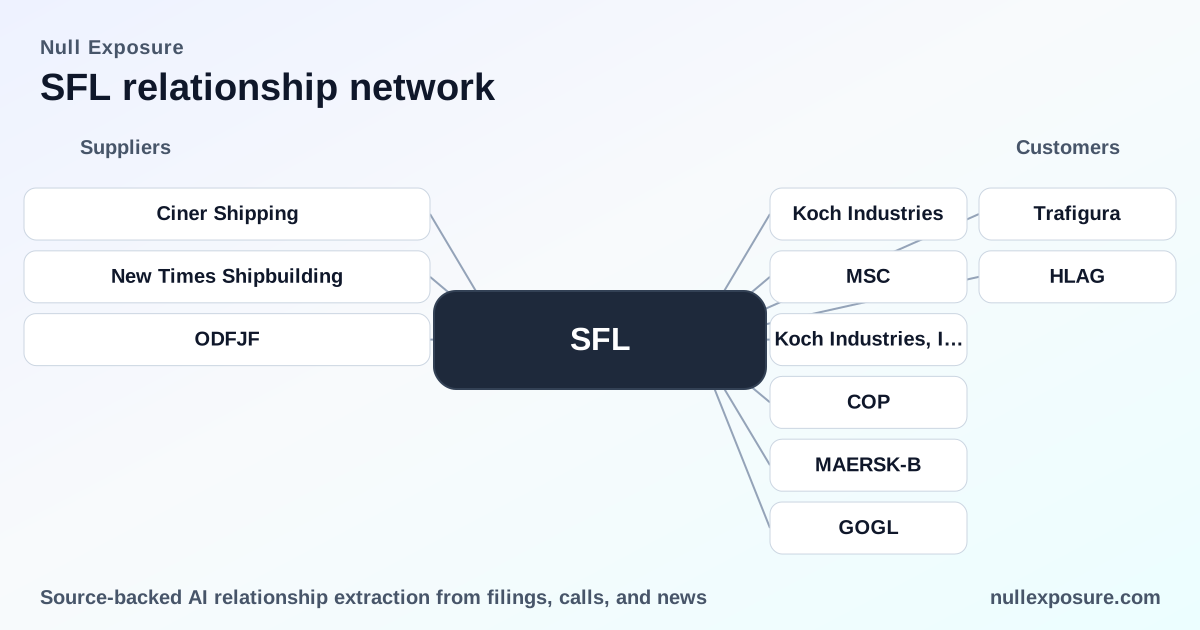
SFL Corporation Ltd is a capital‑intensive owner-operator that monetizes through ownership and long‑ or medium‑term charters of maritime assets, including conventional tankers, containerships and offshore rigs; returns come from contracted charter revenue, asset sales and a modest dividend policy. The company’s business model is driven by duration of charters, fleet renewal through newbuilds, and selective outsourcing of technical management, which together determine cashflow visibility and capital needs. For a concise briefing on counterparties and supplier ties, visit https://nullexposure.com/.
How SFL contracts and what that means for cashflow stability
SFL’s operating model is anchored by long‑term charters, which create predictable revenue streams but require ongoing capital deployment into newbuilds and conversions. The company reports Revenue TTM of $719.8m and EBITDA of $421.4m, with EV/EBITDA at 9.29 and EV/Revenue at 5.17, signaling investors are paying for earnings visibility and asset value rather than short‑cycle trading gains. Balance-sheet and dividend metrics—market cap ~$1.34bn, dividend yield ~7.9% and book value $7.24 per share—frame a blend of income orientation and asset play.
Operational characteristics investors should note:
- Contracting posture: Predominantly medium‑ to long‑term chartering, which reduces spot exposure but locks capital into assets.
- Concentration and criticality: Fleet-level decisions (newbuild orders, rig contracts) make a small set of supplier/partner relationships strategically important for delivery and management.
- Maturity and capital intensity: Newbuild commitments and rig ownership raise capex and refinancing sensitivity despite strong reported EBITDA. No explicit supplier constraints were flagged in the supplied feed, so there are no named covenant or supplier‑specific restrictions to report from those sources; this is a company‑level signal rather than an absence of operational risk.
Relationship by relationship: the commercial counterparties you should evaluate
Ciner Shipping — acquisition and charter origin
SFL purchased older Suezmax units from Turkey’s Ciner Shipping in a transaction where the assets carried an attached charter; the feed notes the Bohai‑built vessels were bought for $45m each in September 2022. This is a classic asset‑acquisition-plus-charter deal that preserves immediate cashflow while recycling older tonnage. (Source: Splash247 coverage referencing the transaction; first seen March 10, 2026.)
New Times Shipbuilding — strategic newbuild supplier
SFL committed to five 16,800 TEU containerships with China’s New Times Shipbuilding, with deliveries scheduled for 2028; this expands exposure to large containership earnings while locking in construction capacity and timing risk into the mid‑to‑late 2020s delivery profile. (Source: Splash247 report on SFL’s $1bn containership newbuild program; first seen March 10, 2026.)
Odfjell Drilling — third‑party rig management for Hercules
SFL announced a US$170m contract for the semi‑submersible rig Hercules and will have Norwegian firm Odfjell Drilling provide management services for the unit on SFL’s behalf, effectively outsourcing technical and operational oversight while retaining asset ownership and charter economics. (Source: SFL press release reported on GlobeNewswire, March 6, 2026, and subsequent industry summaries.)
What those relationships tell investors about SFL’s playbook
Collectively, the three relationships show SFL executing a hybrid model of asset ownership plus delegated operations: buy or order assets, secure charters, then selectively hire specialist managers for day‑to‑day operations (as with Odfjell Drilling). Newbuilds with New Times increase forward capital commitments and delivery concentration in 2028, while purchases from trading houses or smaller owners (Ciner Shipping) demonstrate opportunistic fleet renewal.
Key takeaways:
- Revenue durability comes from charter length, not spot exposure.
- Management outsourcing reduces operational execution risk but does not eliminate capex or delivery risk.
- Newbuild delivery schedules create pipeline risk for 2026–2028; monitor vessel yard performance and financing terms.
If you want a structured supplier risk view and ongoing monitoring of these counterparties, see the overview hub at https://nullexposure.com/.
Risk profile distilled for investors
SFL’s supplier and partner mix introduces several investment‑relevant risks and mitigants:
- Counterparty concentration risk is material at the project level (a few yards and managers handle large commitments), so single-yard execution problems could meaningfully affect asset delivery timing.
- Outsourcing management (Odfjell) lowers technical risk but preserves commercial and refinancing exposure for the owner; SFL retains asset and charter counterparty credit risk.
- The company’s EV/EBITDA of 9.29 and EV/Revenue of 5.17 imply market expectations for steady charter cashflows and asset value maintenance; deviations in charter rates or delivery slippage will be priced quickly.
- Dividend yield (~7.9%) is attractive but supported by asset cashflow and sale‑for‑profit optionality—watch free cash flow and net debt dynamics around newbuild capex.
Place these commercial and market signals into your valuation model: the profile is income-centric with embedded asset timing risk.
For a periodic supplier exposure update and alerts on new counterparty developments, check the resources at https://nullexposure.com/.
What to watch next and how to act
Monitor three concrete milestones:
- Delivery progress and yard performance for the five 16,800 TEU boxships due in 2028 (New Times Shipbuilding).
- Operational handover and commercial employment for the Hercules rig under Odfjell Drilling management, which drives the near‑term revenue recognition profile.
- Asset sale or recycling activity with counterparties like Ciner Shipping that can materially reset book gains and cash generation.
Actionable investor moves:
- Revisit cashflow forecasts around 2026–2028 given the newbuild delivery concentration.
- Stress‑test dividend sustainability under delayed deliveries or weak charter renewals.
- Evaluate counterparty credit and yard performance reports as part of ongoing due diligence.
Final thought: SFL is an asset‑heavy, charter‑driven owner where supplier relationships determine delivery risk and operational continuity; successful execution of newbuilds and rig contracts will be the primary catalysts for re-rating. For continuous tracking of SFL counterparties and supplier risk, visit https://nullexposure.com/.