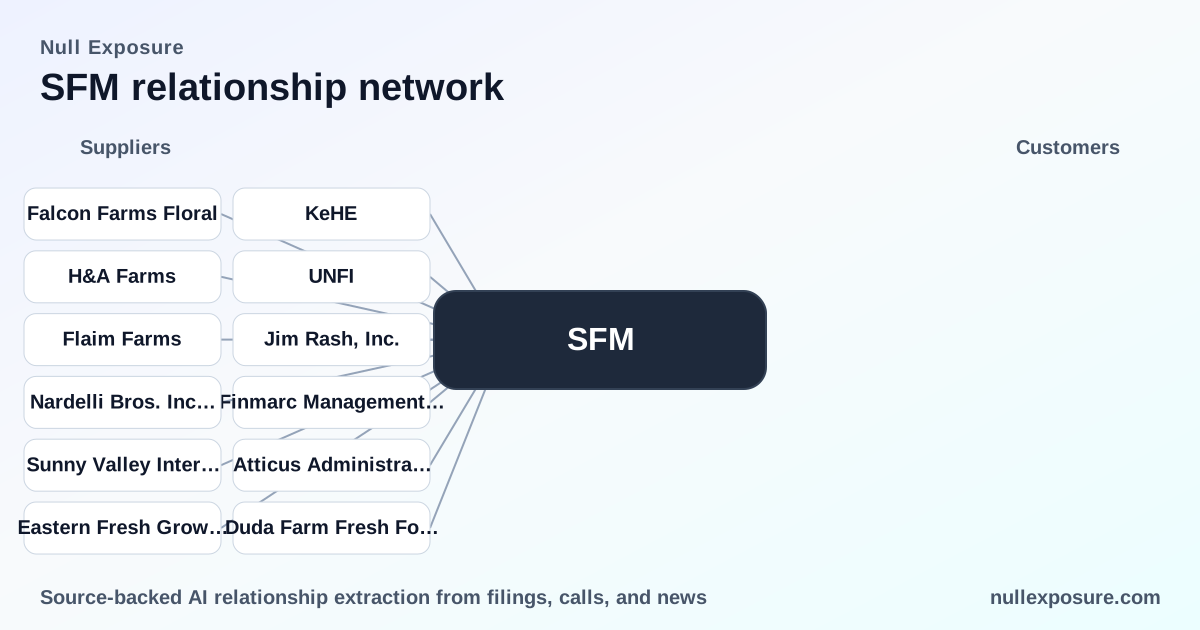
Sprouts Farmers Market (SFM) — Supplier Map and Strategic Implications for Investors
Sprouts is a value-oriented specialty grocer that monetizes through high-turnover fresh produce, private-label natural products, and scale purchasing across a national store footprint; the company buys inventory from a mix of national distributors and local growers, then captures margin through shelf pricing, own-brand products, and store-level efficiencies. For investors, the critical read is how supplier concentration, contract tenure, and real-estate obligations translate into supply-chain risk and margin stability. Explore a deeper supplier breakdown at https://nullexposure.com/.
The supplier picture in one line
Sprouts sources non-produce categories primarily through large third-party distributors, while fresh produce is heavily sourced from regional farmers; this hybrid model lowers procurement complexity for packaged goods but concentrates exposure in a few distribution relationships for dry and frozen items.
Supplier roster and what each relationship means for investors
KeHE
KeHE is identified in Sprouts’ 2024 Form 10‑K as the primary distributor for dry grocery and frozen products, accounting for roughly 50% of purchases in fiscal 2024 (47% in 2023). This is a major concentration that underpins Sprouts’ store inventory flow and negotiating leverage. Source: Sprouts 2024 Form 10‑K (filed Dec 29, 2024).
UNFI
UNFI is listed as the secondary distributor, responsible for about 3% of purchases in both fiscal 2024 and 2023, implying a fallback or complementary role in the non‑produce supply chain. Source: Sprouts 2024 Form 10‑K (filed Dec 29, 2024).
Jim Rash, Inc.
Local Florida growers such as Jim Rash, Inc. are cited as farm-level suppliers for seasonal items like watermelons, supporting Sprouts’ fresh produce positioning in new store openings. Source: News‑Journal Online, “Sprouts set to open its 1st store in Daytona,” Feb 26, 2026.
Duda Farm Fresh Foods
Duda Farm Fresh Foods supplies a range of vegetables (sweet corn, celery, radishes, leafy greens) to Sprouts’ Florida stores, reinforcing the company’s regional sourcing strategy for perishables. Source: News‑Journal Online, Feb 26, 2026.
H&A Farms
H&A Farms is named as a source for berries (blueberries, strawberries) for Sprouts’ Florida produce assortment, reflecting reliance on specialized regional growers for high‑margin fresh SKUs. Source: News‑Journal Online, Feb 26, 2026.
Falcon Farms Floral
Falcon Farms Floral provided promotional floral inventory (roses) connected to a store opening, illustrating Sprouts’ use of local floral suppliers to drive store-level traffic and promotional events. Source: News‑Journal Online, Feb 26, 2026.
Finmarc Management, Inc.
Finmarc Management, Inc. appears as the landlord/center owner in a lease for a new Sprouts site, highlighting the company’s third‑party real‑estate relationships that impact store expansion cadence and lease obligations. Source: i95 Business press release (2026).
Atticus Administration LLC
Atticus Administration LLC shows up as a settlement administrator contact in public notices, indicating Sprouts’ use of external administrative vendors for claims and legal settlement workflows. Source: ClaimDepot settlement notice (2026).
Flaim Farms
Flaim Farms is identified among regional produce suppliers supporting Sprouts’ New York entry, underscoring the retailer’s local sourcing for northeast produce assortments. Source: BlueBook Services, Sprouts store opening coverage (2026).
Nardelli Bros. Inc. – Lake View Farms
Nardelli Bros. / Lake View Farms is listed as a local supplier for seasonal produce at new Centereach stores, reinforcing the pattern of regional grower partnerships in launch markets. Source: BlueBook Services (2026).
Sunny Valley International – The Jersey Fruit Company
Sunny Valley International / The Jersey Fruit Company is named as a regional produce partner for New York locations, consistent with Sprouts’ strategy to combine national sourcing with local growers for freshness and assortment depth. Source: BlueBook Services (2026).
Eastern Fresh Growers
Eastern Fresh Growers is also cited among local produce partners for the Centereach store, confirming a multi‑vendor approach to secure variety and seasonality in produce bays. Source: BlueBook Services (2026).
(For a consolidated view of supplier exposures and to map relationships to credit and operational risk, visit https://nullexposure.com/.)
How Sprouts contracts and where the constraints show up
Company disclosures and filing excerpts produce a clear set of operating constraints that shape supplier dynamics:
- Contracting posture: Sprouts maintains a sizable revolving credit facility and standard third‑party distribution arrangements; the company references a $700 million initial commitment under a Revolving Credit Facility, which supports working capital and inventory purchases. This is a company-level financing backstop, not a supplier contract.
- Lease maturity and long‑term obligations: Operating and finance leases extend through the 2040s, which places long‑term fixed occupancy costs on the balance sheet and ties store network performance to multi‑decade commitments.
- Concentration and criticality: Company filings signal a high concentration in dry grocery distribution — a single primary supplier accounts for roughly half of non‑produce purchases — which is a material operational dependency (company-level signal).
- Spend bands and committed outflows: Sprouts reported material real-estate obligations (
$756.9 million) and noncancelable purchase/service commitments ($37.5 million), demonstrating a mix of very large long-term capital commitments alongside mid-sized contractual spend. - Role posture: Sprouts operates primarily as a buyer and retail integrator, using third‑party distributors for non‑produce distribution while directly contracting many regional growers for produce supply.
These constraints translate into supply‑side leverage risk (concentration with major distributors), fixed-cost leverage (long leases), and working capital dependency (credit facility backing inventory).
Investment implications — risks and opportunities
- Risk — distributor concentration: Heavy reliance on a primary distributor for dry and frozen goods creates a single point of operational risk that could pressure inventory flow and margins if pricing or service terms shift. This is the largest supplier risk to monitor.
- Opportunity — local produce strategy: Partnerships with regional growers support store differentiation and seasonal margin capture; this reduces some perishables risk and improves customer value perception.
- Balance-sheet leverage and expansion risk: Long lease maturities and significant real‑estate obligations mean growth missteps could amplify fixed‑cost strain, but the credit facility provides near-term liquidity flexibility.
- Operational control: Use of third‑party distributors for non‑produce reduces Sprouts’ capital intensity in warehousing, allowing capital allocation toward store openings and remodels.
If you want a tailored supplier exposure report or to overlay these relationships against credit and operational KPIs, start here: https://nullexposure.com/.
Bottom line and next steps for investors
- KeHE‑centric distribution is the single biggest supplier dependency; watch contract renewals, pricing, and service continuity.
- Regional produce partnerships are a strategic hedge that supports freshness and local merchandising.
- Lease and committed spend profiles create medium‑term fixed‑cost sensitivity that should be modeled alongside same‑store sales and margin assumptions.
For dedicated investor briefs and supplier risk scoring tied to Sprouts’ filings, visit https://nullexposure.com/ and request the supplier deep‑dive.