SpyGlass Pharma (SGP): what the underwriter roster and listing tell investors about supplier posture
SpyGlass Pharma operates as a development-stage biopharmaceutical company that commercializes novel therapies through a combination of in-house development and strategic capital markets access. The company monetizes by advancing clinical programs toward regulatory milestones and commercial launch while using equity capital and underwriting relationships to fund R&D and early commercialization. The recent public-market event and its attendant counterparty roster are the clearest signals today of how SpyGlass finances growth and secures distribution for investors.
Discover more context on counterparties and financial exposure at https://nullexposure.com/.
Why the underwriting roster matters more than a single bank headline
An IPO underwriter group is not a collection of neutral vendors—it's a distribution and financing engine. SpyGlass’s selection of multiple established investment banks as joint book-runners gives the company instantaneous institutional reach and public-market legitimacy. That structure lowers single-counterparty concentration for the equity raise and broadens investor distribution, while also signaling the company’s ability to access upper-tier capital markets relationships.
From an operational standpoint, these underwriting relationships are transaction-oriented rather than ongoing supply contracts. They are critical for near-term funding and market liquidity but are not a recurring vendor dependency in the way manufacturing or clinical CRO relationships would be. The combination of underwriters and a Nasdaq listing also increases market visibility and liquidity for shareholders, which changes the company’s capital strategy and investor base.
Visit the Null Exposure homepage for deeper supplier relationship mapping: https://nullexposure.com/.
Counterparty register — what the record shows (each relationship)
Below I list every relationship returned in the supplier search, with a plain-English summary and source reference.
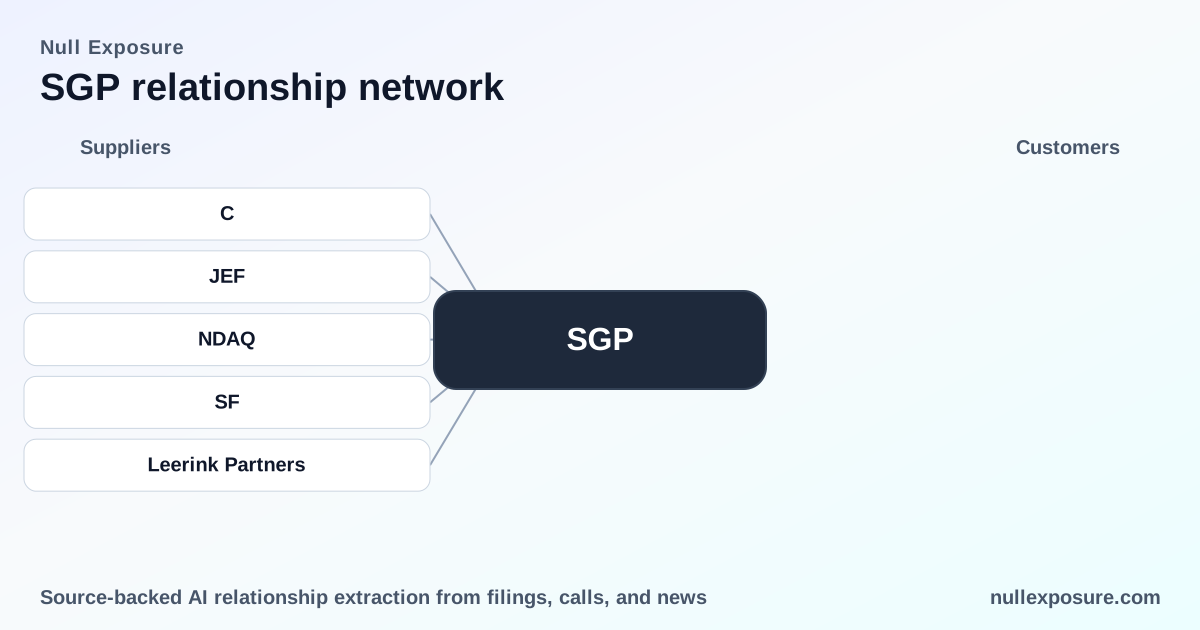
Citigroup
Citigroup acted as one of the joint book-running managers on SpyGlass Pharma’s initial public offering, providing underwriting and distribution services for the equity raise. According to VisionMonday coverage on March 10, 2026, Citigroup was listed among the joint book-runners for the offering.
Jefferies
Jefferies served as a joint book-running manager on the IPO, indicating the firm handled a meaningful portion of underwriting and investor placement responsibilities. VisionMonday’s March 10, 2026 report names Jefferies in the syndicate.
Stifel
Stifel participated as a joint book-runner on SpyGlass Pharma’s IPO, joining the syndicate that executed the public offering and distribution. VisionMonday (March 10, 2026) lists Stifel among the underwriting group.
Leerink Partners
Leerink Partners was included in the IPO book-running team, reinforcing the offering’s focus toward healthcare-specialist distribution channels. VisionMonday’s March 10, 2026 coverage identifies Leerink Partners as part of the syndicate.
Nasdaq
SpyGlass Pharma’s common stock began trading on the Nasdaq Global Select Market on February 6, 2026 under the ticker “SGP,” providing the company a primary trading venue and public market liquidity. VisionMonday reported the Nasdaq listing in its March 10, 2026 piece.
What this supplier picture implies for the corporate operating model
With no explicit contractual constraints flagged in available records, treat the following as company-level operating signals rather than relationship-level facts:
- Contracting posture: The firm’s recent public offering shows a capital-raising posture that favors market-based funding over long-term debt or strategic supplier financing; underwriting arrangements are transactional and event-driven.
- Concentration: The use of a multi-bank syndicate reduces single-point underwriting concentration for this equity event, but reliance on capital markets underscores concentration of funding risk in future public or private financings.
- Criticality: Underwriting and listing are critical to near-term cash runway and investor liquidity; however, these are one-off or periodic engagements rather than recurring operational suppliers.
- Maturity: The supplier relationships observed are early-stage in company lifecycle terms—an IPO and listing mark a transition to public-company maturity that will change supplier and counterparty expectations going forward.
These company-level signals stem from the absence of long-term supplier constraints in the reviewed records, meaning investor focus should shift to execution, pipeline milestones, and ongoing capital access.
Investment implications: key takeaways and risks
- Capital markets are now a primary operational lever. The underwriting syndicate and Nasdaq listing provide access to institutional capital and secondary-market liquidity that will be central to SpyGlass’s funding strategy.
- Underwriter diversity reduces single-vendor risk for the IPO but does not eliminate funding concentration. Future financing needs will determine whether the company becomes reliant on repeat equity issuance.
- The relationships observed are transaction-first, not supply-chain critical. That reduces persistent counterparty operational risk but increases sensitivity to market sentiment and investor appetite.
- Regulatory and clinical execution risks remain primary operational drivers. Market support from banks and listing alone cannot mitigate trial outcomes or regulatory timelines.
How to act on this information
For institutional investors and operators evaluating SGP supplier exposure, the immediate priorities are (1) monitoring upcoming clinical and regulatory milestones that drive follow-on financings, (2) tracking secondary-market liquidity and float dynamics now that SGP trades on Nasdaq, and (3) watching for any disclosure of long-term manufacturing or CRO contracts that would introduce ongoing supplier concentration.
Explore supplier mappings and counterparty detail sets at https://nullexposure.com/ to build a monitoring plan.
Final assessment and next steps
SpyGlass’s IPO syndicate and Nasdaq listing are positive signals for market access and investor distribution, but they do not substitute for clinical progress or durable revenue sources. The company’s operating model is shifting toward a public-company financing cadence: short, high-impact underwriting engagements will fund developmental milestones, and public-market performance will determine future access to capital. For investors, the key questions are how efficiently SpyGlass converts capital into de-risking clinical data and whether it establishes durable commercial or partnering revenue beyond episodic equity raises.
For a closer look at supplier relationships and to subscribe to ongoing counterparty intelligence, go to https://nullexposure.com/.