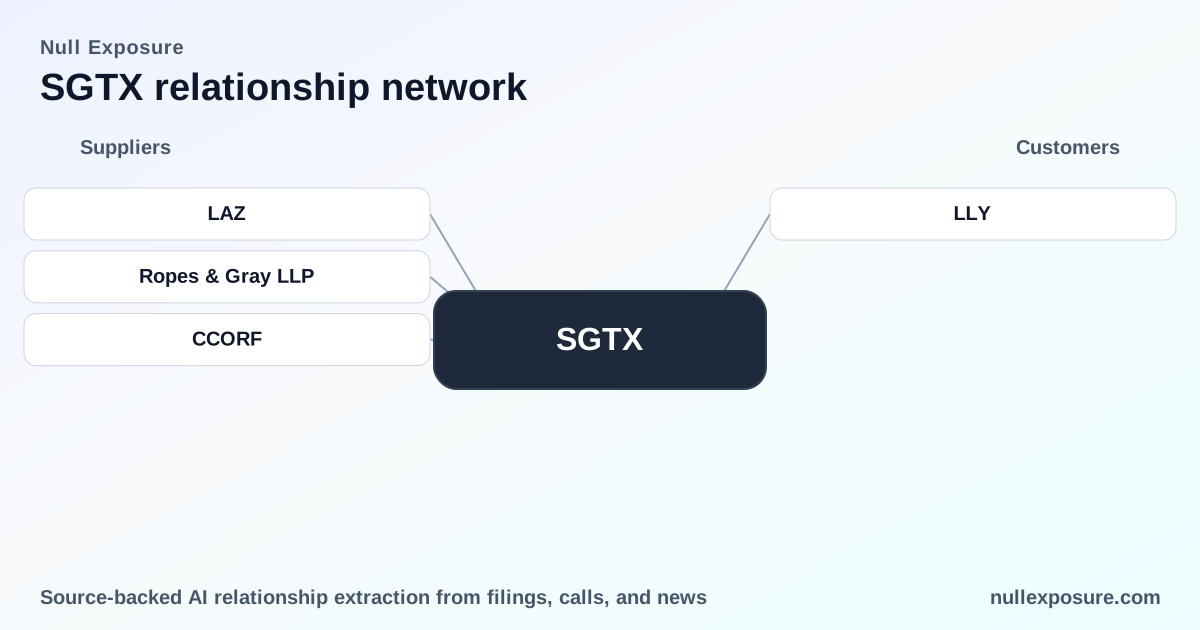
SGTX supplier relationships: advisors and what they signal for investors
Sigilon Therapeutics (SGTX) develops encapsulated cell therapies and monetizes primarily through strategic partnerships, licensing and clinical-stage value creation that culminates in capital markets transactions and M&A exits. The most recent public reporting around the Lilly acquisition process confirms that SGTX converts pipeline value into realized liquidity events by engaging top-tier financial and legal advisors to execute sale and licensing mandates. For investors and supplier operators, the practical implication is straightforward: SGTX runs deal-driven commercialization to extract value from clinical assets, which creates a predictable pattern of advisory and legal spend around liquidity events.
Explore more supplier intelligence at https://nullexposure.com/.
Who worked the deal — advisors and counsel named in press coverage
A single Building Indiana article covering the Lilly acquisition (published March 10, 2026) lists three external firms active on the Sigilon matter. Below are plain-English summaries of each relationship, with source context.
-
Lazard: Lazard acted as the lead financial advisor to Sigilon during the transaction process. According to a Building Indiana report (March 10, 2026), Lazard led financial advisory work for Sigilon in connection with the Lilly acquisition.
Source: Building Indiana article on the Lilly–Sigilon transaction (published March 10, 2026). -
Ropes & Gray LLP: Ropes & Gray served as legal counsel to Sigilon for the transaction. The same Building Indiana coverage identifies Ropes & Gray LLP as Sigilon’s legal advisor on the deal.
Source: Building Indiana article on the Lilly–Sigilon transaction (published March 10, 2026). -
Canaccord Genuity: Canaccord Genuity also acted as a financial advisor to Sigilon, supporting the advisory team noted in press coverage. Building Indiana’s article lists Canaccord Genuity alongside Lazard in an advisory role.
Source: Building Indiana article on the Lilly–Sigilon transaction (published March 10, 2026).
Why these relationships matter to suppliers and investors
The advisor roster for Sigilon is concentrated, high-quality, and transaction-oriented. For investors and vendors, that profile has measurable implications:
- Contracting posture: Engaging global firms such as Lazard and Ropes & Gray signals a preference for established, capability-rich counterparties when executing strategic transactions, implying high standards for vendor selection and willingness to pay premium rates for expertise.
- Concentration: A short list of trusted advisors suggests Sigilon centralizes critical transaction functions with a small set of partners, increasing bargaining power with other suppliers but also concentrating operational dependency.
- Criticality: Advisors are mission-critical during exit processes; vendors tied to regulatory, clinical supply, or IP transfer functions become focal points for diligence and post-close integration.
- Maturity and exit readiness: The public naming of lead advisors in an acquisition context is consistent with a company that has matured past pure discovery and now focuses on monetizing pipeline value via strategic transactions.
These company-level signals indicate that suppliers should prepare for intensive diligence cycles around clinical supply and IP commercialization, and investors should treat SGTX as an asset whose commercial path is transaction-driven.
Explore supplier coverage and due diligence checks at https://nullexposure.com/.
Operational and commercial implications for vendor relationships
For suppliers and operators working with SGTX, the advisory footprint and the acquisition context create several practical dynamics:
- Procurement timing becomes front-loaded. Major transactions compress timelines for contract novation, transfer of manufacturing rights, and supply continuity agreements. Suppliers must be prepared for expedited legal review and operational handoffs.
- Payment and credit risk shifts. During deal processes, payment patterns can change as acquirers and sellers balance purchase price mechanics and working capital adjustments; suppliers should assess exposure to holdbacks, escrows, or purchase price contingent payments.
- Integration and standardization pressures increase. Post-close, the acquiring company will standardize vendor terms and technical specifications; suppliers that cannot meet the acquirer’s quality or contractual standards face requalification risks.
- Opportunity for premium contracting. Suppliers that position themselves as low-friction, compliance-ready partners stand to secure longer-term contracts post-transaction and win preferred-supplier status with the acquirer.
Fast read: what each named advisor signals for counterparty strategy
- Lazard — lead financial adviser status signals a high-proficiency, sale-focused transaction playbook; vendors should expect detailed commercial diligence and robust valuation mechanics. (Building Indiana, March 10, 2026)
- Ropes & Gray LLP — top-tier legal counsel indicates complex regulatory and IP workstreams, raising the bar for contract language and data-room readiness. (Building Indiana, March 10, 2026)
- Canaccord Genuity — supplemental financial advisory implies the company sought both sell-side execution and broader investor-market positioning. (Building Indiana, March 10, 2026)
Practical steps for investors and suppliers
- Map critical supplier contracts to the transactions timetable and identify clauses that trigger on change-of-control or assignment.
- Stress-test cash flow exposure to holdbacks and escrows commonly used in M&A purchase agreements.
- Document readiness for rapid qualification to align with acquirer vendor standards and expedite post-close continuity.
For a deeper read on supplier exposure around life-science M&A and tailored counterparty monitoring, visit https://nullexposure.com/.
Bottom line
The public reporting on the Lilly transaction shows SGTX executed a classic exit play — engagement of elite financial and legal advisors to convert clinical value into an acquisition outcome. For investors, that confirms a monetization path; for suppliers, it signals a temporary intensification of diligence and contract renegotiation risk, followed by an opportunity to lock long-term terms with the acquirer. Monitor contract clauses tied to change-of-control, prioritize rapid qualification capability, and align pricing to reflect both the compressed timeline of a deal and potential for post-close integration.