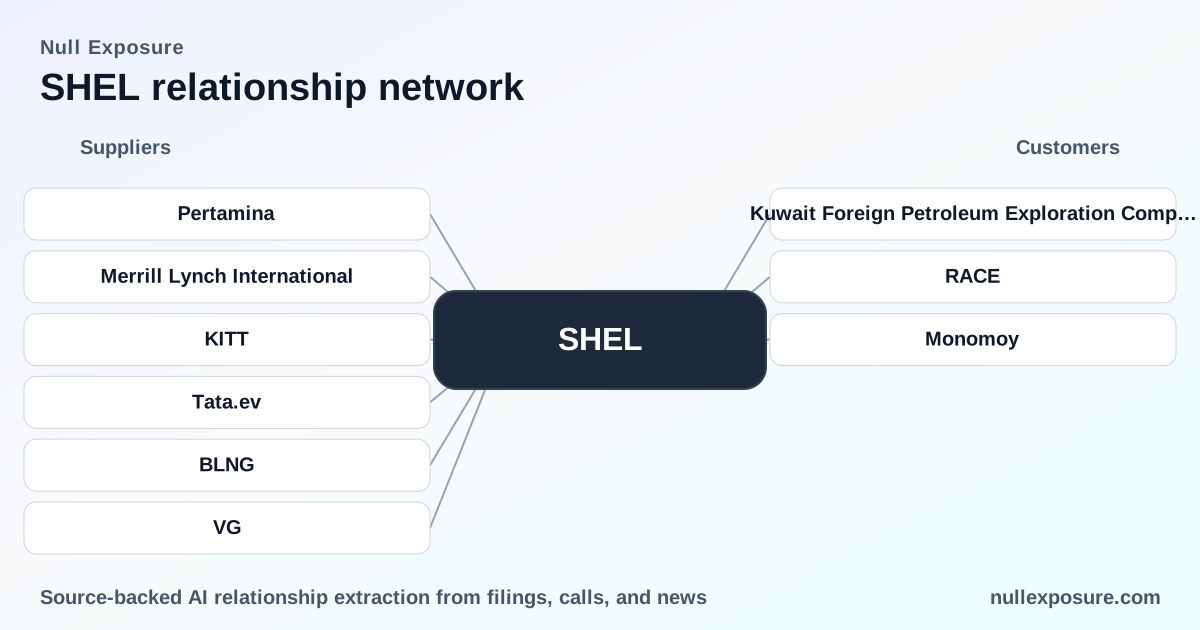
Shell PLC (SHEL) — supplier relationships that shape operational risk and strategic optionality
Shell plc is a global integrated energy company that monetizes through upstream production, downstream refining and retail, commodity trading, LNG contracts, and an expanding low‑carbon services portfolio (EV charging, hydrogen, and energy services). The firm generates cash via commodity sales and trading margins while returning capital through dividends and buybacks; this mixed model creates both steady cash flow and contract‑driven exposure. For a structured view of counterparties and how they influence operational and legal risk, see more supplier intelligence at https://nullexposure.com/.
How these supplier links influence valuation and risk
Investors should read supplier relationships as operational levers that drive margin volatility, cash timing, and legal exposure. Shell’s counterparty set includes state suppliers (spot buys in constrained markets), financial brokers executing buyback and hedging programs, technology and services suppliers for electrification, and LNG counterparties with settled or ongoing arbitrations. These relationships reveal a company that contracts across the spectrum—long‑term LNG commitments, on‑market/off‑market buybacks executed through brokers, and short‑term retail purchases when local supply is constrained—producing a hybrid contracting posture that increases both optionality and legal complexity.
Key company‑level signals: Shell is a highly diversified, mature operator with substantial scale (market cap ≈ $256.4bn, revenue ≈ $266.9bn, EBITDA ≈ $47.7bn), which reduces single‑counterparty concentration but raises systemic exposure to commodity cycles and large arbitration outcomes. The business shows criticality (fuel supply and LNG delivery are essential to customers and national markets) and contractual maturity (long‑dated LNG contracts coexist with short‑term trading and on‑market buybacks). Explore supplier profiles and legal exposure mapping at https://nullexposure.com/.
Detailed relationship coverage — what each link means for investors
Pertamina — emergency petrol purchase in Indonesia
Shell Indonesia purchased 100,000 barrels of petrol from state‑owned Pertamina after private import quotas were capped and some stations ran dry, underscoring Shell’s pragmatic use of spot/state suppliers to maintain retail continuity. Reported in a TS2 article covering regional supply disruptions (FY2025): https://ts2.tech/en/shell-plc-shel-today-ubs-downgrade-ferrari-green-power-deal-and-lng-dispute-26-november-2025/
Merrill Lynch International — trading execution under irrevocable contracts (1)
Trades for Shell are conducted by Merrill Lynch International under irrevocable, non‑discretionary contracts through 30 January 2026, indicating delegated execution for certain trading and liquidity operations that lock trading posture for defined windows. Source: TS2 report on trading arrangements (FY2025): https://ts2.tech/en/shell-plc-shel-today-ubs-downgrade-ferrari-green-power-deal-and-lng-dispute-26-november-2025/
Nauticus Robotics (KITT) — commercial robotics services tie‑up
Nauticus Robotics advanced into commercial service with energy majors including Shell, moving from lab development to deployed subsea services; this expands Shell’s supplier set into robotics for inspection and subsea operations. Coverage noting commercial openings with Shell (FY2026): https://finviz.com/news/281641/sea-space-sky-3-frontier-robotics-stocks-under-20
Tata.ev — EV charging hubs partnership in India
Shell partnered with Tata.ev to build 21 large EV charging hubs in India, signaling a supplier relationship that supports Shell’s retail electrification strategy and potential future retail margin streams from charging services. Reported by MarketBeat as part of Shell’s retail/EV growth initiatives (FY2026): https://www.marketbeat.com/instant-alerts/shell-plc-unsponsored-adr-nyseshel-given-average-recommendation-of-moderate-buy-by-analysts-2026-02-28/
Venture Global — arbitration and LNG contract dispute (1)
Shell is locked in an LNG contract dispute with U.S. exporter Venture Global, where arbitrators previously ruled against Shell over sales decisions taken during the 2022 crisis; this relationship highlights legal and supply risk in the LNG portfolio. Source: TS2 coverage of the ongoing dispute (FY2025): https://ts2.tech/en/shell-plc-shel-stock-on-5-december-2025-latest-price-lng-canada-setbacks-adura-jv-and-2026-outlook/
Merrill Lynch International — buyback execution and market/off‑market limbs (2)
Shell confirmed that purchases made through Merrill Lynch sit within the on‑market and off‑market “limbs” of a broader buyback program announced Oct. 30, 2025, with Merrill making trading decisions independently within the contracted period—this clarifies how Shell outsources parts of capital return execution. Reported by TS2 in coverage of buyback mechanics (FY2025): https://ts2.tech/en/shell-plc-stock-news-today-dec-24-2025-buyback-update-q4-results-date-analyst-forecasts-and-what-investors-are-watching/
Venture Global — 2022 spot sales context and arbitration claims (2)
During the 2022 energy crisis, Venture Global sold LNG cargoes on the spot market while long‑term customers including Shell claimed contractual deliveries were not honored, an episode that generated multiple arbitrations and underscores counterparty conduct risk in stressed markets. Reported by TS2 addressing historical claims and arbitration fallout (FY2025): https://ts2.tech/en/shell-plc-shel-today-ubs-downgrade-ferrari-green-power-deal-and-lng-dispute-26-november-2025/
What investors should take away — risk, optionality, and action
- Legal and contract risk is material: the Venture Global arbitrations demonstrate that long‑term LNG contracts can generate multi‑year disputes with balance‑sheet and reputation consequences.
- Operational adaptability is visible: use of state suppliers like Pertamina and brokers like Merrill Lynch shows Shell manages short‑term retail continuity and capital returns through third parties.
- Strategic diversification into EV charging and robotics (Tata.ev, Nauticus Robotics) creates long‑term optionality for retail and service margins that offset fossil fuel cyclicality.
Bold action items for analysts:
- Revisit probables for litigation reserves and EBITDA sensitivity tied to LNG arbitration outcomes.
- Model retail continuity risk premiums in markets with quota constraints and supplier interventions.
- Allocate scenario weight to EV charging upside over a multi‑year horizon given the Tata.ev partnership.
For a deeper, supplier‑level risk dashboard and legal exposure mapping, review the full supplier intelligence at https://nullexposure.com/.
Final read — where relationships fit into valuation
Shell’s supplier relationships are a mixed signal: they reduce immediate supply shocks through pragmatic short‑term sourcing and brokered execution, while exposing the company to concentrated legal risk in LNG and operational counterparty conduct. Investors valuing SHEL should balance steady cash generation and capital returns against the probability and potential size of contract disputes and regional supply shocks. For ongoing monitoring of counterparties and to integrate these relationship signals into financial models, visit https://nullexposure.com/.