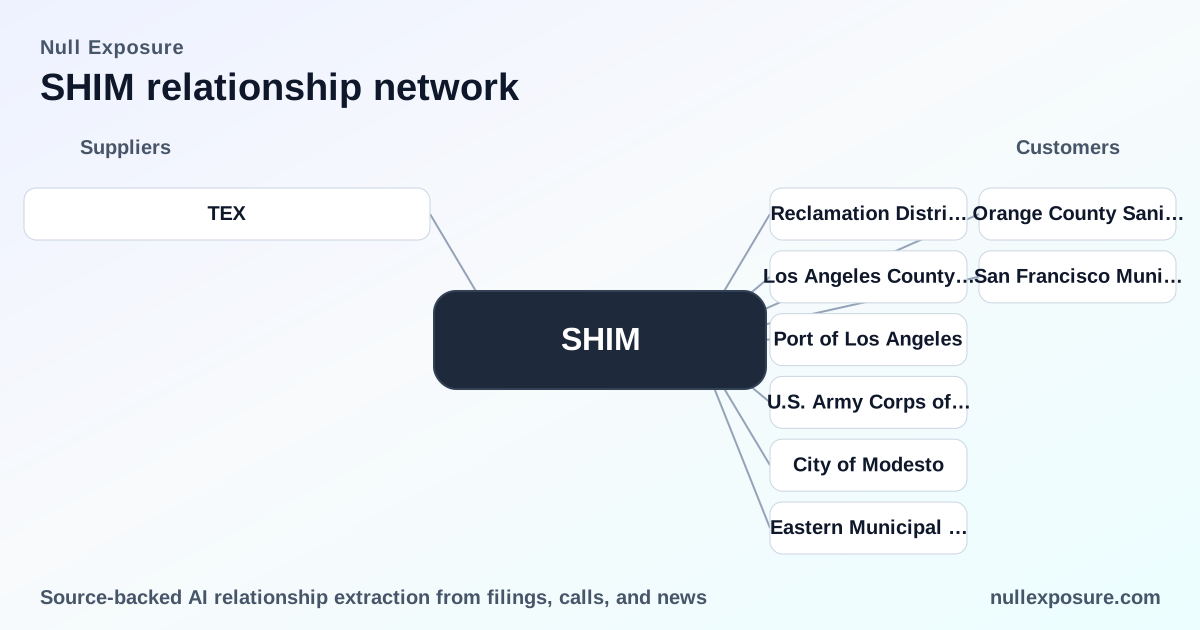
Shimmick Corporation (SHIM): supplier dynamics and operational constraints investors need to price in
Shimmick earns revenue by contracting to design, construct and maintain water and other critical infrastructure across the United States, billing clients under project contracts and relying on a mix of in-house crews and third‑party subcontractors; the company’s economics are driven by large revenue flows (Revenue TTM $492.8M) but thin margins and negative EBITDA, while balance sheet and liquidity depend on bonding arrangements and working‑capital timing. For investors assessing supplier relationships, the key questions are how Shimmick sources specialty equipment, how it manages cash flow to subcontractors, and how third‑party sureties influence project risk and counterparty exposure.
If you want a consolidated view of supplier and operational signals for underwriting or sourcing decisions, see more at https://nullexposure.com/.
Quick snapshot: how the numbers constrain bargaining power
Shimmick reports substantial top‑line scale — $492.8M revenue TTM — but limited profitability: Gross profit only $33.6M and EBITDA negative ($7.99M), producing a slim operating margin profile. The market values the company modestly (Market Cap ~$110M, Price/Sales 0.223, EV/Revenue 0.338) and equity is tightly held (Insiders ~88%; Institutions ~5.6%), implying low public float and concentrated control that affects counterparties’ negotiating posture.
These facts imply several operating model constraints investors and suppliers should factor into sourcing and contracting:
- Contracting posture: Shimmick operates in a cash‑sensitive, short‑cycle environment where the firm uses subcontractors extensively and occasionally pays them ahead of customer receipts; this creates timing risk and heightened sensitivity to payment terms.
- Counterparty dependency: The company routinely obtains third‑party bonding and indemnifies sureties, creating critical reliance on bonding providers who hold security interests over receivables and contract rights.
- Liquidity and maturity signals: Negative EBITDA with sizable revenue implies projects are price‑competitive and margin‑intensive; suppliers should treat Shimmick as a high volume, low margin contractor where payment cadence and lien/bond rights matter more than counterparty credit rating.
- Concentration & control: Heavy insider ownership reduces the likelihood of activist‑driven strategy shifts but increases the risk that minority investors and suppliers have limited influence over governance or liquidity outcomes.
Supplier relationship covered: Terex Bid‑Well — a tactical equipment supplier on a high‑profile job
Construction reporting shows that during the Gerald Desmond Bridge renovation, Shimmick turned to paving equipment manufacturer Terex Bid‑Well when grinding costs for westbound lanes exceeded expectations, using the supplier to increase paving quality and reduce unit costs. This is an example of Shimmick sourcing specialized machinery to remediate on‑project cost overruns. (Construction Equipment Guide, FY2018 — https://www.constructionequipmentguide.com/shimmick-terex-bid-well-renovate-gerald-desmond-bridge/42150)
Takeaway: Shimmick will engage equipment OEMs tactically to control unit costs on specific projects; suppliers with flexible rental or rapid deployment capability will win at the margin.
What the contractual excerpts imply for supplier risk and negotiation
Two company‑level disclosures are material for counterparties, and neither is tied to a single named vendor in the record provided. They are presented here as firm‑wide constraints that drive supplier behavior:
- The company states it uses subcontractors extensively and in some cases pays subcontractors before customers pay Shimmick for the related services. That contractual posture creates working capital transfer risk for suppliers but also indicates an opportunity: suppliers willing to accept credit against Shimmick (or to structure phased billing) can gain volume, while suppliers requiring strict net‑terms or up‑front payment will price it into bids.
- Shimmick discloses that it obtains bonding through third‑party bonding companies, indemnifies those sureties, and grants them security interests in accounts receivable and contract assets. This is a structural signal that sureties are first‑line creditors over project cashflows, which reduces unsecured counterparty recovery prospects and elevates the importance of lien rights and payment bond coverage for equipment lessors and materials suppliers.
Together these disclosures define the operational contours: Shimmick’s supplier relationships are influenced less by iconographic credit scores and more by project cashflow sequencing, surety priorities, and insider control dynamics.
Practical implications for investors and operator sourcing decisions
- For suppliers and equipment OEMs: prioritize flexible delivery models (rental, short‑term lease) and clear documentation of lien, offset and payment bond remedies; equipment suppliers that can move from capex sale to rental will capture higher share in remediation situations similar to the Terex Bid‑Well engagement.
- For credit risk teams and receivables underwriters: treat Shimmick’s accounts as potentially encumbered by sureties; require evidence of bond subordination or specific contract escrow arrangements if you need priority on receivables.
- For procurement and sourcing officers evaluating partnerships: emphasize clauses that preserve cure and completion rights and accelerate final payment upon certification; when possible, embed progress‑based milestones that align with Shimmick’s billing cadence.
Risk checklist and action points
- Working capital mismatch: negative EBITDA plus advanced payments to subcontractors means suppliers could face delayed collection if project cashflows deteriorate.
- Surety encumbrance: sureties with security interests reduce unsecured recovery options; verify bond scope and any assigned receivable security.
- Concentrated ownership and low institutional presence: expect operational continuity driven by insiders rather than market‑driven strategic pivots — plan for bilateral negotiation rather than market pressure.
If your team is underwriting supplier credit or negotiating terms, you can start with a tailored checklist and risk scoring framework on the NullExposure platform at https://nullexposure.com/.
Final read: where risk and opportunity converge
Shimmick is a volume contractor in a low‑margin, high‑working‑capital niche. That profile creates two clear investment and operational rules: first, vendors with flexible, low‑capital delivery models are advantaged, and second, creditors must price in surety encumbrances and payment timing risk. The Terex Bid‑Well example underscores how Shimmick pragmatically sources equipment to restore quality and control costs on the ground — a useful signal for OEMs and rental houses planning go‑to‑market tactics.
For a consolidated supplier risk view and to map your counterparty exposure against Shimmick’s contractual posture, visit https://nullexposure.com/ for tools and next‑step recommendations.